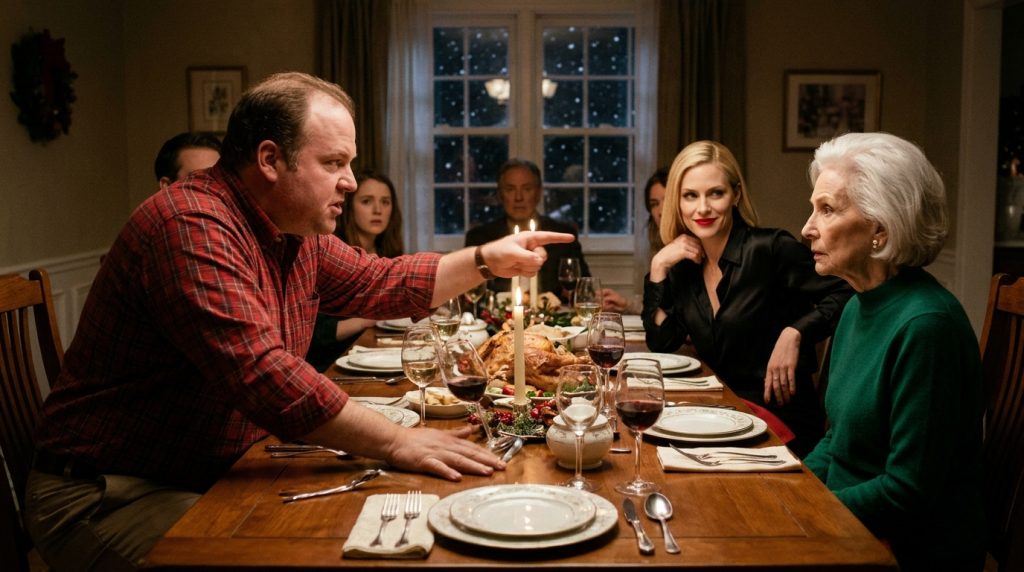
“Be grateful. Your brother’s the only reason the plant hired you.” My dad said that at my 29th birthday, and my brother, Donnie, nodded right at me. I said, “Then he can cover my shift starting Monday.” Then I took out my phone, typed my notice to my plant manager right there at the table and hit send. My name is Sam. I fix machines at a cheese plant in Wisconsin.
And here’s what my dad didn’t know. What nobody at that table knew except the one man doing the nodding. The only reason my brother still had a job at that plant was me. Three months later, my mother carried a pan of scotcheroos into that plant for my brother’s crew. That’s the day she found out he didn’t have one. And the thing I hadn’t told anybody at that table, there was an offer letter from another plant sitting in my glove box.
It had been there for 2 months. I didn’t plan to use it. I just like knowing it was there, like a spare tire. To explain how we got to that birthday, I have to go back about 10 years to when my brother got the job first. Donnie is 4 years older than me. He started at Mill Creek Cheese when he was 23, running a packaging line on second shift.
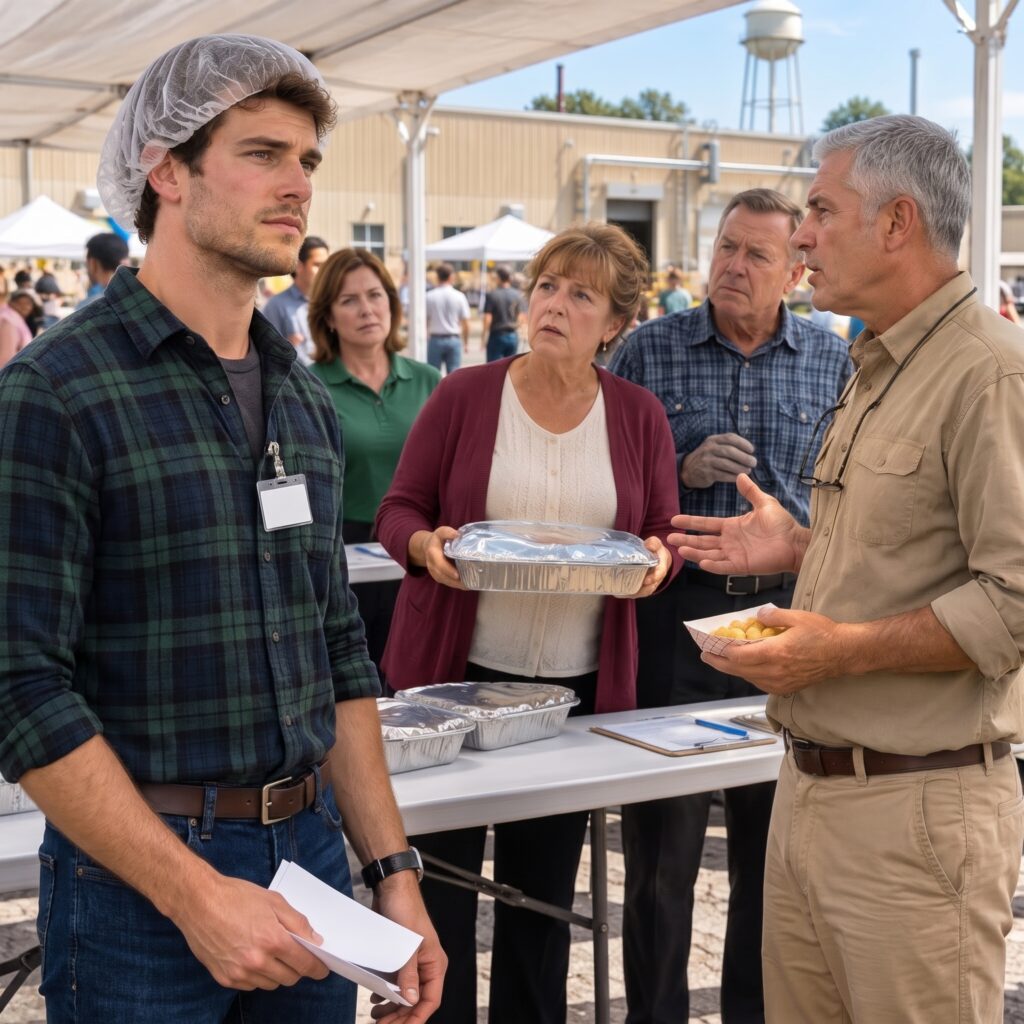
Mill Creek sits on a county road outside Marshfield, a long tan building with a water tower behind it and a smell you stop noticing after about a week. They make block cheese, mostly cheddar and colby, and ship it all over the Midwest. Donnie’s job was to stand at the end of a line and make sure the blocks went into the wrapper straight and the boxes came out taped.
It’s honest work. It’s also work where if you don’t watch the lights on your panel, the machine will let you know in the most expensive way it can. Back then, I was 19 and fixing tractors at an equipment dealer in Abbotsford. I was the kid who could hear a bad bearing from across the shop. My boss used to say I had ears like a bat and hands like a raccoon, which I still think was a compliment.
But equipment dealers don’t pay much when you’re young. And every Christmas, Donnie would lean back in Dad’s recliner and tell the room what he made at the plant. Overtime, shift pay, insurance. Real money, he’d say, and look at me. So, when I was 23, I put in an application at Mill Creek. Maintenance mechanic. I didn’t tell Donnie.
I didn’t think it was any of his business. They called me in for an interview with the plant manager, a man named Ernie Plouts. Ernie had a gray crew cut and reading glasses he kept on a cord around his neck and never once put on his face while I knew him. He talked like every word cost him a quarter. He walked me through the plant himself.
Halfway through the packaging room, one of one of the wrappers started making a noise. Tick, tick, grind. The operator was flipping through a binder looking for the manual. I asked Ernie if I could look at it. He said, “You don’t work here.” I said, “Not yet.” He shrugged, which I learned later was Ernie’s version of a parade. I shut the machine down, found a film roller that had walked about a quarter inch off its shaft, and seated it back where it belonged.
Took me maybe 4 minutes. When I turned it back on, it ran clean. Ernie looked at the machine. Then he looked at me. Then he said, standing right there in the hallway outside the break room, “Can you start in 2 weeks?” That was my interview. Nobody else was in that hallway. Nobody said a word on my behalf.
I didn’t even know there was such a thing as a referral form. Donnie knew though. The week I got hired, he filled one out. He wrote my name on the line that said, “Employee you are referring, signed his own name at the bottom, and dropped it in the box outside human resources.” 90 days later, $500 showed up in his paycheck, a referral bonus for me.
He bought a smoker with it, a big black barrel smoker on wheels, the kind with a little chimney. He parked it on his patio like a trophy. And that Thanksgiving at my parents house in Medford, he stood next to that smoker in my dad’s driveway holding a plate of turkey he’d smoked in it and said, “This one’s on Sam. 500 bucks from Mill Creek for getting my little brother a job.” Everybody laughed.
Dad clapped him on the back. I said, “Donnie, I got that job myself. Ernie hired me in a hallway.” Dad laughed even harder. He said, “Why would your brother lie about that? They paid him for it. They don’t pay you for nothing.” And that was the whole debate. In my dad’s mind, a check was proof and proof was the end of a conversation.
Popular Posts
→- 1
- 2
- 3
- 4




Recently Viewed
Stories you read recently will appear here.