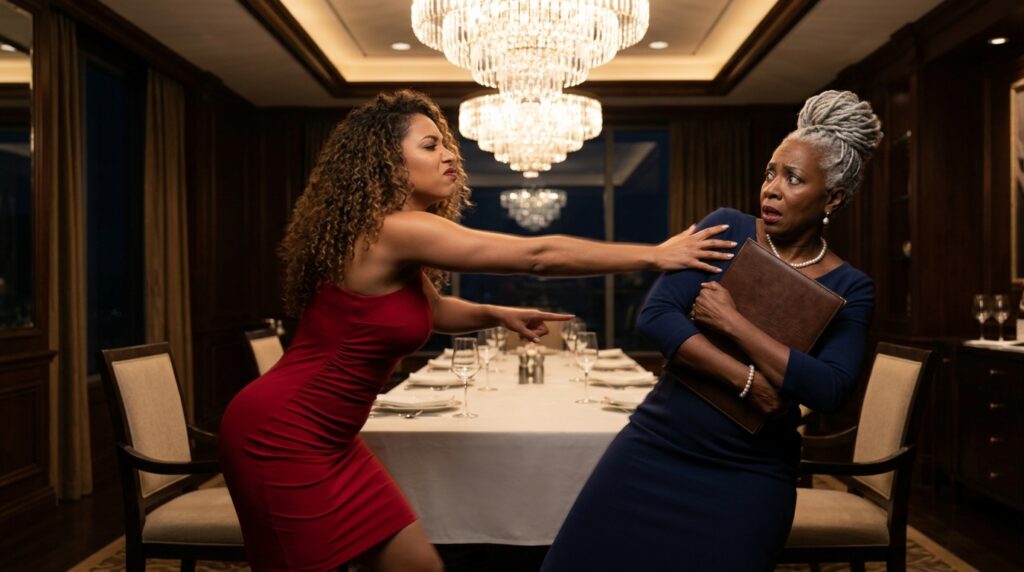
The restaurant went silent when I placed the folder on my table at home and heard twenty-four people waiting on the other end of the phone.
They thought because I did not announce every sacrifice, those sacrifices did not matter.
They thought because I wore simple clothes and lived in a modest apartment, I had nothing left to give.
They never understood that I had spent my entire life building something much larger than appearances.
Tessa had spent the evening carefully creating a picture where she was powerful and I was insignificant.
She chose the chair.
She chose the words.
She chose the audience.
But she never chose to know the truth.
I opened the folder.
Inside were documents from Tate Freight’s acquisition negotiations, legal agreements, and a letter my attorney had prepared before the final sale.
The company was not a hobby.
It was not a lucky break.
It was forty-two years of early mornings, rejected loans, difficult conversations, and decisions made when nobody was watching.
When I started, I had one truck and more determination than resources.
People told me transportation was a man’s world.
They told me customers would not trust a woman running a freight company.
I listened.
Then I built anyway.
Reid grew up surrounded by the results of that work, but he rarely saw the struggle behind it.
I wanted him to have a childhood without carrying my burdens, so I kept many of them hidden.
That was my mistake.
Not because helping my son was wrong.
Because hiding the truth allowed people to create their own version of me.
A smaller version.
A harmless version.
The woman they could dismiss.
My attorney joined the call at my request.
“Good evening, everyone,” he said.
Nobody answered.
I imagined the scene in the restaurant.
Tessa sitting upright.
Reid holding the phone.
Guests suddenly uncomfortable because the person they had ignored was no longer invisible.
“Wilma,” my attorney continued, “do you want me to explain the agreement?”
“Yes,” I said.
The document was simple.
Clear.
Legal.
Tate Freight was mine.
The acquisition was moving forward.
And the money Reid had assumed came from family wealth or luck had always been tied to decisions I made.
There was another page.
That page changed the conversation.
Years earlier, I had created a family trust.
Not a gift.
Not an unlimited account anyone could access.
A structured trust designed to protect the company and the people I cared about.
Reid had benefits from it.
But those benefits came with conditions.
One condition was respect.
Another was that no one could pressure, manipulate, or control access to family resources through another person.
Tessa had spent months telling friends that I was old-fashioned and confused.
She complained that I did not understand their lifestyle.
She posted pictures in expensive places and never mentioned who helped make those moments possible.
Now she was learning the difference between owning something and pretending to own it.
“Mom,” Reid finally said, “why didn’t you tell me?”
I looked at the empty room around me.
“Because I wanted you to love me without knowing what I could provide.”
The line went quiet.
That was the first honest moment we had shared in years.
Then Tessa
Popular Posts
→- 1
- 2
- 3
- 4




Recently Viewed
Stories you read recently will appear here.


