My mother cut open my 8-year-old stepdaughter’s last gift from her late mom and told her to move on. I stayed silent. Two weeks later, Mom was sitting in an attorney’s office realizing what that moment had cost her.
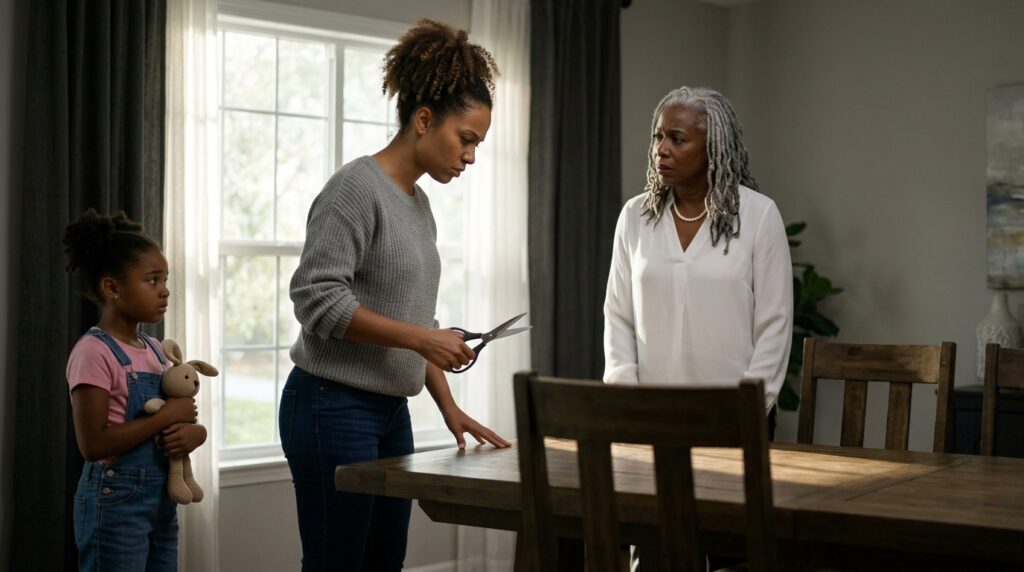
My mother had a pair of kitchen scissors in her hand before I realized what she was doing.
“Mom, stop.”
Eight-year-old Sophie lunged across the table, but I caught her around the waist before she could reach Linda. My mother had already cut through the small stitched seam on the back of Sophie’s stuffed rabbit.
Sophie made a sound I had never heard from her before.
“No! That’s from Mommy!”
The room went silent.
The rabbit was faded pink, one ear slightly crooked from years of being carried to bed. Sophie’s biological mother, Rachel, had given it to her three days before she died from complications after a sudden brain aneurysm. Sophie was five then. She had slept with it every night since.
My mother knew that.
She also knew Sophie never let anyone wash it, repair it, or even move it from her pillow without asking.
Linda pulled the stuffing apart with two fingers and frowned.
“This is exactly the problem,” she said. “She treats this thing like a shrine.”
My sister Megan, sitting beside her, gave a tired laugh. “Mom’s right. She’s been gone three years. At some point, everybody has to move forward.”
Sophie stared at them with tears spilling down her face.
I felt my husband Daniel stand behind me.
“Give it back,” he said.
My mother looked at him like he was being unreasonable. “I’m trying to help. You two keep encouraging this obsession.”
Then she looked directly at Sophie.
“Your mom’s gone, sweetheart. Move forward.”
Sophie stopped crying.
That frightened me more than the tears.
She just went still in my arms, staring at the torn rabbit on the table while my mother reached inside and pulled out a small plastic voice box.
“What is this?” Linda asked.
Daniel’s face changed.
“Don’t press anything.”
She pressed it.
Rachel’s voice filled the dining room.
“Hi, bug. If you’re hearing this, I hope someone you love is holding your hand.”
Sophie collapsed against me.
Daniel covered his mouth.
And my mother, instead of apologizing, whispered, “See? This is unhealthy.”
I didn’t yell.
I didn’t argue.
I picked up the rabbit, the voice box, and every piece of stuffing I could find. Then I took Sophie’s hand.
As we reached the front door, Megan called after me, “Emma, don’t be dramatic.”
I turned around once.
Not to answer.
Just to look at the two women I had spent six years rescuing every time their lives fell apart.
That was when I made my choice.
Neither of them knew that, two weeks later, they would be sitting in the same attorney’s office asking me why I had destroyed their future.
The attorney’s office meeting wasn’t something I arranged after dinner.
It had been on the calendar for months.
My father had died the previous spring and left me a small commercial building outside Columbus. My mother’s home-decor shop occupied the first floor. Megan’s salon used the second. Neither paid market rent. Dad had asked me to keep the building in the family, and I had gone further: I had instructed our attorney, Claire Bennett, to prepare documents transferring a one-third ownership interest to Mom and another third to Megan.
They were supposed to sign those papers on March 14.
After what happened to Sophie, I called Claire the next morning.
“Do not record the deeds,” I said.
She paused. “They haven’t been signed. You can withdraw the gifts.”
“Then withdraw them.”
I also asked her to prepare normal commercial leases when their current reduced-rent agreements expired in sixty days.
I wasn’t evicting anyone.
I wasn’t taking anything they owned.
I was simply done handing pieces of my future to people who could look at a grieving child and call her love for her dead mother unhealthy.
Meanwhile, Daniel took Sophie to school, and I brought the rabbit to a specialty toy-restoration shop. The woman there carefully opened the damaged seam.
That was when she found something my mother had missed.
Behind the voice box was a tiny zippered fabric pocket sewn into the lining.
Inside was a microSD card.
Daniel went pale when I showed him.
“I didn’t know that was there.”
We played it that night on his laptop.
There were six audio files.
Five were short messages from Rachel to Sophie: birthday wishes, advice about middle school, a message for the first time she got her heart broken.
The sixth was labeled for Daniel.
He listened with his eyes closed.
Then Rachel said something neither of us expected.
“If you ever love someone again, please don’t let Sophie think loving her means betraying me. And if that woman loves my daughter, tell her I’m grateful.”
Daniel broke down.
Sophie looked at me from the couch.
“Was she talking about you?”
I could barely answer.
Popular Posts
→- 1
- 2
- 3
- 4




Recently Viewed
Stories you read recently will appear here.


