PART 2 — WHAT “REAL FAMILY” COST THEM
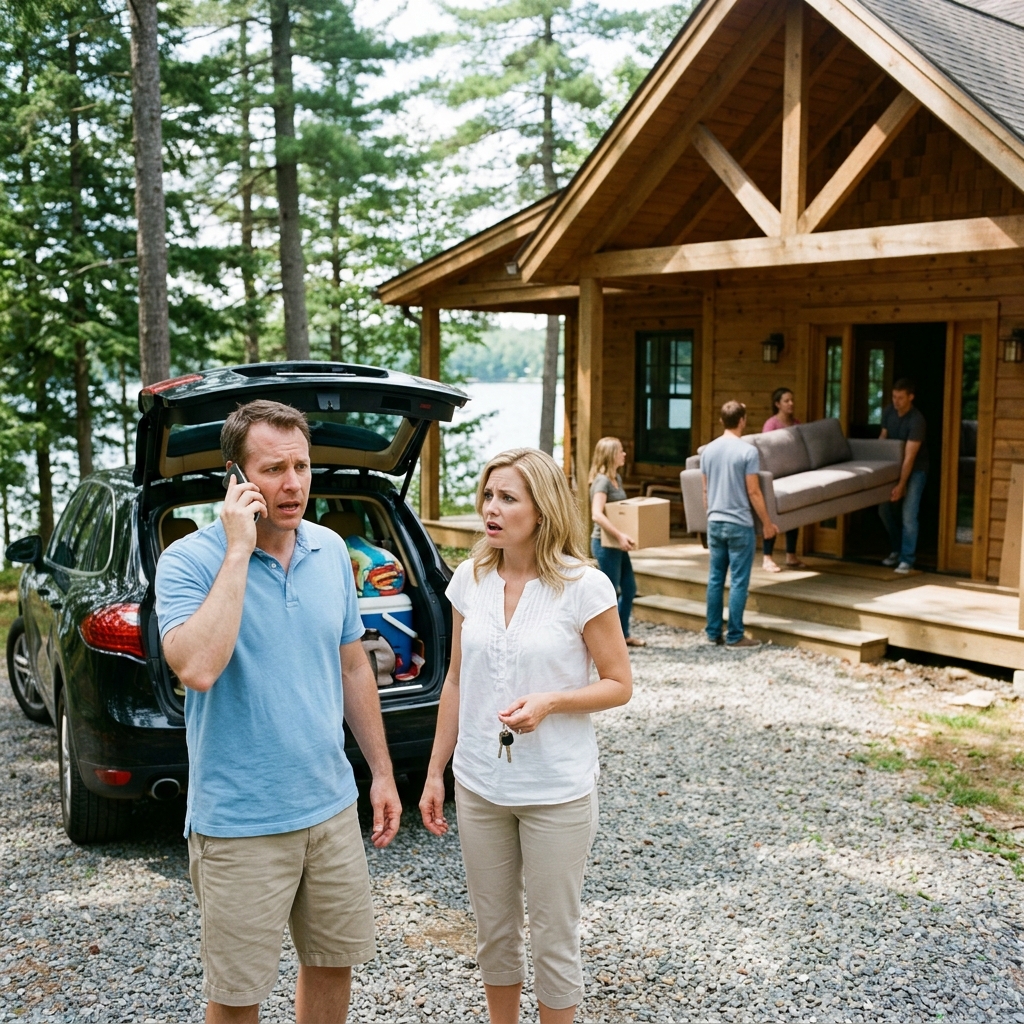
Daniel drove to my house that evening with Megan beside him.
He didn’t call first.
When I opened the door, Megan was already crying.
“You sold it without telling us?”
“Yes.”
“That house was for the family.”
I looked at her.
“Which family?”
She stared at me.
Daniel stepped in quickly. “Dad, she worded the text badly.”
“No. She worded it clearly.”
Megan shook her head. “I meant that this summer should be simpler. Emma doesn’t even live with us full-time.”
“Neither do your children.”
“That’s different.”
“How?”
She opened her mouth, then closed it.
Daniel sat down on the couch and rubbed his face.
“Dad, Emma probably wouldn’t have cared.”
I pulled out my phone.
“She already knows.”
His head snapped up.
Emma had called me the day after Megan’s message. She was twenty now, old enough to understand exactly what exclusion looked like.
She had tried to sound casual.
“Grandpa, it’s okay. I’m used to it.”
That sentence had hurt more than the text.
Used to it.
Used to being the child who made things “complicated.” Used to being included only when convenient. Used to watching her father stay quiet.
I told Daniel that.
His face changed.
Megan said, “I never meant to hurt her.”
“Intent doesn’t erase impact.”
Then Daniel asked the question I knew was coming.
“What happened to the money?”
“The sale proceeds are mine.”
He looked embarrassed.
“I didn’t mean—”
“Yes, you did.”
For years, the trust had paid every expense on that property. Daniel had never once asked what taxes,
maintenance, or insurance cost.
I explained that part of the proceeds would go into my retirement investments, and part would fund education accounts for all three grandchildren equally.
Megan blinked.
“All three?”
“Yes.”
She looked confused.
“After what happened?”
“They’re children. They didn’t send that message.”
That shut her down.
Then I added one condition: no parent would control those accounts.
Daniel stared at the floor.
Finally, he said, “You think I failed Emma.”
“I think you chose peace with your wife over standing up for your daughter.”
His eyes filled.
“That’s not fair.”
“It’s exactly fair.”
He stood and paced toward the window.
Then his phone rang.
He looked at the screen and went pale.
“Emma.”
He answered.
I could hear her voice faintly through the speaker.
“Dad, Grandpa told me you knew about the message.”
Daniel closed his eyes.
Then Emma asked the question none of us could soften.
“Why didn’t you say anything?”PART 3 — THE FAMILY WE CHOSE TO BE
Daniel stayed at my house after Megan left.
He sat at the kitchen table for a while without speaking.
Finally, he said, “I thought staying neutral would keep everyone together.”
I poured coffee into two mugs.
“There is no neutral when one child is being pushed out.”
He nodded.
The next week, he asked Emma to meet him alone. I wasn’t there, and I didn’t ask for every detail. Later, Emma told me he apologized without blaming Megan.
That mattered.
Megan’s apology took longer.
At first, she insisted the phrase “real grandchildren” had been misunderstood. Then one afternoon, she came to my house by herself.
“I was jealous,” she admitted.
“Of Emma?”
“Of the bond you have with her. And the bond Daniel has with her. I kept feeling like my kids were outsiders, so I tried to make one place belong only to us.”
I looked at her.
“And you made Emma the outsider instead.”
She nodded, ashamed.
“I did.”
I didn’t tell her everything was okay. It wasn’t.
But I accepted the apology.
The lake house stayed sold.
That surprised them more than anything.
Some consequences shouldn’t disappear just because people finally understand why they happened.
That summer, I rented a smaller cabin for one week.
I invited all three grandchildren.
No parents.
Emma came. So did Megan’s two kids, Tyler and Sophie.
The first night, they cooked burgers badly, argued over music, and laughed until almost midnight. By the second day, they were swimming off the dock and teasing each other like they had always belonged together.
Because they did.
When Daniel picked them up, Emma hugged him first.
Megan stood beside the car and watched the three kids comparing photos.
She whispered to me, “I almost ruined that.”
“Yes.”
“I won’t do it again.”
“I hope not.”
A year later, Daniel and Megan bought a cabin of their own. They paid for it themselves.
Before their first summer there, Megan sent a family group text.
“All three kids have rooms. No exceptions.”
Emma sent back a heart emoji.
I smiled when I saw it.
Selling the lake house didn’t fix our family. It forced us to stop pretending the problem wasn’t there.
Popular Posts
→- 1
- 2
- 3
- 4




Recently Viewed
Stories you read recently will appear here.


