“My son removed me from the family group chat because, as he put it, “Mom, it was for working adults.”
I said nothing.
I went back to feeding the chickens, checking the fence line, and writing in the little farm notebook they all loved to mock.
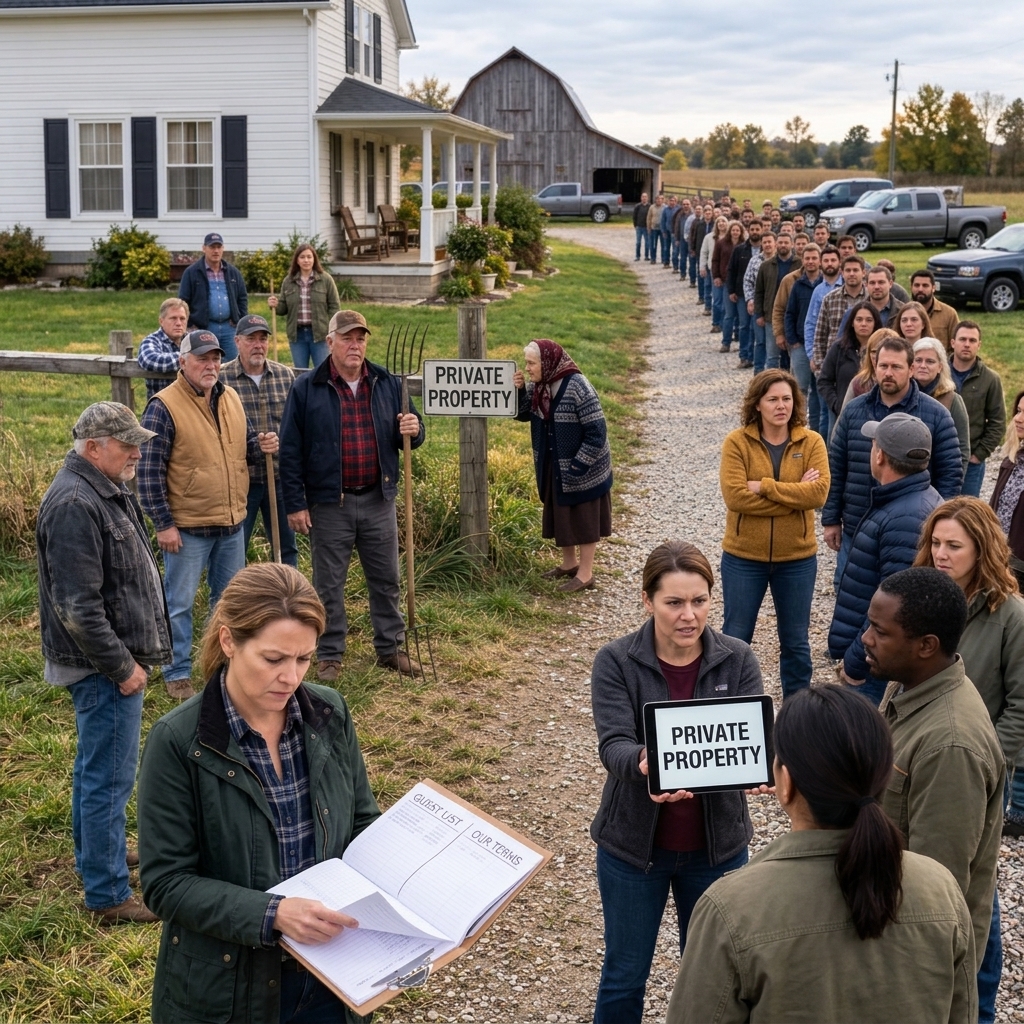
One week later, twelve of them arrived with suitcases, meat, coolers, and weekend plans, certain I would leave the key under the flowerpot again.
But this time, the gate was locked.
My name is Ruth, and for most of my adult life, my family treated my farm like a place that opened whenever they needed it.
Not a home.
Not my work.
Just the family farm.
To me, it was the place my late husband and I had built one difficult season at a time.
A white porch swing.
A gravel driveway.
A red barn.
A kitchen window overlooking the pasture.
It was peaceful.
It was hard work.
And it was mine.
But every summer, holiday, or long weekend, my phone would start buzzing.
“Mom, can we come out?”
“Do you still have the big cooler?”
“Can you make potato salad?”
“Leave the key under the flowerpot.”
And for years, I did exactly that.
I washed sheets.
Filled the refrigerator.
Cooked breakfast.
Mopped muddy floors.
Picked up garbage after everyone drove away.
They called the farm “our little escape.”
I was the one left cleaning up after their escape was over.
Then my son Daniel removed me from the family group chat.
I only found out because my niece casually mentioned their Labor Day plans, and I realized I hadn’t heard a single thing about them.
I checked my phone.
The chat was gone.
So I called Daniel.
“Did you remove me?”
He paused.
“Mom, it was for working adults.
You don’t understand what we talk about.”
I stood silently in my kitchen.
Working adults.
I thought about the tractor payment.
The leaking roof.
Feed bills.
County paperwork.
The decades I had spent keeping that farm alive while raising the son who apparently thought I no longer understood work.
“I see,” I said.
“Don’t make it dramatic, Mom.
It’s just easier this way.”
Easier.
That had always been their favorite word.
Easier when I hosted.
Easier when I cooked.
Easier when I stayed quiet.
Easier when I left the key outside.
Easier when I never complained.
So this time, I did something different.
I didn’t argue.
I opened the kitchen drawer and pulled out my old black notebook.
They loved making fun of that notebook.
“Mom and her little farm diary.”
“Writing down chicken gossip again?”
“Careful, she’s probably documenting the potato salad.”
I always let them laugh.
Because I wrote everything down.
Who borrowed tools and never returned them.
Who promised to help with repairs and forgot.
Who left garbage behind.
Who invited extra guests without asking.
Who used my freezer, propane, pantry, bedrooms, equipment, and time.
Dates.
Names.
Promises.
Not because I wanted to embarrass anyone.
But because when people depend on your kindness long enough, they eventually start confusing kindness with permission.

The following Friday evening, headlights appeared at the end of the gravel driveway.
One truck.
Then another.
Two SUVs.
Twelve people climbed out carrying suitcases, coolers, groceries, folding chairs, and enough food for an entire weekend.
Daniel walked straight toward the flowerpot.
He lifted it.
Nothing.
He frowned.
Then he noticed the chain stretched across the gate.
Locked.
His wife looked confused.
The kids started asking why they couldn’t go inside.
Someone laughed.
“Maybe she moved the key.”
Daniel pulled out his phone and called me.
I answered from the porch.
“Mom, the gate’s locked.”
“I know.”
“We’re here.”
“I can see that.”
There was a pause.
“Can you open it?”
I looked at twelve people standing outside my property with everything they needed for a weekend they had planned without asking me.
“No.”
Behind him, my sister whispered:
“Is she serious?”
Daniel’s voice tightened.
“Mom, don’t do this in front of everybody.”
For half a second, I almost softened.
Then I remembered the group chat.
The way he had said “working adults.”
The confidence that I would still be useful even after they decided I wasn’t important enough to include.
“There’s a sign,” I said.
They all turned toward the fence.
A white board had been mounted beside the gate.
It read:
Welcome to Ruth’s Farm.
Private property.
No entry without invitation.
No overnight stays without written agreement.
No shared meals, equipment, rooms, or storage unless arranged in advance.
For questions, see the notebook.
Below the sign sat my old black notebook inside a clear plastic box.
Nobody laughed this time.
Daniel stared at it.
“Mom, what is this?”
I stood on the porch with one hand resting on the railing my husband had built thirty years earlier.
“It’s for working adults,” I said.
Daniel’s face changed.
Then someone behind him opened the notebook.
A few pages turned.
Popular Posts
→- 1
- 2
- 3
- 4




Recently Viewed
Stories you read recently will appear here.


