PART 1
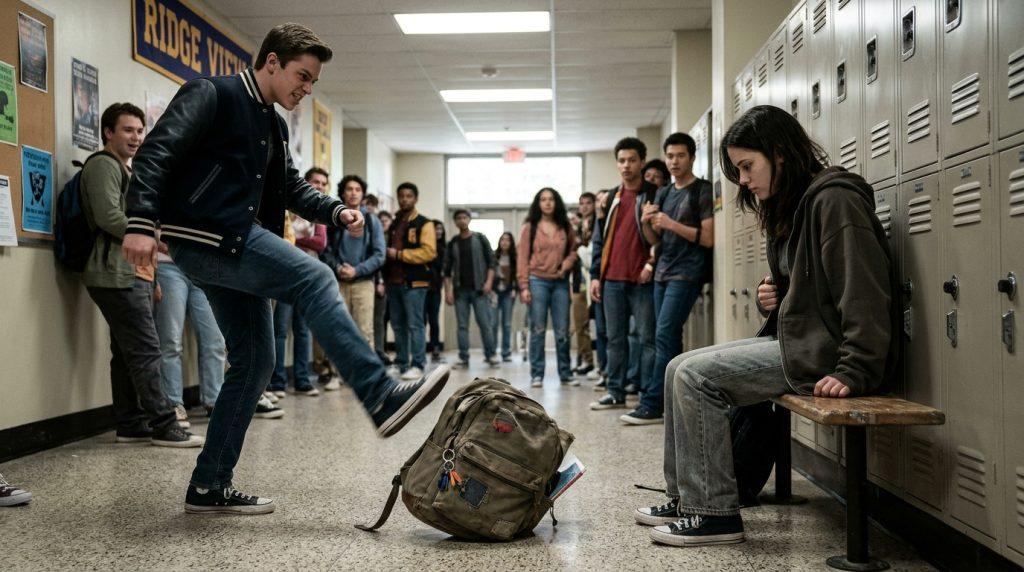
My name is Lucas Miller, and I was the quiet kid at Northwood High who sat in the third row near the windows. I wore secondhand sneakers, kept my backpack close, and rarely volunteered to speak. People like Tyler Brooks had already decided I was an easy target because I didn’t have expensive clothes or exciting stories to tell. Usually I could make it through a school day without giving them another reason to notice me, but Heroes’ Week made staying invisible impossible.
The assignment sounded simple: choose someone you admired and explain why that person was a hero. Other students were bringing firefighter helmets and photographs of relatives who had served in the military. I chose my mother, Rachel Miller, because I knew how hard she worked and how little she asked for in return.
She was a lieutenant colonel in the United States Air Force, and she flew the F-22 Raptor, but at home she was just Mom—the woman who checked my homework after long shifts and remembered to buy my favorite cereal.
The night before my presentation, she stood washing dishes while I struggled over a notebook at the kitchen table. She helped me with a few sentences, then brought me a photograph of herself in a flight suit beside a gray jet on a bright runway. When I asked whether people would believe me, she looked almost surprised. She told me that some people would judge my clothes or my quiet voice, but that I didn’t have to spend my life correcting every assumption. “Just tell the truth,” she said. “That’s enough.”
I believed her right up until I opened my notebook in Mr. Reynolds’s classroom. “My hero is my mom,” I said, trying to keep my voice steady. “Her name is Rachel Miller, and she flies an F-22 fighter jet for the United States Air Force.” The first laugh came from near the windows, then Tyler made an airplane noise, and suddenly the room sounded as if I had told the funniest joke anyone had ever heard.
Mr. Reynolds could have stopped it with one sentence, but he crossed his arms and raised his eyebrows instead. “An F-22 pilot? Your mother?” he asked, and when I answered yes, his smile made the class laugh even harder. He said we needed to stick to stories people could actually believe, then reminded me that not everybody needed an extraordinary job to be worthy of respect.
I would have agreed with that last part under different circumstances, but he wasn’t defending ordinary workers—he was accusing me of inventing my own mother.
I unfolded the photograph and offered to show him, but he dismissed it without taking a proper look. Tyler whispered that his father was Batman, and someone else asked if my mother parked her fighter jet outside Walmart. My face burned, yet I kept remembering what Mom had told me when kids mocked my shoes: people who humiliate others often feel small themselves. I said, “I’m not making it up,” but Mr. Reynolds told me not to argue and sent me back to my seat before I’d finished a single paragraph.
I walked past the laughing desks with the picture folded in my hand.
What hurt most wasn’t that my classmates knew nothing about my mother; they had never met her, and I didn’t expect them to understand her work. It was that an adult who was supposed to listen had decided my story wasn’t worth hearing. By lunchtime, the jokes had traveled through the hallways, and students who didn’t even know my name were calling me “Top Gun.”
I couldn’t finish my lunch, and when Mom texted to ask how my presentation went, I almost wrote that everything was fine. Instead, I typed, “Not great. I’ll tell you later,” because lying to her felt worse than telling her I’d been laughed at. She answered that she was proud of me for doing the presentation and that we’d talk that night. I read those words more than once, wondering how I could tell her that a whole classroom had treated her life’s work like a fantasy.
That afternoon, our school held its Heroes’ Week assembly, and nearly a thousand students crowded into the auditorium. Firefighters, police officers, and retired service members sat in reserved seats while teachers lined the walls. The most important guest was Admiral William Carter, a silver-haired Navy officer who didn’t need to raise his voice to make people pay attention. I sat halfway down the freshman section with my notebook on my knees, hoping the assembly would end before anyone remembered my presentation.
Popular Posts
→- 1
- 2
- 3
- 4




Recently Viewed
Stories you read recently will appear here.