At My Stepsister’s Luxury Wedding, She Publicly Humiliated Me Before Hundreds—Until One Unexpected Truth Changed Everything
My stepsister slapped me in the middle of her wedding reception and told me I didn’t belong there. A second later, her groom said my full name, and the entire ballroom …
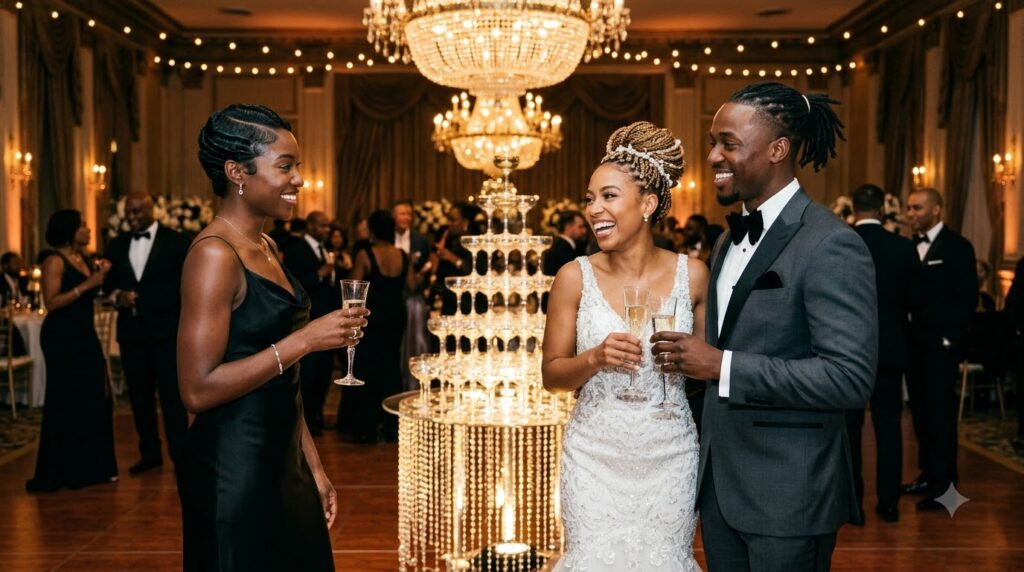
By the time my stepsister slapped me in front of five hundred wedding guests, I had already spent an hour standing at the edge of a ballroom where the same family that …The slap landed so hard it turned my face toward the champagne tower.
For a brief second all I saw was light—gold light from the chandeliers, silver light from the mirrored wall behind the bar, the glitter of five hundred glasses raised in celebration. My cheek burned. The skin just below my eye throbbed in a hot, immediate pulse. Somewhere a woman gasped. Somewhere else someone laughed.
Then the laughter spread.
Not everyone laughed. That would be too easy, too cartoonishly cruel. But enough people did. Enough people smiled behind their drinks or leaned toward one another with delighted, hungry expressions, the kind guests wear when a wedding suddenly turns into better entertainment than the band. The hall, which a moment earlier had been full of music and candlelight and polished speeches and expensive perfume, sharpened into something mean.
My stepsister stood in front of me with her hand still half raised, as if even she was startled by how good it had felt to humiliate me in public.
“You don’t belong here,” she said.
Her voice carried.
It always had.
Some people are born with soft voices and some cultivate them because softness makes other people come closer. Bianca had never needed either. She had a voice designed for rooms to rearrange themselves around it. At thirteen, she could cry on command. At seventeen, she could make adults believe nearly anything if she widened her eyes at the right moment. At thirty, standing in a gown that probably cost more than my first apartment’s annual rent, she still had the same gift she’d had all her life: the ability to turn her own ugliness into someone else’s shame.
I did not touch my face.
I did not step back.
I did not say a word.
That was the part she hated most.
If I had shouted, she would have known the script. If I had cried, she would have won in a way she understood. But silence has a way of exposing the naked shape of a thing, and Bianca had always despised being seen clearly.
Around us, the ballroom had begun to slow. Conversations stumbled. Heads turned. The string quartet at the far side of the room faltered into an awkward half-finished phrase and then stopped entirely. Somewhere near the dance floor, a waiter lowered a tray because even hired staff know when they are suddenly standing inside a story they’ll tell later.
Bianca took one more step closer.
Her veil trembled slightly behind her shoulders. Diamonds flashed at her ears. Her makeup was immaculate, but there was color rising too fast under her foundation now, anger fighting with champagne and panic.
“Look at you,” she said, louder this time. “You really thought you could stand here with people like us?”
The words triggered another ripple of amusement from the guests nearest us.
People always laugh too easily when they think someone has already been judged for them.
I stood there with my glass of water still in one hand, untouched and sweating against my palm, and I thought, not for the first time in my life, that cruelty becomes much easier for a room when it is performed by the bride.
Then a man’s voice cut through the laughter like a blade.
“Do you even know who she is?”
Everything stopped.
Not gradually. Instantly.
The question didn’t just silence the room. It changed it.
Bianca’s face moved first, irritation twisting into confusion as she turned toward the sound. I turned more slowly, already knowing that whatever happened next would divide the night cleanly into before and after.
Julian Mercer—her fiancé, or perhaps no longer her fiancé even then—was standing three steps behind her.
He had one hand braced against the back of a gilt dining chair and the other still half-curled at his side as if he had moved without fully deciding to. He looked nothing like the smiling groom from an hour earlier, the man who had thanked guests, hugged elderly relatives, kissed Bianca’s cheek under a thousand camera flashes, and played the role everyone expected from him so well that I had almost felt sorry for him.
Now he looked stunned.
Not embarrassed. Not merely angry.
Stunned.
And his eyes were on me.
Not on Bianca. Not on the guests. On me.
Popular Posts
→- 1
- 2
- 3
- 4




Recently Viewed
Stories you read recently will appear here.


