On A Mission In The Middle East, The Hospital Called, “Your Daughter Is Critical.” A Nurse Whispered, “Your Ex’s New Wife Hurt Her… The Detective Won’t Act. Her Brother Is The Police Chief.” They Didn’t Know Who I Was. The Next Morning, Military Personnel Were At Their Door.
At 2:07 a.m., thousands of miles from home, a terrified nurse told me my seven-year-old daughter was in critical care and that someone was trying to erase the evidence before morning. My ex-husband believed my deployment had made me powerless, and his new wife’s family controlled nearly every badge in their small Ohio town. What they did not understand was that I had spent sixteen years learning exactly what to do when people underestimated how far I would go to protect someone under my command—especially my child.
### Part 1
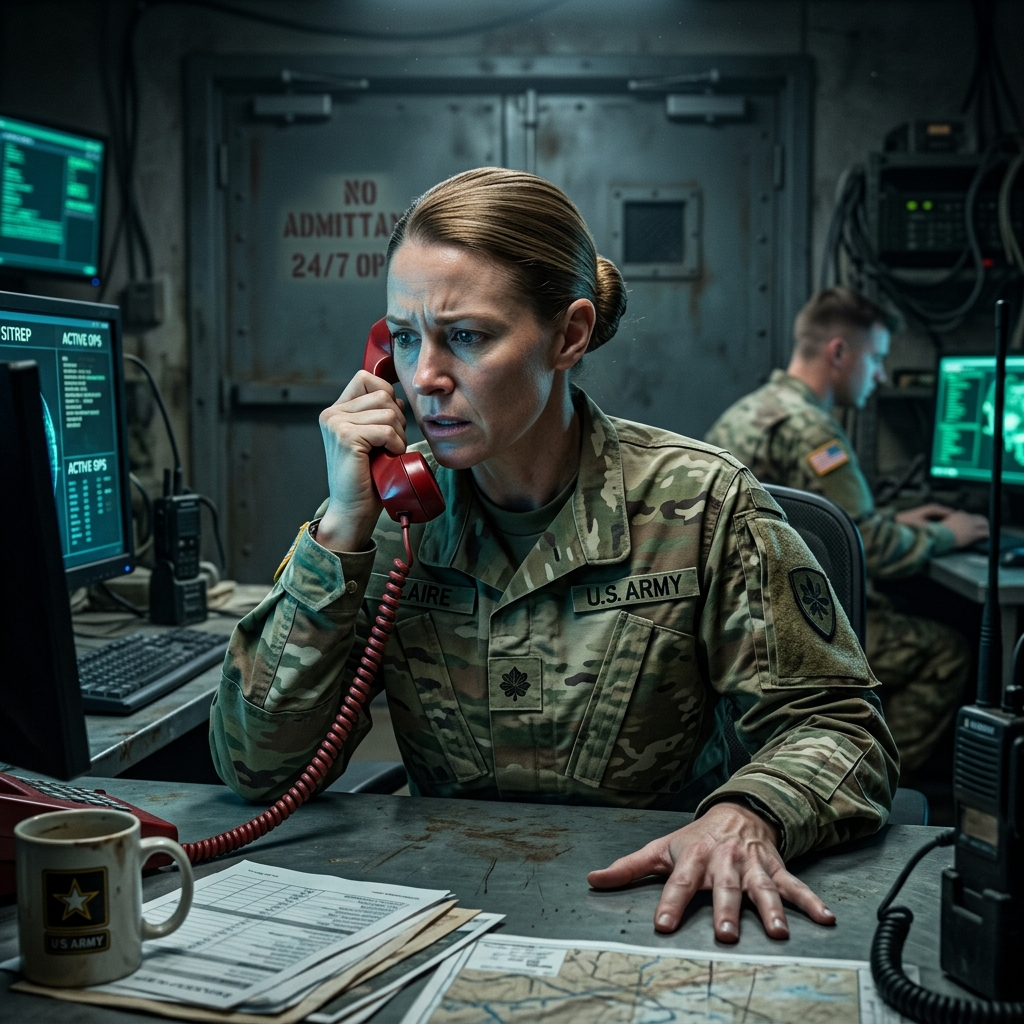
At 2:07 in the morning, the tactical operations center smelled like burned coffee, hot electronics, and the dust that found its way into everything no matter how often we cleaned. I was halfway through reviewing an overnight logistics report when the red communications handset on the corner of my desk flashed, a line normally reserved for urgent command traffic. I picked it up expecting a transportation problem, a casualty notification, or something requiring my signature before sunrise, but instead I heard a woman inhale sharply and whisper, “Major Donovan, please don’t hang up.”
My name is Claire Donovan, and at the time I was a major in the United States Army, forty-one years old and eight months into an overseas deployment I had spent years preparing to handle. I was responsible for people, equipment, schedules, and decisions that could not be postponed because I was tired, frightened, or homesick. But when the woman identified herself as Hannah Price, a pediatric nurse at Ashford County Medical Center in Ohio, every piece of military discipline I had built inside myself suddenly had to hold up something much heavier than war.
“Your daughter Sophie was brought into our emergency department two hours ago,” Hannah said. “She’s stable right now, but she has injuries that do not match the explanation we were given.”
The room around me seemed to lose depth. The monitors still glowed green and blue, the ventilation system still rattled above the ceiling tiles, and somewhere behind me a sergeant quietly asked for updated fuel numbers, but all I could hear was the word daughter. I pressed my palm against the steel desk and asked the question every parent asks even when they already know they are not ready for the answer. “Who brought her in?”
“Her stepmother.”
Tessa Whitmore.
Even hearing the name in my head tightened something behind my ribs. Tessa had married my ex-husband, Mark, less than four months after our divorce became final, and from the beginning she had treated Sophie less like a child and more like evidence of a previous life she wanted erased. I had disliked her, distrusted her, and argued repeatedly with Mark about the way she spoke to Sophie, but until that night I had never allowed myself to believe the thing my instincts had been warning me about.
Hannah lowered her voice further. “She told us Sophie fell on the stairs. One of our physicians documented concerns immediately, but a detective arrived before we could make the normal outside referral. He spoke privately with Mrs. Whitmore, then instructed staff to correct portions of the intake record.”
“Correct?”
“Delete.”
A chill moved through me that had nothing to do with the aggressive air conditioning. “Why would a detective do that?”
There was a pause long enough for me to hear Hannah breathing. “Because the police chief is Tessa’s brother.”
I closed my eyes.
Chief Caleb Mercer had shaken my hand once at a county fundraiser while Mark stood beside me bragging about my Army career to people he wanted to impress. Caleb had been charming, polished, and almost aggressively friendly, one of those men who made sure everyone knew how many doors opened when he walked into a room. At the time I had dismissed him as another small-town politician wearing a badge; now, with a nurse risking her job to reach me through an emergency contact buried in my military records, that memory felt different.
“Hannah,” I said carefully, “I need you to tell me exactly what you saw.”
She did not describe anything graphically, and I was grateful for that later. She told me enough: older bruising beneath newer injuries, a frightened reaction when Tessa approached the bedside, inconsistencies in the timeline, and Sophie asking twice whether “Daddy would be mad” if she told the truth. Hannah also told me Mark had arrived shortly after midnight and was already demanding discharge paperwork despite the pediatric physician’s objections.
My hand tightened around the handset. “Put the doctor on.”
“I can’t. Chief Mercer is standing outside the unit.”
That sentence changed everything.
Popular Posts
→- 1
- 2
- 3
- 4




Recently Viewed
Stories you read recently will appear here.


