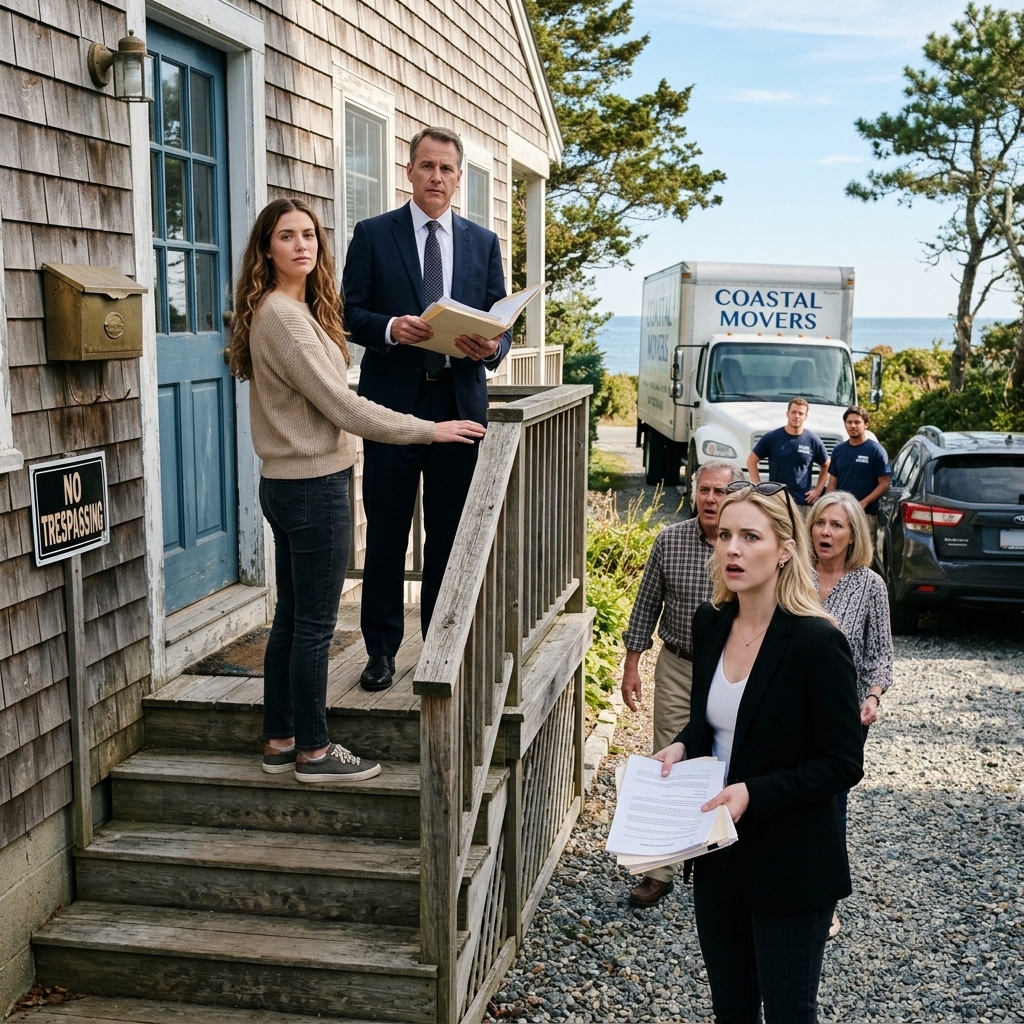
Two Days After My Family Smiled and Told Me My Grandfather’s House Was Now My Sister’s, They Returned With Movers to Put Me Out—But the Moment They Saw the Man Beside Me Holding a Legal Folder, Every Confident Smile on That Driveway Disappeared
The moment my parents smiled and told me to leave my grandfather’s house, I knew the conversation had never been about what was fair. It was about timing, confidence, and the fact that they believed I would do what I had always done: step aside before anyone had to push.
I had graduated less than a week earlier. My diploma was still propped against a framed photograph on the dining room sideboard, the embossed seal catching sunlight from the bay window, when my younger sister, Emily, walked into Grandpa George’s living room with a slim stack of papers in her hand. She wore cream slacks, a blue blouse, and the easy expression of someone who had arrived to announce a decision rather than discuss one.
Mom stood near the fireplace. Dad stayed beside the doorway with his arms folded.
Emily smiled at me.
“The house is in my name now. You should start packing.”
For a second, I thought I had misheard her. Not because the words were complicated, but because of how lightly she said them. There was no hesitation, no embarrassment, no acknowledgment that she was standing in the home where I had spent years helping our grandfather through the slow narrowing of his life.
Mom stepped in immediately, softening her voice.
“Harper, sweetheart, this isn’t personal. We’ve talked it through, and this simply makes the most sense for the family.”
Dad nodded.
“You have your own career ahead of you. You’ll be in the city most of the time anyway. Emily is in a better position to manage a property like this.”
I looked past them at the living room I knew better than any room from my childhood home. The cedar mantel Grandpa had sanded by hand. The old brass clock that ran three minutes slow. The faint dent in the floor where he had once dropped a toolbox and refused to replace the board because, as he put it, “A house ought to remember who lived in it.”
I had been managing the property for months.
After Grandpa died, I handled the electric bill, the insurance, the property tax notices, the plumber who came out in January, the roofer who patched a leak above the guest room, and the landscaper who kept the back slope from turning wild. Before he died, I had driven him to appointments, sorted his prescriptions into labeled boxes, picked up groceries, and sat at his kitchen table while he complained that every company in America had decided passwords should be impossible for old men.
Emily came for holidays.
My parents came when there was paperwork to discuss or when Grandpa specifically asked.
Yet somehow, in the version of the story now standing in front of me, I was the one who could not manage the place.
Emily tapped the papers against her palm.
“You’ll need to be out by tonight.”
That was the sentence that clarified everything.
Not next week. Not after we sit down with an attorney. Not once we verify the records.
Tonight.
They had arrived expecting immediate obedience.
I studied their faces. Mom’s expression was sympathetic in the polished way she used when she wanted something unpleasant to sound reasonable. Dad looked stern but satisfied, as if the difficult part was simply getting me to understand reality. Emily watched me most closely.
She was waiting for tears, confusion, an argument she could call dramatic.
Instead, I said, “Okay.”
All three of them relaxed.
Emily’s shoulders dropped first. Mom exhaled. Dad uncrossed his arms.
“Good,” Mom said quickly. “I knew you’d understand.”
That reaction told me more than the papers ever could. They had not come prepared for a real dispute. They had come prepared for the old Harper.
The old Harper had been trained carefully.
In our family, no one ever announced that Emily mattered more. There was no formal rule, no cruel declaration, nothing dramatic enough to point to later and say, There. That was the moment everything became unequal.
It happened in smaller ways.
If Emily was disappointed, the house adjusted around her. Dinner plans changed. Weekend schedules changed. Money appeared. Conversations became urgent.
If I was disappointed, Mom would squeeze my shoulder and say, “Harper, you’re mature. You understand.”
Dad preferred another version.
“You’re independent. You don’t need as much.”
For years, I took those lines as compliments.
I was dependable. I was sensible. I was the daughter who could handle things.
What I did not understand until much later was that praise can become a convenient way to deny someone care. If you tell one child she is strong often enough, eventually everyone starts treating her needs like optional expenses.
So I learned to need less.
Popular Posts
→- 1
- 2
- 3
- 4




Recently Viewed
Stories you read recently will appear here.


