The moment Harlan Fletcher finished reading my name aloud at that all-hands meeting, I understood with complete clarity that the last six years of my life had been invested in an enterprise that did not honor its word. I am Roland Vance. I am fifty-one years old, and for six years I served as the Senior Director of Logistics and Procurement for Rainier Building Supplies, one of the premier commercial building materials distributors in the Pacific Northwest.
Our facility in south Seattle oversaw freight lanes reaching through Tacoma, Olympia, and the Puget Sound corridor, extending across the Cascade passes into Spokane. When I took the helm at Rainier, the Northwest division was hemorrhaging nearly four million dollars annually from bottlenecks, vendor penalties, and erratic freight routing. I spent my first two years on warehouse floors and in regional mill offices across Washington and Oregon. By my fourth year, operating margins had climbed eleven percentage points. By my sixth year, we had secured three master supply agreements, turning the division into a seventy-five-million-dollar annual revenue engine.
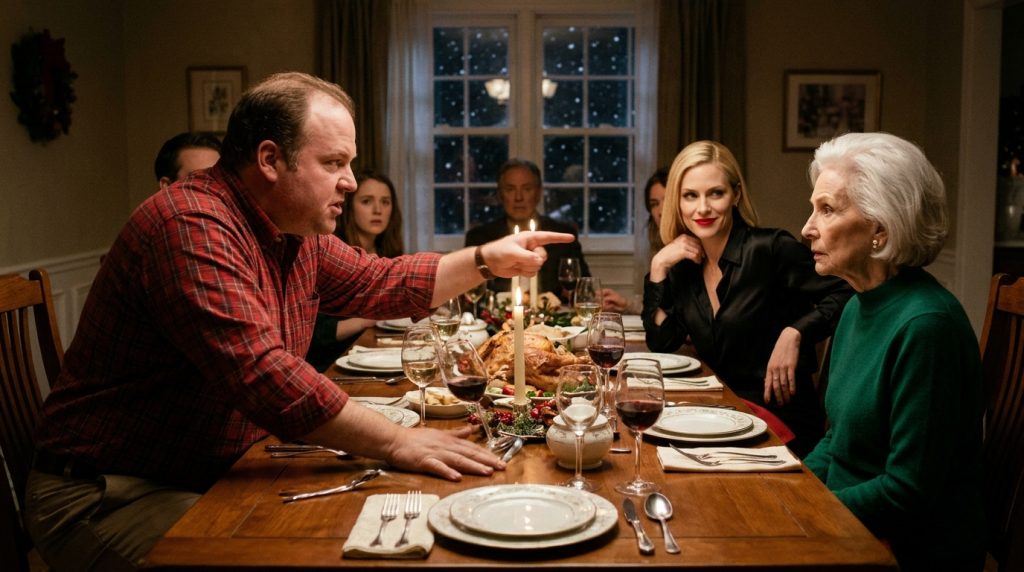
Yet on that damp Thursday morning in mid-September, forty-one colleagues sat across our primary conference room while Harlan Fletcher stood at the podium in a navy blazer, adjusted his cuff links, and announced that his twenty-five-year-old daughter, Chloe Fletcher, would be stepping into the newly created role of Executive Director of Northwest Operations.
Harlan was sixty-one years old. He had occupied the general manager’s chair for twelve years, an appointment secured through the influence of his late brother-in-law on the parent board at Crestview Industrial Holdings in Chicago. Harlan thrived on banquets, golf outings, and expensive dinners charged to company accounts. He possessed an easy charm but understood nothing about freight tariffs, inventory velocity, or the coordination necessary to keep thirty tractor-trailers moving across five terminals every morning.
Chloe had completed a communications degree four months earlier, followed by summer travel in Europe. She had arrived eleven weeks prior, observing occasional sales presentations and carrying a leather planner she had never opened in any meeting. The applause filling the room was the muted, dutiful sound common when employees recognize an injustice they lack the power to challenge. It was polite and hollow. I sat in the second row, joining the applause with measured claps, my face impassive and my breathing steady.
“And naturally,” Harlan continued, turning toward me with an expansive smile, “Roland has been an indispensable pillar of our regional achievements. Roland will continue in his vital role as senior operational advisor, providing Chloe with tactical grounding as she guides the division through its broader strategic layer.”
The strategic layer. That was the phrase he selected to justify elevating a twenty-five-year-old who could not identify the difference between western hemlock and an engineered beam over a man who had dedicated six years of seventy-hour workweeks to saving the company. Every winter emergency call at four in the morning and every hazardous freight rerouting across Snoqualmie Pass was erased under the label of advisory support.
“Looking forward to supporting the division, Harlan,” I said evenly. His smile broadened, satisfied that his veteran manager had submitted without resistance. The meeting dispersed. I walked back to my desk in the operations bullpen, looking at the telematics dashboard tracking our freight convoys along Interstate 5, but my mind was focused on what lay ahead.
Three weeks before that meeting, I had overheard a conversation that altered everything. Working late to finish the inventory reconciliation, I found the executive corridor deserted, but Harlan’s door was cracked open. The voice emerging from his speakerphone belonged to Stuart Pennington, Senior Vice President of Operations at Crestview Industrial Holdings in Chicago.
“Harlan, corporate is questioning this restructuring,” Stuart had said. “Roland Vance has run logistics and procurement with flawless metrics for six years. Your margin recovery is entirely tied to his management. You explicitly assured this office that Vance was being prepped for the regional directorship.”
Harlan’s response had been an easy chuckle. “Stuart, Roland is precisely where we need him to remain. But Roland is fifty-one years old. He went through a divorce four years ago. His son is midway through college, and he carries a sizable mortgage in Bellevue. He is not going to walk away from a stable salary at this stage of life. Men like Roland settle. Fear keeps them reliable. He will do the heavy lifting, Chloe will hold the title, and the division will stay on schedule.”
Standing in the dim hallway, I felt no panic. What settled over me was icy lucidity. Harlan believed my dedication was born of vulnerability, convincing himself that my loyalty was merely the submission of an older worker trapped by financial responsibilities. He had miscalculated the character of the man outside his door.
Popular Posts
→- 1
- 2
- 3
- 4




Recently Viewed
Stories you read recently will appear here.