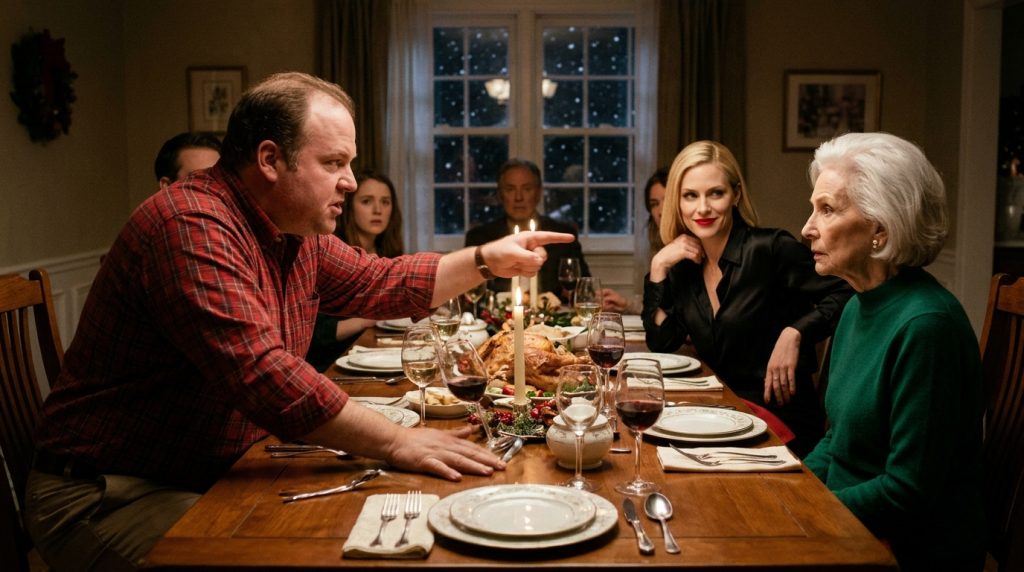
I removed two envelopes from my briefcase and set them on the table. One contained formal notice that all future contact had to go through Rachel. The other confirmed that I had removed my parents and Grant from every emergency contact, beneficiary, and family access document under my control.
Dad stared at the envelopes.
“What is this?”
“The end of your ability to enter my life whenever you need something.”
Mom whispered, “You don’t mean forever.”
“I do.”
“You’ll regret this when we’re gone.”
“Maybe,” I said. “But regret is not a reason to continue accepting abuse.”
Grant lowered his head.
For the first time, he looked less like the golden boy and more like an ordinary middle-aged man who had spent his entire life expecting someone else to catch him.
I felt no triumph.
Only distance.
Michael and I stood.
Vanessa began sobbing.
Grant called my name.
Mom said, “Please don’t walk away from your family.”
I paused at the door and looked back once.
“My family is waiting at home.”
Then I left.
Outside, the night air was cold and smelled faintly of rain. Michael placed his hand against my back as we crossed the sidewalk.
Behind us, the restaurant door remained closed.
I never opened it again.
### Part 8
Grant and Vanessa lost the mansion two months later.
They moved into a small apartment near an industrial district on the edge of town. The building was clean but old, with flickering hallway lights and a laundry room in the basement.
For them, it felt like disaster.
For millions of ordinary families, it would have been a home.
Grant eventually found clerical work for a shipping company. He was forbidden from handling financial accounts, and most of his wages went toward legal fees and restitution.
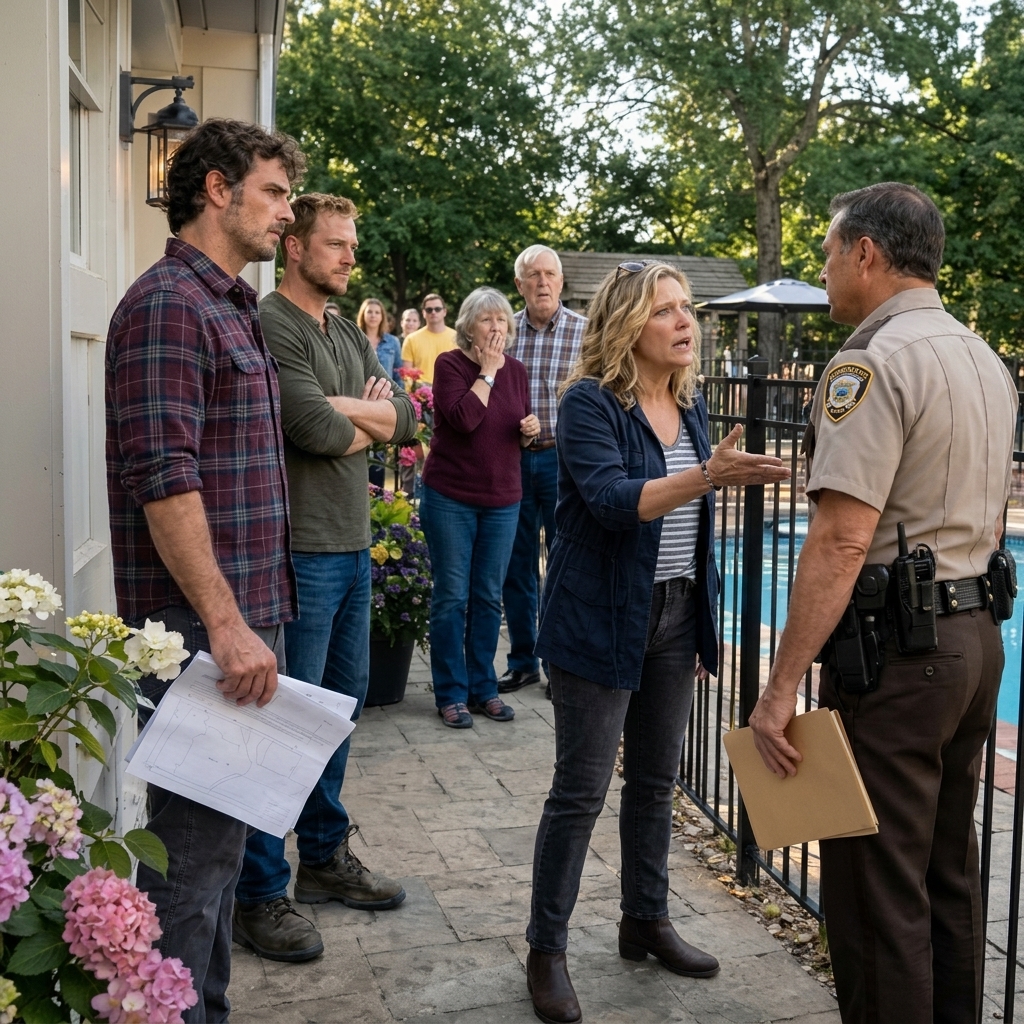
Vanessa sold her handbags, jewelry, and remaining designer clothes through consignment stores. The criminal charge from the barbecue ended with probation, required counseling, and a permanent no-contact order involving me and my immediate family.
My parents never apologized.
Mom sent birthday cards to the girls for the first year, but each one contained a message about forgiveness. I returned them unopened.
Dad mailed a letter accusing me of destroying his final years.
I gave it to Rachel.
Cutting them off did not make me happy.
It made me free.
There was grief in that freedom. Some nights, I remembered the mother I had wanted rather than the woman she was. I remembered waiting beside the window on my birthdays, hoping Dad would arrive with a surprise he had somehow kept hidden.
He never did.
Accepting that truth hurt, but it hurt cleanly. It was no longer mixed with hope.
The girls changed too.
Lily stopped asking whether she was “really ours.” Maya began using our family as subjects in her art. She drew Michael bent over blueprints, Lily asleep beneath the living room window, and me standing at the edge of the ocean in uniform.
One afternoon, nearly six months after the barbecue, a plain white envelope arrived without a return address.
It was addressed to Maya and Lily.
I opened it first because of the no-contact order.
The letter came from Connor.
His handwriting leaned unevenly across two sheets of notebook paper. He wrote that he was ashamed of what he had said beside the pool. He admitted he had heard his mother use those words for years and repeated them because he wanted his older brothers to laugh.
He did not excuse himself.
He did not ask for money.
He did not ask us to help his parents.
He wrote, “I know saying sorry doesn’t undo it. I just need Maya and Lily to know there was never anything wrong with them. There was something wrong with what I was taught.”
I read the letter twice.
Then I called Maya downstairs.
She read it silently at the kitchen table. Lily sat beside her, swinging her legs beneath the chair.
“Do I have to forgive him?” Maya asked.
“No.”
“Can I forgive him without trusting him?”
“Yes.”
She looked at me.
“Is that what you did with Grandma?”
“No.”
“Why not?”
“Because forgiveness isn’t something people are owed. It’s something you choose when it helps you heal. I healed by walking away.”
Maya nodded.
She wrote Connor a short reply.
“I accept your apology. Please become better than what you heard.”
Nothing more.
It was enough.
That winter, snow covered the backyard and gathered along the cedar railing Michael had built. The fireplace snapped softly while Maya sketched on the rug.
Michael sat in his chair reading a book about sustainable architecture. I rested on the sofa with a blanket over my legs.
Lily climbed beside me and tucked her head beneath my chin.
Popular Posts
→- 1
- 2
- 3
- 4




Recently Viewed
Stories you read recently will appear here.