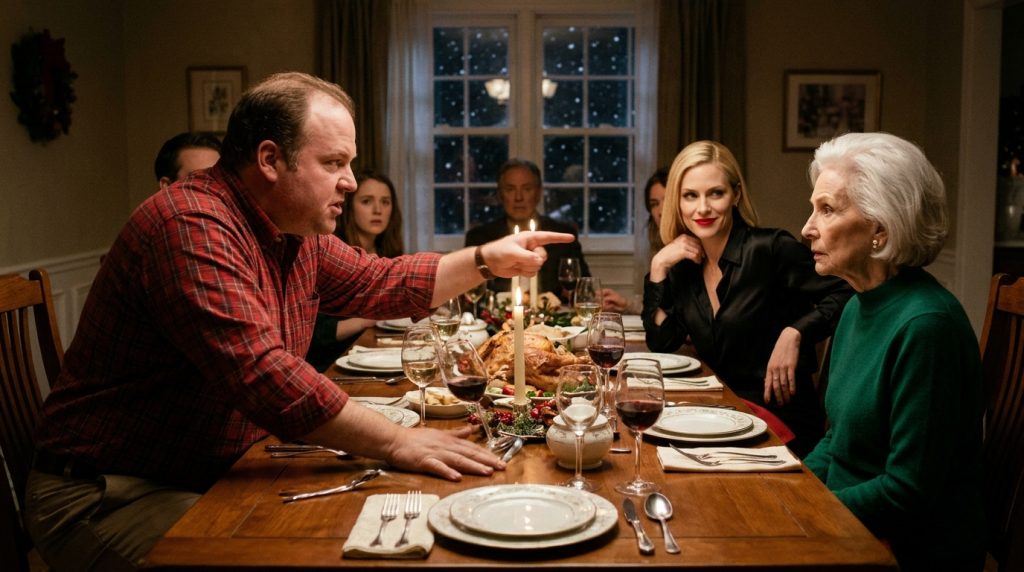
“Why did you put me downstairs?”
“We needed the space.”
“For what?”
She finally told me.
Vanessa and Richard had planned to use my third suite as an extra private room attached to theirs whenever the children wanted friends over or they wanted space from the kids.
My room was the easiest one to sacrifice.
“You assumed I wouldn’t complain.”
She said nothing.
“You assumed because I’m retired, my comfort mattered less.”
Still nothing.
Then I asked something harder.
“Or did you assume I would keep paying because you knew I wouldn’t risk ruining the children’s vacation?”
Her eyes dropped.
There it was.
Not evil.
Not some grand conspiracy.
Something more ordinary.
She had counted on my love.
That hurt worse.
Vanessa threatened to leave.
“Fine. We’ll take the kids somewhere else.”
My stomach tightened.
The grandchildren had done nothing wrong.
For one terrible second, the old pattern almost returned.
Apologize.
Pay.
Make peace.
I had done that for years.
Then I heard Caroline’s voice in my memory from decades earlier, when I was teaching her how to handle unreasonable guests.
Fix the problem you actually have. Don’t create three new ones because you’re afraid of discomfort.
So I said:
“If you want to leave, that’s your choice.”
Vanessa stared at me.
“But don’t use the children to negotiate access to my money.”
She went completely silent.
Richard spoke first.
“We’re staying.”
Vanessa turned toward him.
He looked exhausted.
“And we’re paying for our own extras.”
That afternoon was unpleasant.
Dinner was worse.
Nobody spoke much.
The grandchildren sensed something had happened but did not understand it.
I refused to explain adult conflict to children.
Instead, I asked them about snorkeling.
The next morning, my granddaughter knocked on my door.
When I opened it, she looked past me toward the balcony.
“Grandma, you got the ocean room!”
“I did.”
“Mom said there was a mix-up.”
“That sounds about right.”
She walked outside.
Then asked, “Did you really used to run hotels?”
I smiled.
“A few.”
“How many?”
“Enough to know you should never trust a minibar.”
She laughed.
We sat on the balcony for nearly an hour.
She asked about my career.
Nobody in the family had asked me those questions in years.
I told her about disasters.
Celebrity guests.
Weddings.
Power failures.
The time an entire convention arrived one day earlier than the organizer had booked.
She listened like the stories mattered.
Vanessa appeared in the doorway halfway through.
She didn’t interrupt.
That afternoon, Caroline completed the audit.
Some of the $3,200 consisted of spa reservations and dining packages scheduled for later in the week.
They were canceled before posting.
A smaller amount had already been charged legitimately under the original reservation terms.
I paid what I had actually agreed to pay.
Nothing more.
Caroline offered to comp several services because of the resort’s failure to verify the room change with me.
I declined most of them.
“I didn’t come here for free things.”
She smiled.
“You haven’t changed.”
“I hope I have a little.”
The trip improved slowly.
Not dramatically.
Vanessa remained cool for two days.
Richard paid restaurant checks with less enthusiasm than usual.
The children swam, snorkeled, ate too much dessert, and had the vacation I had wanted them to have.
On the fifth evening, Vanessa knocked on my door alone.
“Can I come in?”
“Yes.”
She walked to the balcony.
For a while neither of us spoke.
Then she said:
“I was embarrassed.”
“I know.”
“Not at lunch.”
I waited.
“When you retired.”
That surprised me.
She explained that for years, she had introduced me as her mother who ran hotels.
Her successful mother.
Her busy mother.
Her important mother.
When I retired, she had somehow started treating that part of my life as though it had ended rather than been completed.
“I think I started seeing you as someone who had less going on than us.”
“That was obvious.”
She winced.
“I know.”
Then she said the sentence I needed.
“What I did with the room was awful.”
No excuse afterward.
No “but.”
Just the sentence.
I nodded.
“Yes.”
She began crying.
I did not immediately hug her.
That may sound cold.
It wasn’t.
I wanted her apology to remain about what she had done, not about how quickly I could make her feel forgiven.
After a while, I took her hand.
“I love you.”
“I know.”
“That does not mean you can treat me as less important because I’m no longer earning a paycheck.”
“I know.”
“And paying for something does not make me responsible for every luxury you want.”
“I know.”
This time, I believed she might.
Trust did not reset because of one balcony conversation.
For several months after the trip, I changed how I handled money with Vanessa.
I stopped automatically paying when she hinted at something.
If I wanted to give, I gave.
If I didn’t, I didn’t explain myself.
Something interesting happened.
Our conversations improved.
Without money filling every uncomfortable space between us, we actually had to talk.
The following spring, my granddaughter called.
She had a school assignment about careers.
“Grandma, can I interview you?”
“About what?”
“Hotels.”
I laughed.
“I’m retired.”
“I know.”
Then she said:
“That doesn’t mean you stopped knowing things.”
I closed my eyes.
Out of everyone in the family, the thirteen-year-old had understood the lesson most quickly.
She interviewed me for forty-five minutes.
At the end, she asked:
“What was the best hotel room you ever stayed in?”
I thought about Ocean Crest.
The laundry room.
The restored suite.
The balcony.
Then I smiled.
“The best room isn’t always the fanciest one.”
“That sounds like an old-person answer.”
“It probably is.”
She laughed.
Months later, Vanessa invited me to dinner.
When the check arrived, I reached automatically toward my purse.
She put her hand over it.
“No.”
I looked at her.
“I invited you.”
Then she smiled.
“You taught me that matters.”
I let her pay.
Not because the dinner cost anything compared with the $28,000 vacation.
Because respect rarely returns through grand gestures.
Sometimes it returns through a daughter finally understanding that generosity is not permission.
Retirement had not made me less valuable.
Age had not canceled the decades that came before it.
And love had never required me to accept the smallest room simply because everyone assumed I would quietly pay for the largest ones.
Popular Posts
→- 1
- 2
- 3
- 4




Recently Viewed
Stories you read recently will appear here.