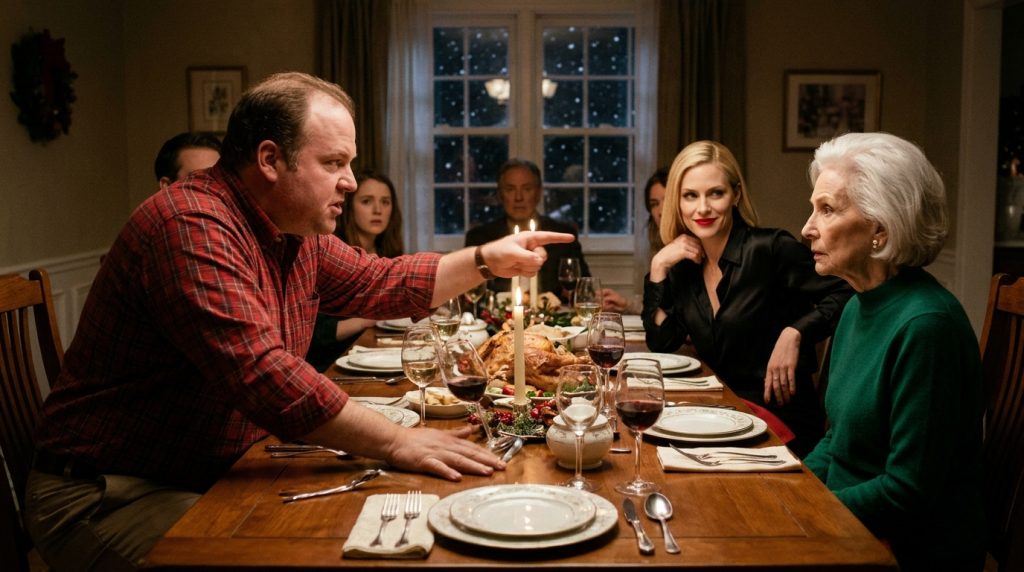
The story was what had been happening behind closed doors.
I had not planned to expose Derek at a party. I had planned to protect myself.
Eight months earlier, a serious car accident had left me using a wheelchair. Recovery was slow. I had to adapt my home, my routines, and my work.
Derek acted supportive at first.
Then he started saying, “Focus on healing. Leave the business to me.”
I was exhausted, so I trusted him.
I didn’t notice employees stopped copying me on certain emails. I didn’t notice invoices being routed differently. I did notice that Derek became protective of his phone.
Then the bank statements arrived.
At first, I thought there had been an accounting mistake.
Then I saw the same company name again and again.
Vanessa’s consulting company.
There were payments for “marketing,” “client relations,” and “events.” Some services might have been real, but the total was nearly $86,000.
Our accountant found invoices with missing records and dates that didn’t match the work claimed.
I asked Derek about it.
He got angry.
“You’re imagining things because you’re frustrated.”
That almost made me stop.
Instead, I hired Sarah.
She reviewed the company’s operating agreement and found that Derek had authority to run daily operations while I recovered, but he did not have authority to change ownership.
Then we found an internal memo telling employees that I had stepped away permanently.
I had never approved it.
A digital archive revealed an email from Derek to Vanessa saying he planned to “clean up the ownership issue before she could interfere.”
I read it three times.
Not because of the money.
Because I finally understood how he saw me.
Not as his wife.
Not as his partner.
As an obstacle.
I decided not to confront him until everything was documented.
That was why I arrived at the party with the folder.
Now Vanessa was staring at Derek.
“You told me the company was practically yours.”
Derek snapped, “I said I was running it.”
“You said she had no say anymore.”
Vanessa looked at me, tears filling her eyes.
“I didn’t know.”
“You knew enough to accept the money,” I said.
I handed her the payment summary.
“Then explain the invoices with no work attached.”
Her face crumpled.
She turned toward Derek.
“You told me everything was clean.”
He said nothing.
“I’m done,” she whispered.
She walked away.
The guests who had laughed at me could barely look in my direction.
One woman apologized.
I accepted it, but I wasn’t interested in their guilt.
Sarah explained that the company would undergo an independent review, Derek would lose financial authority, and the questionable transfers would be addressed properly.
No revenge.
No screaming match.
Just evidence and consequences.
Derek hated that.
“This is my company.”
I looked at him.
“No. It was our company.”
“You were going to let me run it.”
“While I recovered.”
“You trusted me.”
“I did.”
That answer broke his anger.
“You still love me?” he asked quietly.
I looked at my wedding ring.
“I loved the man I thought you were.”
He lowered his eyes.
The next morning, the board reviewed the records.
The company was stable. The suspected transfers were recoverable. There was no reason to sell the business or remove me from ownership.
Derek’s resignation became effective immediately.
The investigation later found that he had knowingly approved several payments to Vanessa that were not supported by actual work. Some money was returned; the rest was handled through legal agreements.
Vanessa was not charged because there wasn’t enough evidence to show she knowingly joined the scheme. She ended the relationship and the consulting arrangement.
Derek kept contacting me.
Finally, I answered once.
“You asked everyone to see me as helpless,” I told him. “Now you’re asking me to trust you again.”
“I made mistakes.”
“You made choices.”
“I’m sorry.”
“I believe you.”
“Can we fix this?”
“I don’t know.”
That was the most honest answer I could give.
Eventually, we divorced quietly.
I moved into an accessible apartment closer to the office, not because I had been forced out, but because I wanted a home built for my life now.
I returned to work part-time, then took back my role in the company.
My wheelchair had never prevented me from understanding contracts, numbers, or people.
I had simply allowed other people to decide what I was capable of.
I stopped doing that.
A year later, I returned to the same venue for a business dinner.
I wore the same cream dress.
One guest recognized me.
“Are you the woman from that party?”
“Yes.”
“What happened?”
I looked around the room.
“People laughed because they thought a wheelchair meant weakness.”
I smiled.
“They were wrong.”
Popular Posts
→- 1
- 2
- 3
- 4




Recently Viewed
Stories you read recently will appear here.