For once, I thought they’d get to be happy for me.
Sunday dinner at my parents house has been the same for 30 years.
Pot roast, mashed potatoes, sweet tea in the pitcher with the chipped lip.
Dad at the head of the table, mom in the chair closest to the kitchen.
On September 29th, 2024, I waited until dad had finished his second plate.
Then I put my fork down and told them.
I told them about the four years, the diagnosis, the money, the date in January.
My father’s eyes filled up before I finished.
He reached across the table, put his big rough hand over mine, and didn’t say anything at all.
Mom got up, came around the table, and hugged me from behind.
She smelled like dish soap and the same perfume she’s worn since I was a kid.
Oh, honey, she said, “Oh, Gina.”
For a moment, it was exactly what I had hoped for.
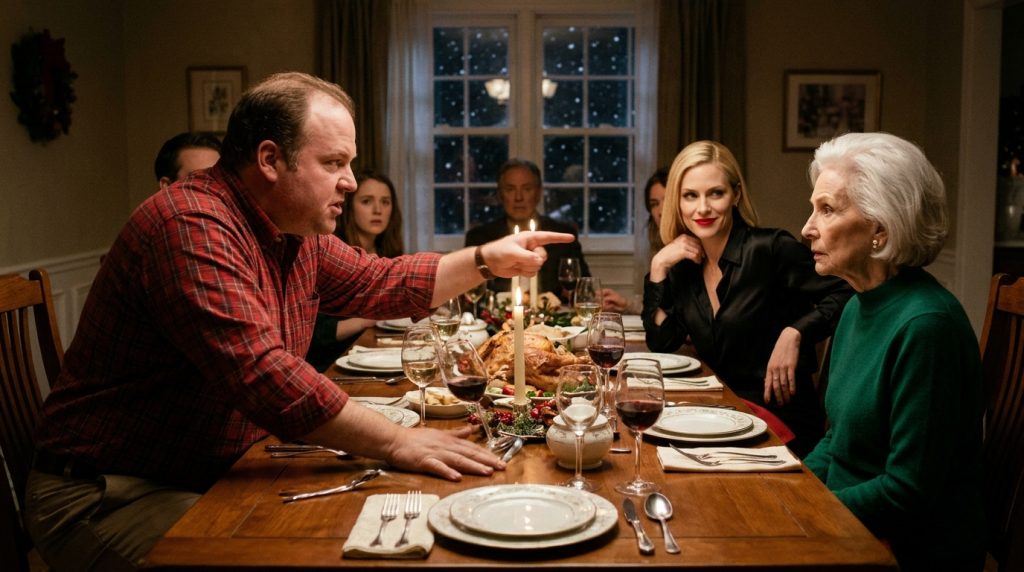
Across the table, Tessa was folding her paper napkin into halves, then quarters, then eighs, a small, tight square.
“Wow,” she said.
“Must be nice to have something everyone cares about.
It landed on the table like a dropped glass.”
“Mom laughed, the quick, bright laugh she uses to sweep things under a rug.”
“Tessa, come on.
I’m kidding.
I’m happy for you, obviously.”
Tessa smiled at me.
I’m just saying.
Must be nice.
Then she asked dad to pass the rolls and the moment was over and everybody went back to eating.
I didn’t think about it much.
Tessa said things like that.
She’d been saying things like that her whole life.
But I wrote the date in my planner that night.
Sunday, September 29th, told mom and dad.
Later, I would count forward from it one square at a time.
9 days later, on a Tuesday night, Tessa asked everyone to come to my parents house.
She didn’t say why.
She just texted the family group chat.
Can everyone come over tonight, please? It’s important.
When Nolan and I got there, she was sitting on the couch with a box of tissues.
Mom was already crying, though she didn’t know why yet.
Dad was standing in the kitchen doorway with his work boots still on.
Tessa said it slowly like she was reading it off a card.
Hodgekin lymphoma, stage three.
She had found a lump in her neck.
There had been a biopsy.
Chemotherapy would start in December at the Cumberland Valley Cancer Institute in Harrisburg.
Mom made a sound I had never heard a human being make.
Dad sat down on the stairs.
He didn’t choose the stairs.
His legs just stopped holding him.
He sat on the third step with his elbows on his knees and his boots flat on the carpet.
And he stared at the floor.
“My girl,” he said.
“My girl,” who couldn’t even get her ears pierced.
Tessa held up her hand.
Please don’t ask me about the medical stuff, okay?
You guys, I can’t.
If I talk about it, it’s real.
So, we didn’t ask.
That’s what you do.
You don’t make the sick person explain.
I sat down beside her and held her hand.
She squeezed back.
Her fingers were cold.
On the drive home, neither Nolan nor I said anything.
Nobody said the letters IVF in that house again for a year and a half.
By the middle of November, everything in my family was organized around Tessa.
She moved back into her old bedroom so mom could take care of her.
A friend from the salon set up an online fundraiser called Tessa Strong.
My mother’s church put her on the prayer list.
And my father, who had never touched his retirement account in 40 years of work, pulled $30,000 out of his 401k.
Then he started talking about selling the truck.
I found him in the garage one evening with his hand flat on the hood just resting there the way you’d rest your hand on a dog.
Fella at the parts store says I could get 15, maybe more.
He said old ones are worth something now.
Dad.
She needs it more than I need a truck, kiddo.
I went home and sat at the kitchen table with Nolan.
I opened the Sage account on my phone and looked at the number for a long time.
I knew what the doctor had said.
Every year matters.
I knew that if I gave this money away, it would take us at least two more years to save it again.
I would be 37, maybe 38.
I also knew what that truck meant to my father.
Nolan didn’t tell me what to do.
He never does.
It’s your call, he said.
It’s always been your call.