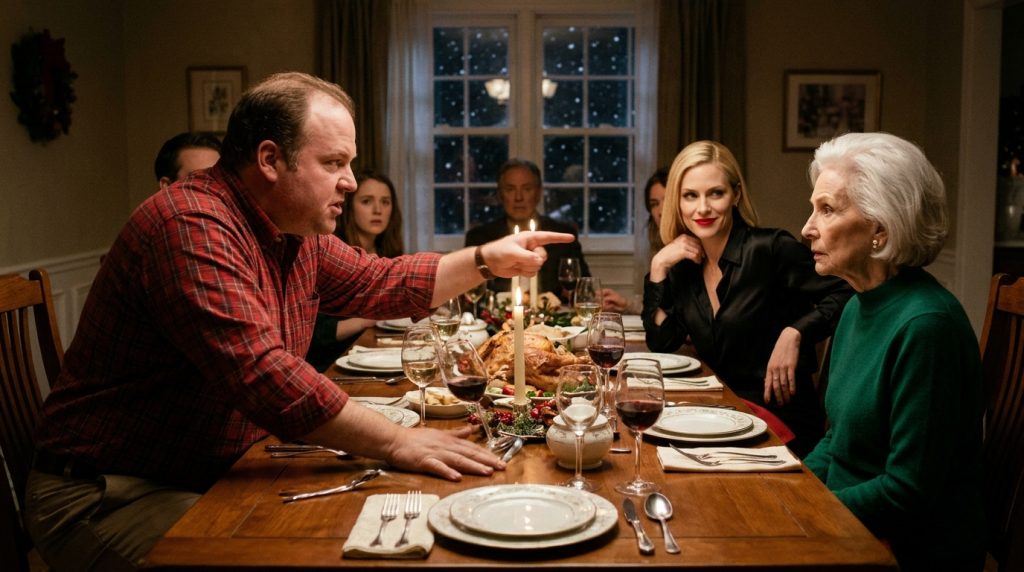
“I didn’t think of it like that.”
“I think you did.”
She didn’t answer.
“You sent me houses with rooms labeled for yourself.”
“I know.”
“You checked school districts.”
“Yes.”
“You planned where your children would sleep.”
“Yes.”
“You told me I had money ‘just sitting around.’”
She covered her face.
“Yes.”
“Why?”
She dropped her hands.
“Because I was scared.”
I waited.
“Our rent was ending. Mason had already been warned at work. Your parents were panicking. I had three kids and no job and debt everywhere.”
“And somehow that became my obligation.”
“I thought family meant people with more helped people with less.”
“That can be true.”
She looked up hopefully.
I finished.
“When the people with less are also doing everything they can.”
Her expression fell.
“You weren’t.”
“No.”
“You weren’t working. Mason couldn’t keep a job. You spent money you didn’t have.”
“I know.”
“You expected me to sacrifice the life I built so none of you had to change.”
She cried harder.
“I know.”
That was enough.
Not forgiveness.
Not healing.
But truth.
I stood.
Everyone watched me.
“I’m willing to help the children.”
Mom’s shoulders sagged with relief.
I raised a hand.
“Don’t celebrate yet.”
She went still.
“I am not rescuing the adults.”
Mason nodded.
“What does that mean?”
“It means I have conditions.”
I had spent the previous week building the plan.
Not emotionally.
Financially.
Like a client turnaround.
I pulled a folder from my desk.
“Mason, my company has an entry-level operations position open.”
His eyebrows rose.
“You’re giving me a job?”
“I’m offering you the chance to apply.”
His face changed.
“There will be an interview. The department manager will make the final call. Not me.”
“Okay.”
“If you get hired, your manager will know you’re my brother but will treat you exactly like everyone else.”
“Okay.”
“If you’re late repeatedly, you get fired.”
He nodded.
“If you blame your manager, I won’t save you.”
“I understand.”
I turned to Brooke.
“You need full-time employment.”
Her expression tightened.
“I’m already working part-time.”
“Good. Increase your hours or find another position.”
“What about child care?”
“I’ll help cover legitimate child-care costs for a limited transition period, paid directly to the provider.”
That surprised everyone.
I continued.
“No cash handed to you.”
Brooke nodded slowly.
“Fair.”
“Mom. Dad.”
They looked at me.
“You need income.”
Dad’s face flushed.
“Ethan, I’m sixty-three.”
“And you’re not retired anymore because you spent your retirement.”
He looked away.
Mom whispered, “That’s fair.”
Dad sighed.
“I can still do bookkeeping.”
“Then do bookkeeping.”
I opened the folder.
“I found a basic three-bedroom ranch fifteen minutes from the kids’ current school.”
Brooke covered her mouth.
Mom began crying again.
I kept going.
“I am not giving it to you.”
Mason nodded immediately.
“I figured.”
“I would purchase it as an investment property. You would lease it from me.”
“How much?” Mason asked.
“Below market, but not free.”
I named the amount.
He looked at Brooke.
They both knew it was achievable if they worked.
“Security deposit?”
“You earn it by completing three months of stable employment first. Until then, I’ll cover temporary housing for the children in a safer extended-stay location.”
Dad looked at me.
“What happens if we miss rent?”
“You get the same written process any tenant receives.”
Mom looked shocked.
“You would evict us?”
“If everyone refuses to work and stops paying? Eventually, yes.”
Brooke looked down.
I leaned forward.
“This is the part all of you need to understand.”
They listened.
“I will never again destroy my peace to protect you from consequences.”
Nobody spoke.
“I am not your emergency fund. I am not the family bank. I am not buying luxury because Brooke likes it. I am not financing Mason’s next business idea. I am not restoring Mom and Dad’s retirement.”
Dad winced.
“I’m helping because three children need stability and because, for the first time, the adults in this family appear willing to work.”
Mason nodded.
“I am.”
“I hope so.”
Mom asked softly, “And after this? What happens to us?”
I knew what she meant.
Would we become a normal family?
Sunday dinners?
Christmas mornings?
Calls just to talk?
Forgiveness?
I looked at her.
“We’ll see.”
Her eyes dropped.
That answer hurt her.
It needed to.
Apologies do not erase decades.
Consequences don’t disappear because somebody finally says the sentence you waited years to hear.
Three months later, Mason got the job.
Not because of me.
The hiring manager actually rejected him after his first interview because his work history was awful.
Mason asked for another chance.
He wrote a detailed explanation of the gaps.
He admitted his failures instead of blaming former bosses.
That got him a second interview.
Then an offer.
Popular Posts
→- 1
- 2
- 3
- 4




Recently Viewed
Stories you read recently will appear here.