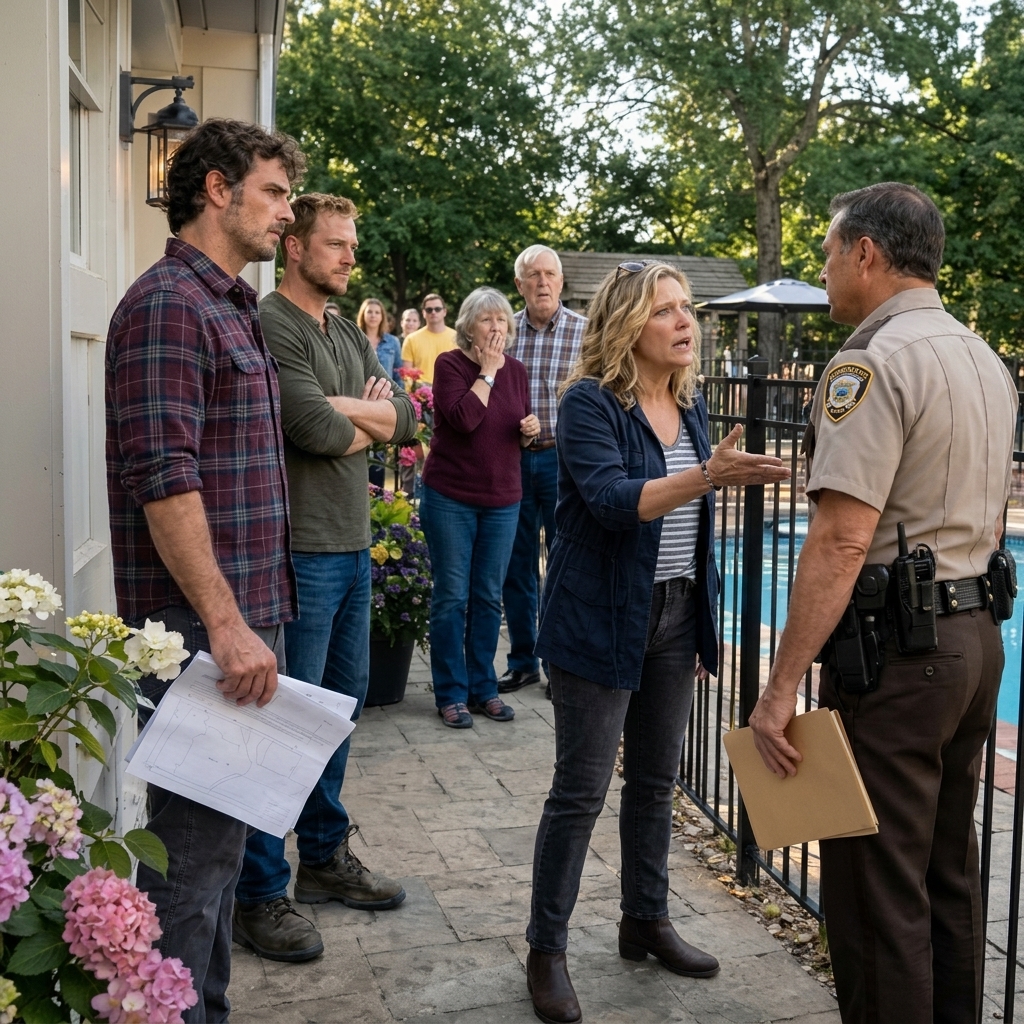
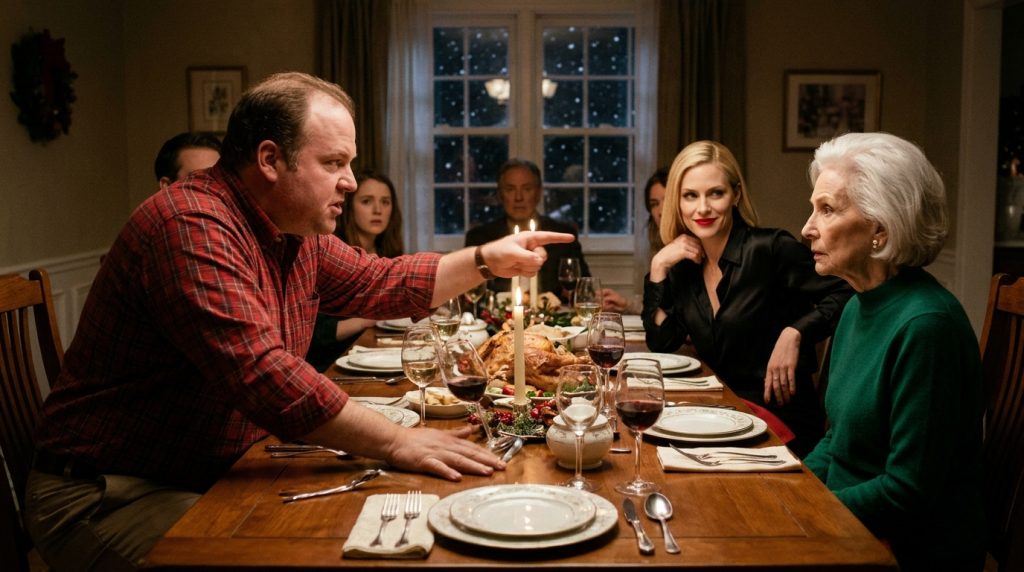
“She truly thinks I control you.”
“She thinks every family works like hers.”
A few days later, Vanessa waited outside the café near Michael’s architecture firm. He entered each afternoon for espresso and half an hour of reading. She knew his routine because she had mocked it often enough.
She dropped into the chair across from him before he could open his book.
Her makeup was uneven, and her highlighted hair had been pulled into a loose knot. The expensive handbag she placed on the table had a small price tag still attached to one handle, as if she had planned to return it.
“You have to fix this,” she said.
Michael closed his book.
“Fix what?”
“Lauren’s tantrum.”
“You mean the consequence of you striking my wife?”
“She provoked me.”
“You called our daughters street trash.”
“I was angry.”
“You said what you believe.”
Vanessa leaned closer. “Whatever. I apologized.”
“No, you didn’t.”
“I’m apologizing now.”
“To me?”
Her mouth opened, then closed.
Michael studied her for a moment.
“You still don’t know, do you?”
“Know what?”
He set his espresso cup on the saucer.
“The money you’re begging me to restore never belonged to me.”
Vanessa’s face changed.
Michael leaned across the table.
“Every dollar came from Lauren.”
And that was only the first truth he gave her.
### Part 5
Michael told me about the café that evening.
He was standing at the kitchen counter slicing peppers while I stirred soup on the stove. The windows had fogged from the steam, and Lily’s laughter drifted from the living room, where she and Maya were constructing a blanket fort.
“When I said the money was yours, Vanessa thought I was lying,” he said.
“I’m not surprised.”
“She said you couldn’t possibly afford their mortgage.”
“That sounds like her.”
“So I told her about the rental properties.”
I stopped stirring.
“How much did you tell her?”
“Enough.”
Michael had spent years watching me absorb insults without defending myself. He had respected my decision, but respect had never meant agreement.
“I told her you’ve earned more from your investments than she and Grant have earned from actual work in years,” he continued. “I told her she had been carrying handbags paid for by the woman she called poor.”
I lowered the heat beneath the soup.
“And then?”
His expression changed.
“I told her about us.”
The kitchen seemed to go still.
“You told her about the diagnosis?”
“Yes.”
I placed the wooden spoon on the counter.
Michael approached carefully. “I know it was private.”
“It was yours to reveal.”
“I should’ve done it years ago.”
“You didn’t owe them that information.”
“No, but you didn’t owe me seventeen years of humiliation.”
I looked toward the living room. A blanket shifted, followed by muffled giggling.
“What did she say?” I asked.
“At first, nothing. Then she said it couldn’t be true because you acted ashamed.”
I laughed once.
“I acted private.”
“She couldn’t understand the difference.”
That was Vanessa’s central problem. She believed silence meant defeat, modesty meant poverty, and kindness meant permission.
Michael told her how I had sat beside him in the specialist’s office. He told her I had allowed my family to blame me because I knew they would question his masculinity.
“Then I told her the difference between you and her,” he said.
“What difference?”
“You protected someone you loved even when no one was watching. She humiliated people she considered weak whenever an audience was available.”
Afterward, he left enough money to cover his coffee and walked out.
Vanessa remained seated while every person in the café pretended not to stare.
That evening, Grant appeared at our front gate.
Our camera showed him standing in the rain beneath an umbrella, pressing the call button repeatedly. He looked thinner than he had at the barbecue. His expensive haircut had grown unevenly around his ears.
I spoke through the intercom.
“You need to leave.”
“Lauren, please.”
“You’re violating my request for no contact.”
“I didn’t hit you.”
“You defended the person who did.”
“Vanessa wants to apologize.”
“She knows my number.”
“You blocked her.”
“Then she can write a letter.”
He wiped rain from his forehead.
“The bank is accelerating the foreclosure.”
“That sounds serious.”
“Don’t do this.”
“I’m not doing anything. I stopped doing something.”
“What does that mean?”
“I stopped paying for your life.”
His eyes narrowed.
“You said you would help me.”
“I helped you for three years.”
“You can’t just walk away.”
“I did.”
“What about the boys?”
“What about my girls?”
He looked aside.
That tiny movement told me everything.
“Connor shouldn’t have said those things,” he muttered.
“Where did he hear them?”
“He’s a teenager.”
“Where did he hear them, Grant?”
His silence lasted too long.
I moved closer to the monitor.
Popular Posts
→- 1
- 2
- 3
- 4




Recently Viewed
Stories you read recently will appear here.