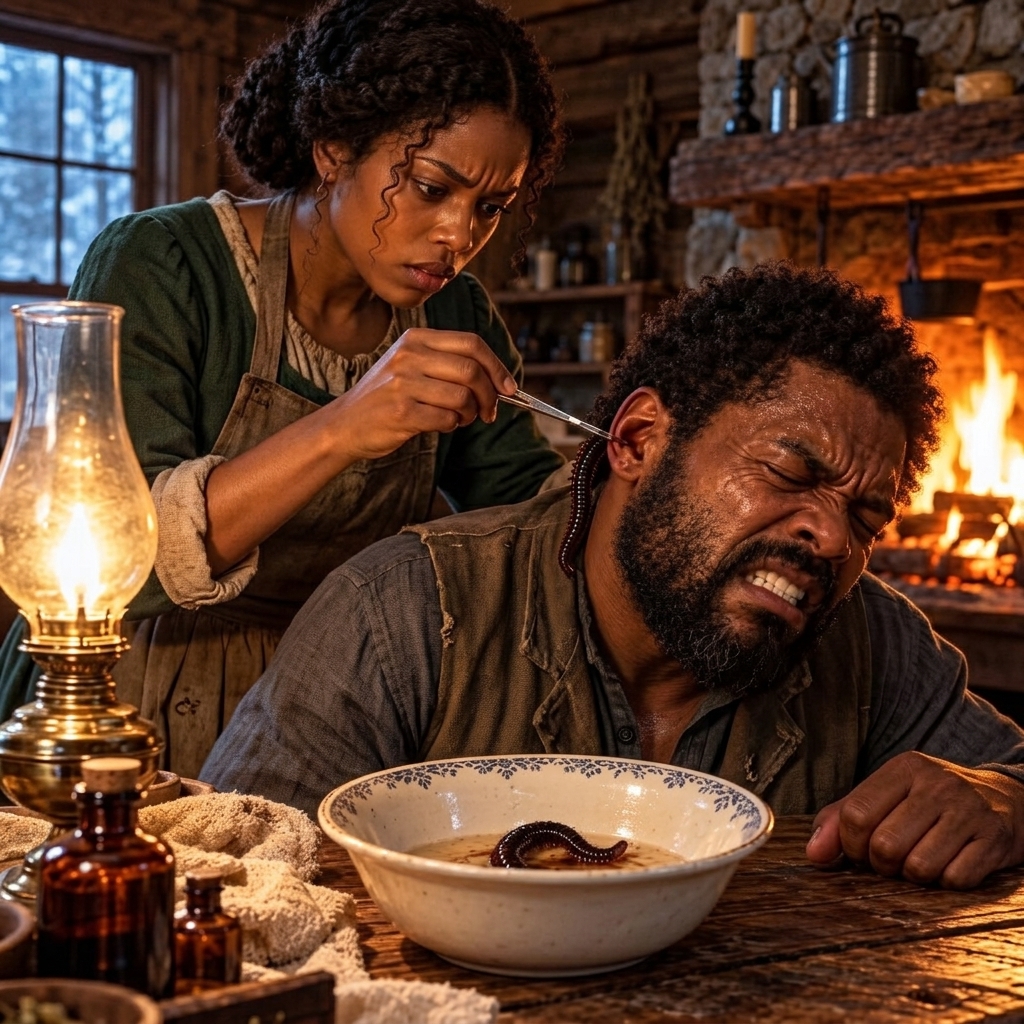
PART 1: THE BRIDE WHO COST FIFTY DOLLARS
My father sold me for fifty dollars, but the most terrifying part was discovering that my new husband carried a secret far more disturbing than anything my family had warned me about.
I was twenty-four years old when Elias Ashford counted five ten-dollar bills across our kitchen table and informed me that my wedding would take place the following morning.
He did not ask whether I loved the man, whether I wanted to marry, or whether I had ever imagined sharing my life with a stranger.
He simply folded the money, slipped it into his coat, and told me to find my mother’s wedding dress.
My older brother Merrick watched from the doorway with a bottle of whiskey dangling between his fingers.
“Fifty dollars for Rosalie is more than I expected anybody to pay.”
My father laughed, and something inside me went terribly still.
Our family had once owned respectable farmland outside Coldwater, but years of failed harvests, unpaid loans, and my father’s drinking had consumed nearly everything.
First went the horses, then the equipment, and finally the little pieces of furniture my mother had treasured.
After her death, I became the only valuable thing my father believed remained under his roof.
The man who had agreed to marry me was Gideon Rook, a thirty-eight-year-old rancher who owned the largest cattle property beyond the northern ridge.
I had seen him only twice, always from a distance, standing apart from other men with his shoulders squared and his expression unreadable.
Coldwater had plenty to say about him.
Some called him dangerous, others called him strange, and nearly everyone referred to him as the half-mad deaf rancher.
An accident during childhood had supposedly destroyed most of his hearing, leaving him isolated in a world where ordinary conversation meant nothing.
Rumors claimed he became violently angry when people startled him, although nobody ever seemed able to explain precisely what he had done.
My father dismissed my concerns with a careless wave.
“He has cattle, land, and a roof, which is more than you’ll ever get here.”
I looked toward Merrick, hoping my brother might show one final trace of loyalty.
Instead, he raised his bottle.
“At least he won’t hear you complaining.”
That night, I opened the cedar chest beneath my bed and lifted out my mother’s faded ivory wedding gown.
The fabric smelled faintly of lavender, and for one painful moment I remembered her hands fastening the same tiny pearl buttons before a church celebration years earlier.
She had always promised that marriage should begin with a choice.
Now I was preparing for mine like a prisoner being transferred.
Snow covered Coldwater the following morning, turning the muddy streets white and softening the appearance of buildings that had never shown me kindness.
Inside the little church, my father stood impatiently beside the minister while Merrick leaned against a pew.
There were no flowers, no musicians, and no guests beyond the people required to witness the ceremony.
Then the church door opened.
Gideon Rook stepped inside wearing a dark wool coat, polished boots, and a clean white shirt buttoned carefully at the throat.
He was taller than I remembered, with broad shoulders, weathered hands, and dark hair touched by gray near his temples.
A narrow scar disappeared beneath the hair beside his right ear.
He approached slowly, stopping far enough away that I had room to move.
When the minister spoke, Gideon watched his lips with intense concentration.
The ceremony lasted less than ten minutes.
When instructed to kiss his bride, Gideon touched my cheek with astonishing gentleness before placing the briefest kiss against my forehead.
My father looked disappointed, as though he had expected a more convincing demonstration of ownership.
Outside, Gideon helped me into his wagon and carefully tucked a heavy blanket around my knees.
He climbed beside me without speaking.
For nearly an hour, the wagon traveled through snow-covered pine woods while I stared at the countryside and wondered what awaited me.
Once, the horses startled at a falling branch.
Gideon immediately steadied them, then turned toward me with a questioning expression.
I realized he was checking whether I had been frightened.
I nodded that I was unharmed, and he returned his attention to the road.
His silence was unlike my father’s.
At home, silence usually meant anger gathering before an explosion.
Beside Gideon, it seemed to mean that he had nothing cruel to say.
By late afternoon, we reached a wide valley where cattle stood beneath snow-dusted trees and a sturdy timber cabin overlooked the pasture.
Smoke curled from its chimney.
Inside, the floors were swept, a bright fire warmed the room, and a loaf of fresh bread waited beneath a clean kitchen cloth.
Popular Posts
→- 1
- 2
- 3
- 4




Recently Viewed
Stories you read recently will appear here.


