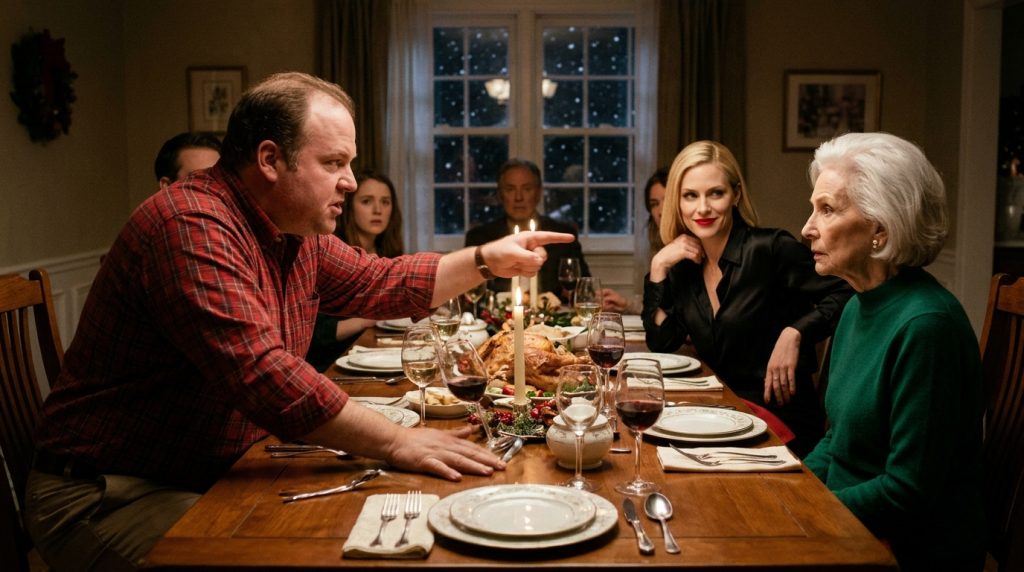
Claire’s relationship with Logan deteriorated sharply during the first month after Thanksgiving because he kept trying to transform new information into urgent marital conversations.
He wanted answers.
Did she still love him?
Was she leaving?
Had she planned the financial action behind his back?
Why had she not trusted him?
Claire answered only the last question.
“I did trust you. Repeatedly. You kept showing me that your mother’s comfort mattered more than my warning.”
Logan said:
“I didn’t know this was the warning.”
“You did not need to know about Michael to know she humiliated me.”
That ended the argument.
Claire’s attorney advised her to separate marital property temporarily because the Blackwood trust dispute could create creditor complications.
Claire did.
Logan initially felt insulted.
Then recognized structure as protection.
He signed a postnuptial financial separation agreement pending investigation.
No pressure.
No hidden clauses.
Independent counsel for both.
The act became surprisingly emotional.
For years, Logan had assumed shared money proved marital unity.
Claire had learned that financial boundaries can protect love from power imbalance.
Their counselor said:
“Transparency is not the same as total access.”
That sentence helped.
Claire also had to confront her own secrecy.
She had prepared legal action without telling Logan.
Justified.
Still significant.
The counselor asked whether she wanted a marriage where secret preparation became normal.
No.
Then future rule:
If Claire ever believed disclosure to Logan would create legal risk, she would tell independent counsel and create protected process.
But once the immediate risk passed, she would disclose relevant facts.
Likewise Logan would not demand advance notice where Claire reasonably feared interference.
Trust with safeguards.
Not blind transparency.
That nuance made their eventual reconciliation believable.
They were not returning to innocence.
They were designing adulthood.
Meanwhile the sealed addendum became admissible in the trust proceeding after authentication by the nurses and hospital records.
One nurse remembered Charles clearly.
He had asked:
“Can a dead man still fix something?”
She answered:
“Only if he writes clearly.”
He tried.
Late.
Imperfect.
But the document gave investigators a roadmap.
May you like
Claire no longer needed to carry it.
That relief mattered more than victory.
Chapter 6 – EVELYN’S VERSION
Evelyn requested an interview through counsel.
Detective Hart recorded it.
Her explanation began with fear.
She had severe postpartum depression after Michael.
Charles traveled constantly.
Anne took over.
Evelyn felt replaced as mother.
When she tried to reclaim Michael, Anne resisted.
Evelyn experienced that as theft.
Then Logan was born.
Healthy.
Attached to her.
Evelyn began telling herself one child was “really hers” and one had been taken.
That emotional distortion hardened.
She punished Michael for bonding with Anne.
Then punished Anne for loving him.
Years later she convinced herself erasing Michael from succession was fairness.
“He wasn’t part of the company.”
Hart asked:
“Was he your son?”
Evelyn said nothing.
That silence mattered.
Her financial conduct had similar logic.
She believed preserving Blackwood control justified moving money.
Family first.
Always.
Claire understood the pattern.
Family first had never meant people first.
It meant image, control, and continuity.
Evelyn admitted grabbing Claire’s hair at Thanksgiving.
She called it “losing control.”
She admitted humiliating her for years.
Why?
Because Claire asked questions.
Because Claire did not defer.
Because Logan changed around her.
Claire threatened hierarchy.
Again, no excuse.
Context.
Evelyn eventually faced charges related to financial fraud and obstruction.
The assault became a separate case.
Logan refused to pressure Claire into leniency.
That was new.
Claire noticed.
Evelyn’s defense team tried to argue Claire orchestrated the entire crisis to seize company influence.
Claire had never requested a board seat.
Never requested trust shares.
Never requested money.
The theory failed.
Evelyn’s history with postpartum depression became a point of controversy.
Her defense team wanted to use it broadly.
Claire objected privately to the idea that illness should become shorthand for decades of later choices.
Detective Hart agreed.
Postpartum depression explained part of the early crisis.
It did not explain false trust representations twenty years later.
It did not explain threatening Anne.
It did not explain fraud.
It did not explain assaulting Claire at Thanksgiving.
Mental illness was context, not moral transfer.
Michael felt similarly.
He did not want strangers saying Evelyn “gave him away because she was depressed.”
The records showed more.
Temporary placement during illness.
Then conflict.
Then pride.
Then control.
Then erasure.
Sequence mattered.
Evelyn eventually admitted that once Michael bonded with Anne, she began experiencing every visit as rejection.
A toddler crying for Anne felt like accusation.
Instead of tolerating grief and rebuilding, Evelyn withdrew.
Then she punished the child in her mind for adapting.
That pattern later appeared with Claire.
Claire questioned Evelyn.
Evelyn interpreted it as disloyalty.
Rather than tolerate difference, she tried to force hierarchy.
Hart’s interview ended with one question:
“If Michael had asked to come home at eighteen, what would you have done?”
Evelyn cried.
“I don’t know.”
Honest at last.
She had spent decades creating certainty around a choice she never emotionally resolved.
That did not erase liability.
It made her human.
Claire found humanity harder than villainy.
A villain can be dismissed.
A human being who repeatedly chose control requires boundaries without fantasy.
Evelyn’s criminal case ended in a plea after forensic evidence became overwhelming.
She admitted conspiracy to conceal related-party transfers, false financial representations, obstruction, and assault.
The court imposed prison time, restitution, and supervised release.
Claire read the plea transcript once.
The judge asked:
“Did you grab Claire Morgan by the hair and force her toward the table?”
“Yes.”
No “but.”
That mattered.
Public record now contained the act without family reinterpretation.
Evelyn also lost fiduciary authority over all Blackwood trusts.
The court did not decide family worth.
It decided legal fitness.
Specific.
Claire appreciated specificity.
She began to see that accountability worked best when nobody demanded one institution solve every emotional question.
Evelyn’s plea hearing became one of the few times Michael and Claire were physically in the same courtroom, though they sat on opposite sides of the aisle and did not speak until afterward.
The prosecutor recited the financial conduct.
Related-party transfers.
False representations.
Attempts to obstruct trust review.
Then the assault.
Evelyn answered yes to each factual question.
When asked whether she knew Michael was alive when trust documents described him as presumed dead, she paused.
Her lawyer whispered.
The judge waited.
“Yes.”
That one word changed the entire legal record.
No ambiguity.
No family story.
She knew.
Michael closed his eyes.
Logan looked at the floor.
Claire felt no triumph.
Truth entering a record can feel quieter than people imagine.
The judge asked why she did it.
Evelyn began:
“To protect—”
The judge interrupted.
“I am asking what you did, not for your justification.”
Claire almost smiled.
Facts first.
At sentencing Michael submitted no victim statement.
He said the trust case addressed his interests.
Claire submitted one for the assault.
Logan submitted one about family consequences.
Different harms.
Different voices.
Popular Posts
→- 1
- 2
- 3
- 4




Recently Viewed
Stories you read recently will appear here.