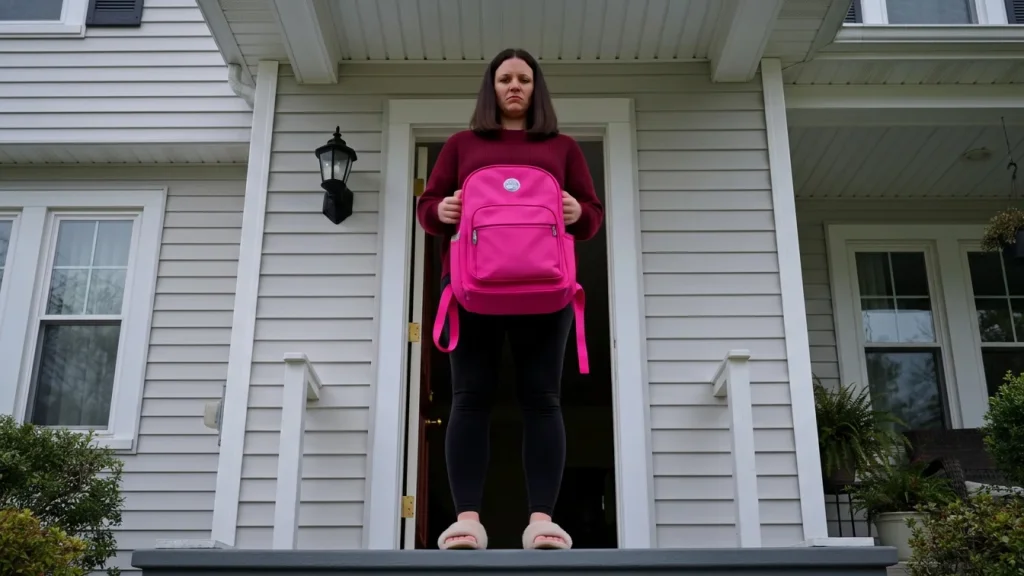
Now someone was trying to rewrite the future they were supposed to inherit.
Daniel stood.
“I’ll take this for examination. But I need you to be careful. Whoever sent it wants you to know it exists.””
“Why send it to me anonymously?””
“Because they may want to frighten you.””
He paused at the front door.
“Or because they want you to discover something the original investigation hasn’t uncovered.””
After he left, I returned to the kitchen.
My phone vibrated.
An unknown number.
One message appeared.
*You should have asked who else Robert put inside your children’s trust.*
I read it twice.
Then another message arrived.
*Your signature is only the beginning.*
My fingers went cold.
Because whoever had sent that letter knew something Daniel hadn’t yet discovered.
And they were watching the Carter family closely enough to know exactly when to strike.
Chap 17
Daniel called the following morning.
“Emily, I need you to come to the administrator’s office.””
“Did you find something?””
“Yes.””
His hesitation frightened me more than the answer.
“Is it about the signature?””
“Partly. But there’s another issue involving the original trust.””
I arranged for a babysitter and drove to the office.
The independent trust administrator, a gray-haired man named Mr. Collins, was waiting in the conference room. Several thick folders were spread across the table.
Daniel stood beside him.
Neither man looked particularly pleased to see me.
I sat down.
“Please tell me what happened.””
Mr. Collins folded his hands.
“We reviewed the historical trust instruments after receiving the document you provided. Your signature appears on a secondary amendment that was never properly authenticated.””
“So it’s fraudulent?””
“That is our preliminary assessment.
A handwriting examination will be necessary before we make a formal determination.””
I nodded.
“What about the trust itself?””
Mr. Collins opened a folder.
“The original trust was established to protect the Carter family estate and provide for designated family beneficiaries. Over the years, several administrative changes were proposed. Most were rejected or never completed.””
“And the document I received?””
“It references an amendment that was entered into a separate historical file.””
Daniel placed another sheet on the table.
“There’s something you need to see.””
It was a beneficiary schedule.
At first, the names seemed ordinary. Several relatives were listed, along with descriptions of their interests and the conditions attached to them.
Then I noticed a familiar name.
David Carter.
I looked up.
“Why is David listed here?””
Mr. Collins adjusted his glasses.
“Because the amendment added him as a second primary beneficiary.””
I stared at the page.
“Second primary beneficiary?””
“Yes. The amendment appears to have divided certain interests between two people.””
“Who was the first?””
“The original beneficiary group included the descendants of the Carter family. The amendment created a specific additional interest for David.””
I leaned closer.
“That doesn’t make sense. David was officially dead three years ago.””
Daniel nodded.
“That’s precisely the problem.””
Mr. Collins turned the page.
The amendment had a recorded execution date.
It was signed after the date on David’s official death certificate.
I felt a strange pressure in my chest.
“You’re saying someone added a dead man to the trust?””
“According to the records, yes.””
“How?””
“That is what we’re trying to establish.””
I looked at Daniel.
“Could someone have backdated the amendment?””
“Possibly. But the registry entry indicates that it was submitted after the date of death.””
I read the dates again.
David had supposedly died three years earlier. The family had held a funeral. His death had been accepted by the authorities. His name had been removed from the family records.
Yet someone had added him to the trust after he was supposedly gone.
“Was David aware of this?”” I asked.
“Not according to the records we have,” Daniel replied.
I thought about David.
He had spent years hiding, believing Robert had enough influence to destroy him if he ever came back. He had missed birthdays, family gatherings, and years of his children’s lives.
Now I wondered whether the trust had been another reason Robert wanted him gone.
“Why would someone make David a beneficiary if they wanted him to disappear?”” I asked.
Mr. Collins answered carefully.
“Sometimes, a person can be named as a beneficiary without having direct access to the assets. If another party controls the documents or the administration, the named beneficiary becomes little more than a legal instrument.””
“So someone could use David’s name while preventing him from receiving anything?””
“That is one possibility.””
Daniel leaned forward.
“There’s another issue. The amendment includes a clause stating that if David could not personally claim his interest, the funds would be held under a separate arrangement.””
“Who would control that arrangement?””
Mr. Collins opened another folder.
“The records are incomplete.””
I felt my anger rising.
Popular Posts
→- 1
- 2
- 3
- 4




Recently Viewed
Stories you read recently will appear here.