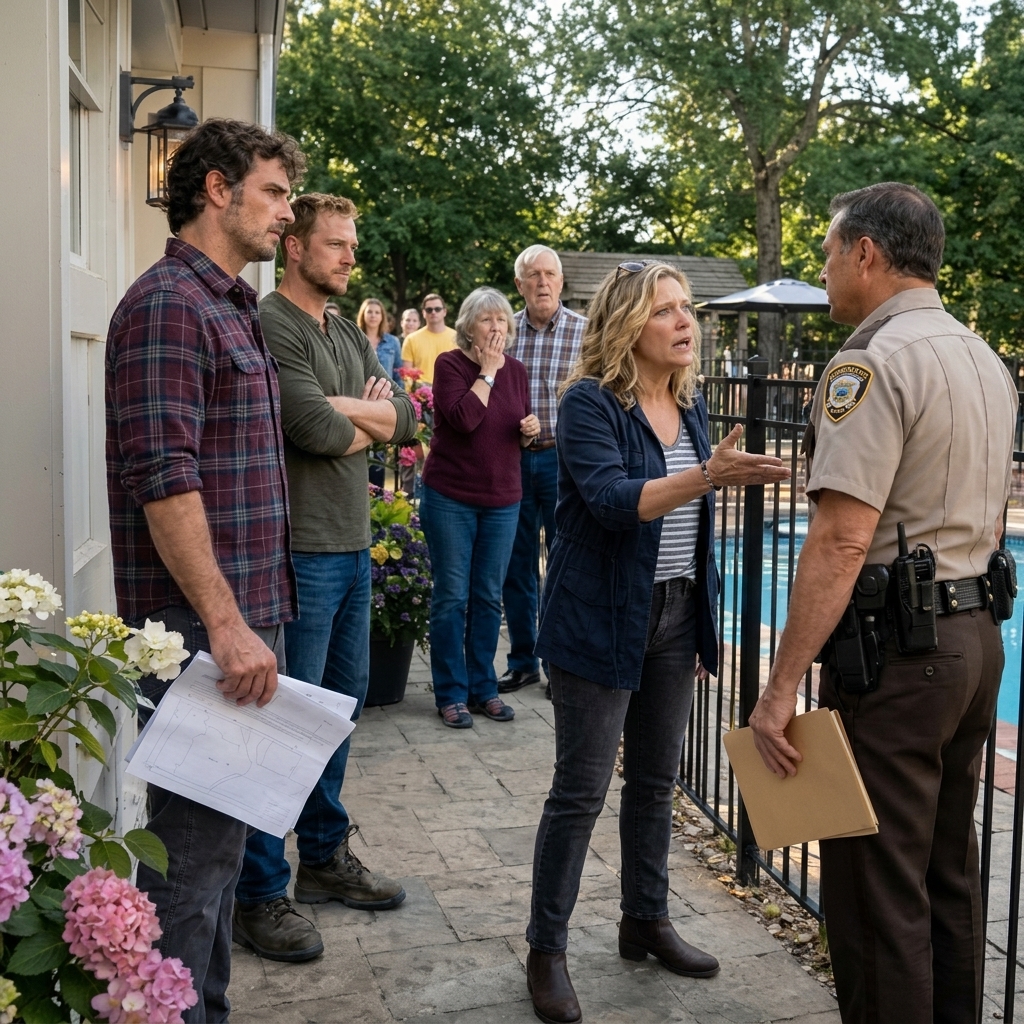
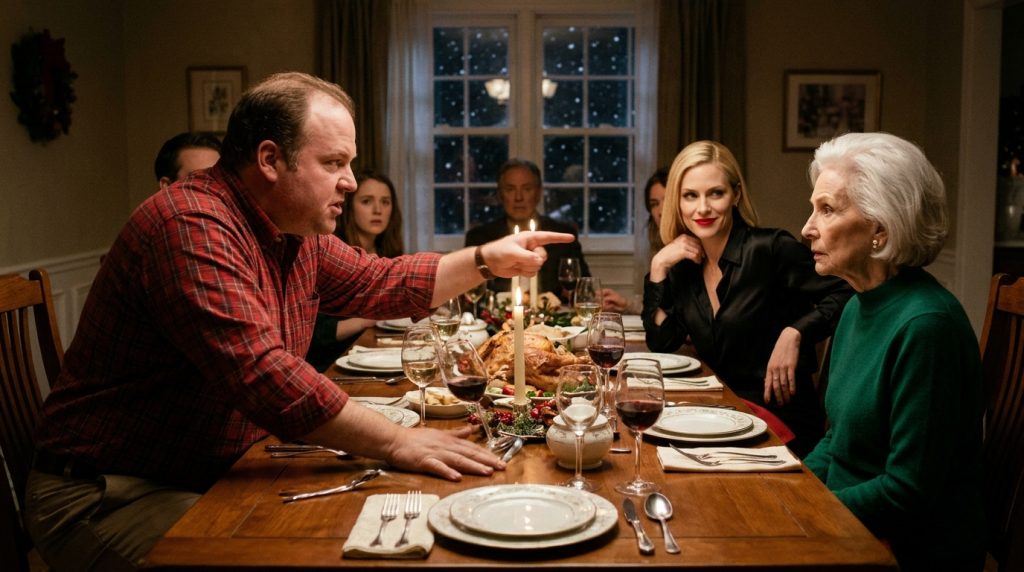
My father lowered his eyes to the dirt. Ryan muttered a curse under his breath. Jessica crossed her arms defensively. Susan actually had the nerve to look bored, inspecting her cuticles like a woman who had lived long enough to outlast shame and no longer saw the point in pretending to have a conscience. That disgusted me more than anything else.
“We have all been helping each other out around here,” Jessica chimed in, using that softened, weaponized customer-service voice she deployed whenever she wanted to sound reasonable while defending something rotten. “If your parents do a few chores around the house, it’s because they live here too, Sarah.”
I turned my head to look at her fully.
The designer sunglasses pushed back into her highlighted hair. The heavy, gold-plated bracelet I recognized from a selfie she had sent me just last week, accompanied by a text begging for “just a little more cash for Arthur’s medicine.” I knew women exactly like her in Chicago—the kind of corporate climbers who call exploitation “synergy” and theft “necessity.”
“‘A few chores’?” I repeated, tasting bile in my throat. “I just watched my mother hand-washing your linens like a scullery maid, and my father being berated for spilling water in the yard I paid for.”
Susan clicked her tongue loudly. “Oh, please. Don’t be so dramatic. Nobody is being berated. The old man dropped a glass, that’s all. Clumsiness.”
I looked at the ring on Susan’s right hand. A massive, ruby-colored stone flashed in the sun, vulgar and impossibly bright. I remembered the tearful voicemail from Jessica three days earlier, dripping with fake concern, claiming my mother’s blood pressure had spiked again and maybe I should wire an extra thousand dollars because “inflation is just making groceries so expensive out here for them.”
That ruby ring had not been cheap. Neither had the cream-colored patio set. Neither had the fresh, professional paint job on the side gate, or the brand-new SUV parked in the shade of the oak tree where my father used to leave his rusted wheelbarrow.
“How long?” I asked.
This time, I wasn’t looking at Jessica or her mother. I was staring straight through my brother. Because women like them could be cruel, yes, but absolutely none of this happened without a son consciously deciding that the parents who fed and clothed him were negotiable commodities, easily traded for a bit of domestic comfort.
Ryan rubbed the back of his neck, already preparing the coward’s ultimate defense. “Sarah, look, it’s not what you think.”
The answer was so utterly predictable it made my stomach turn over.
Then, my father spoke for the first time. “Sarah, honey. Please. Don’t fight here in the yard.”
He said it softly. Almost pleadingly. And that hurt me in a profound, agonizing way the others couldn’t touch. Not because he was trying to protect my brother. Because he had learned to fear the cost of the truth arriving without prior warning. I could hear it vibrating in his vocal cords—the old, conditioned tremor of a broken man who had been trained to calculate the consequences of every single word before daring to speak in his own home.
I didn’t walk toward the porch. I walked directly to him.
With each step, the devastation became clearer: the thick dust settled deep into the lines around his mouth, the broken capillaries in his nose from exhaustion, the way his left shoulder now sat an inch lower than his right, the crude, messy patch sewn into the knee of his trousers instead of simply buying a new pair.
This was not a man living in the comfortable, golden retirement I had meticulously financed. This was a man being ground into dust on the very land meant to set him free.
“Dad,” I whispered, my voice breaking. “Why are you sweeping glass in ninety-degree heat?”
He didn’t look at me. He glanced, just for a fraction of a second, toward Ryan on the porch.
That single glance was everything.
People talk about elder abuse as though it always arrives with black eyes and screaming matches. But sometimes, abuse arrives as a glance. A terrified, submissive glance that asks an abuser’s permission before answering a simple question from a daughter. A glance that checks the temperature of the room before daring to speak the truth. Once you see that specific kind of fear in your parent’s eyes, you can never, ever unsee it.
“Because I was just trying to help out,” my father mumbled.
I reached out and gently pried the broom from his calloused, shaking hands.
Popular Posts
→- 1
- 2
- 3
- 4




Recently Viewed
Stories you read recently will appear here.