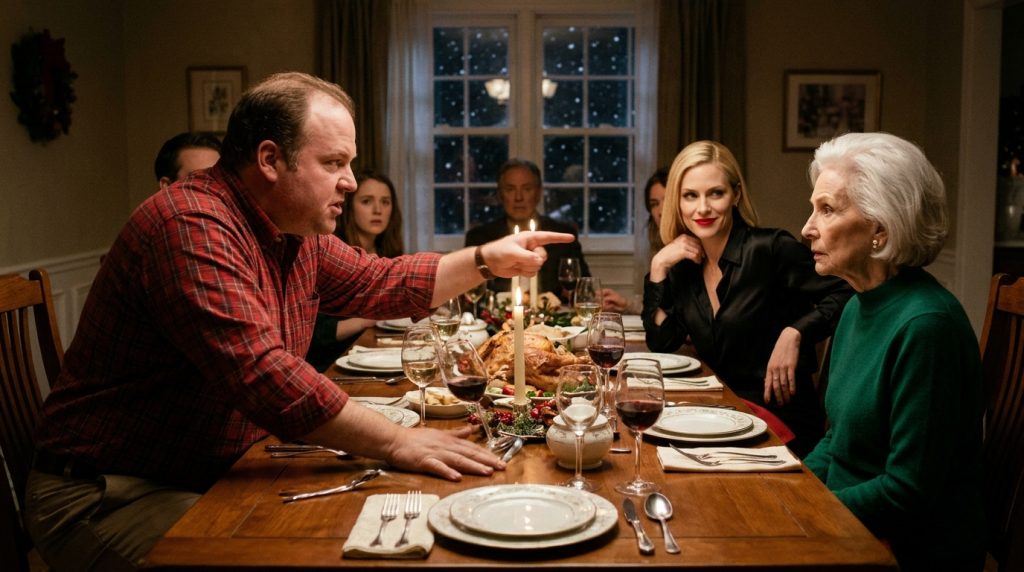
He straightened up. It was a slow, aching movement, joints popping, but he straightened all the same. For the first time all afternoon, I saw a flicker of the man who used to carry me on his shoulders. His eyes darted to Ryan, then to Jessica, then to Susan.
“Sarah is right,” my father said, his voice finding its gravelly resonance. “Enough is enough.”
Ryan stared at him, genuinely appalled that the old man had found his spine. “Dad, don’t start this—”
“No,” my father interrupted, pointing a crooked finger at his son. “You shut your mouth and you start listening.”
And then, because truth, once it finds a tiny crack, tends to shatter the entire dam, everything poured out.
My mother, wiping her eyes with her apron, admitted they had moved out of the master suite “temporarily” after Ryan said he needed a comfortable place to stay to save money for his own house. Temporary became eight months. Then Jessica’s mother, Susan, lost her apartment lease and moved into the guest room. Then the living room became off-limits because Jessica “needed quiet for her remote job.”
Then, the new washing machine was sold on Facebook Marketplace because Ryan claimed the electricity bill was getting too high. The monthly wire transfers I sent for “roof repairs and property taxes” were diverted to pay the lease on Ryan’s new SUV, Jessica’s online shopping habits, and Susan’s credit card debt. Because apparently, everyone’s superficial comfort mattered infinitely more than the elderly couple sweating in the un-airconditioned storage room.
And through it all, the psychological knife twisting in their backs: every time my parents meekly tried to push back, Ryan would threaten them. He reminded them that the farmhouse would fall into ruin without a “man” there to manage it, that I was too busy in Chicago to care about them, and that if he left, they would be shoved into a state-run nursing home to rot.
It was systemic, financial, and emotional extortion. And it was dressed up as “family.”
It had worked because my parents were old, proud, deeply ashamed, and terrified of being abandoned with legal and financial burdens they no longer understood. I had bought them a sanctuary, and my own brother had seamlessly converted it into a hostage situation for leverage.
I stood in the foyer and listened to the entire confession without interrupting once.
That cold restraint seemed to unnerve Jessica more than if I had grabbed her by the throat. People who rely on gaslighting and confusion absolutely loathe calm, because calm allows their ugliness to stay visible long enough to be permanently documented.
And I was documenting everything.
I pulled my iPhone out of my pocket. I snapped photos of the missing washer hookups. The suffocating back room setup. The halved blood pressure pills. The expensive skin creams. I photographed the crumpled, hidden receipts my mother finally dug out of a coffee can in the pantry—proof of what she had been forced to buy with her meager social security checks while my money was siphoned away.
When I raised my phone to take a picture of the flat-screen TV, Jessica snapped.
“Stop taking pictures of my things!” she shrieked, lunging forward, her acrylic nails aiming for my hands.
I didn’t flinch. I took one smooth step back and leveled a look at her that stopped her dead in her tracks.
“Touch me,” I said, my voice echoing off the hardwood, “and I swear to God, I will have the county sheriff arrest you for assault on top of elder abuse and financial fraud.”
Jessica froze, her hands hovering in the air.
Susan started spitting curses from the doorway, calling me an ungrateful, bitter spinster poisoned by city arrogance. But every insult sounded hollow and pathetic now that the structural lie had collapsed around them. She wasn’t the queen of the manor anymore. She was just an old, parasitic woman in borrowed jewelry, about to lose her free ride.
I dialed a number on my phone. Not the local Oakhaven police. I called a ruthless real estate litigator in Chicago—the woman who had handled my title filings years ago, and who still remembered exactly why I had insisted the deed remain solely in my name to protect my parents from this exact scenario. She answered on the second ring.
I put her on speakerphone. I described the situation clinically. Her voice went completely flat in that beautiful, terrifying professional way that means a lawyer has stopped viewing the opposition as humans and started viewing them as a procedural checklist to be annihilated.
She gave me explicit, legal instructions, loud enough for the room to hear.
Popular Posts
→- 1
- 2
- 3
- 4




Recently Viewed
Stories you read recently will appear here.