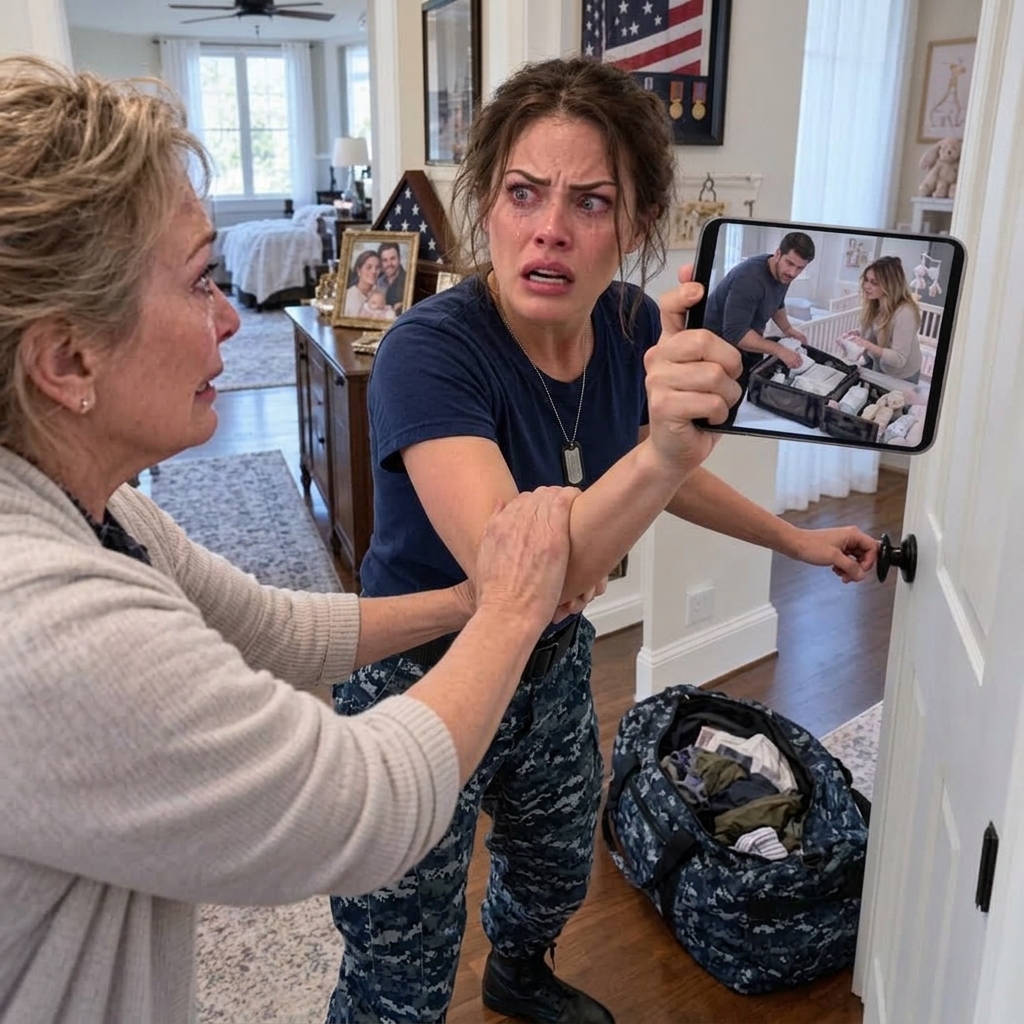
I Was Unpacking My Duffel Bag After Deployment. Our Nanny Of 5 Years Grabbed My Wrist, Trembling. “Ma’am, Don’t Turn That Handle. Check Your Phone First.” I Opened The Hidden Camera Feed To The Crib. My Husband Was Packing Our Baby’s Passport With My Sister.
I came home from an eight-month Navy deployment one day early and found my husband preparing to leave the country with our little girl and my younger sister. My nanny stopped me inches from the nursery door and showed me the camera feed before I could confront them. I stayed quiet, gathered proof, and stopped them before they reached the airport. Three months later, after the custody fight had begun, an old envelope appeared in my mailbox—and proved their plan had started long before my deployment.
Part 1
The brass knob on my daughter’s nursery door felt colder than it should have. I had one hand wrapped around it and the other still aching from carrying my seabag through three airports when someone caught my wrist from behind. I turned fast, expecting my husband, and found Carmen Reyes, our live-in nanny of almost five years, staring at me with a face so frightened that for a second I forgot how badly I wanted to see my daughter.
“Don’t open that door,” she whispered. Her fingers were trembling against my sleeve, and I could hear movement beyond the nursery wall: drawers sliding, something heavy rolling across hardwood, a zipper being pulled. Before I could ask what was happening, Carmen held up her phone and said, “Please. Look first.”
My name is Natalie Mercer, and at the time I was thirty-seven years old, a lieutenant commander working in Navy logistics out of Norfolk, Virginia. For most of my adult life, I had made a career out of noticing what other people ignored: mismatched shipping numbers, cargo moving under the wrong authorization, timelines that looked reasonable until you examined who had approved them. None of that training prepared me for the nursery camera feed showing my husband, Grant, kneeling beside our daughter’s crib with a leather portfolio open on the floor.
My younger sister, Leah, stood beside him wearing the cream-colored coat I had bought her after she graduated college. She was twenty-five, beautiful in the effortless way that had always made strangers forgive her before she had even done anything wrong, and she was calmly packing documents into a carry-on bag. I watched her pick up Sophie’s passport, check the photograph, then slide it into an interior pocket with Sophie’s birth certificate and pediatric records.
My first instinct was so physical that it frightened me. I wanted to throw the door open, grab my daughter, and demand an explanation until the windows shook, but Carmen tightened her grip on my arm and pointed toward the phone. The monitor had sound, and through the tiny speaker Leah said, “The driver gets here at ten-fifteen, and the Dulles flight is still on time.”
Grant glanced at his watch. “She isn’t supposed to land until tomorrow evening. By the time Natalie gets through customs and drives home, we’ll already be in Portugal.” He said my name without anger, regret, or panic, which somehow hurt more than if he had been shouting.
Leah lowered her voice, but the microphone caught enough. “And if she calls the police?”
“She can call whoever she wants,” Grant answered. “I have the authorization, I have the relocation papers, and once Sophie is living with me overseas, Natalie gets to spend the next year proving she didn’t consent.”
I had spent eight months imagining my homecoming. On bad nights aboard ship, I pictured Sophie running toward me on unsteady toddler legs, Grant laughing behind her, Carmen pretending not to cry, and the four of us ordering greasy pizza because nobody wanted to cook. Instead, I stood in the guest room smelling cedar furniture polish and the faint lavender detergent Carmen used on Sophie’s blankets while I listened to my husband discuss how difficult he intended to make it for me to get my own child back.
“How long?” I whispered.
Carmen looked toward the hall before answering. “I realized something was wrong two weeks ago. Before that, I thought they were cleaning the house because Grant said you wanted less clutter when you returned.” Her mouth tightened. “Then he asked me to sign something about your mental condition.”
Every sound inside me seemed to stop. “My what?”
“He said you had become unstable during deployment. He wrote the statement himself.” Carmen reached into the pocket of her cardigan and pulled out a folded sheet of paper. “I told him I wouldn’t sign it.”
Popular Posts
→- 1
- 2
- 3
- 4




Recently Viewed
Stories you read recently will appear here.


