PART 2:
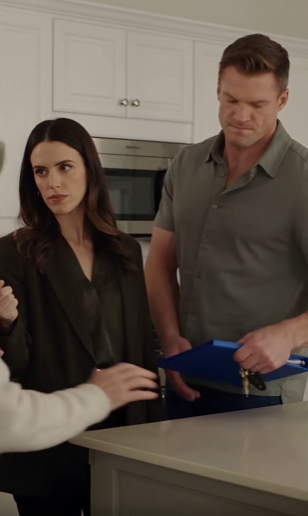
I did not call the police first. That decision sounds strange until the person who hurts you is your own child and part of your mind still searches for an explanation that might make what happened less real. I sat at the kitchen table staring at Daniel’s spilled coffee and wishing he would walk back through the door ashamed, confused, desperate—anything but deliberate. Then I remembered the last thing Ashley had whispered on the recording: “Then we deal with Maya too.”
I called my granddaughter from memory. The moment she heard my voice break, she stopped asking ordinary questions and became completely focused. I told her about the folder, Daniel’s hand around my throat, my missing keys and phone, and Ashley’s attempt to make relatives believe I was confused.
Maya asked only one thing: “Is the recording saved?”
When I said yes, she told me not to touch anything else. Forty minutes later, she arrived with Thomas Reed, a gray-haired attorney carrying a leather briefcase. Maya saw the redness on my neck and hugged me so hard I winced. Thomas watched the recording twice, took notes the second time, then told me I needed two things immediately: police documentation and medical documentation before the marks faded.
I told him I did not want Daniel arrested. Maya looked at me as if she could not believe what she was hearing, but Thomas did not judge me. “You do not have to decide today how you feel about your son,” he said. “But you do have to preserve the truth.” That sentence gave me enough strength to make the call.
Sergeant Nina Patel arrived, watched the video, photographed my neck, and asked about the paperwork. Daniel had taken the blue folder, but Maya remembered an email Ashley had sent three days earlier titled DOCUMENTS FOR MOM. Attached were scanned copies of every page they had tried to make me sign.
Thomas read them in silence before turning the laptop toward me. “This is not a refinance,” he said. The documents would have given Daniel a controlling interest through a family property trust and included a limited power of attorney allowing him to borrow against my home. Depending on the lender, he might eventually have been able to sell it.
Suddenly Daniel’s words made sense. Trouble. He needed my house for something he had not told me about. Before we could determine what,
my daughter Rebecca called and asked whether something was wrong with me because Daniel had already told the family I attacked him, threw coffee, screamed irrationally, and nearly fell while he tried to steady me.
I told Rebecca I had a recording. Maya sent it to her. Ten minutes later my daughter called back sobbing and said, “I’m sorry.” By evening, Daniel’s version of events began collapsing relative by relative.
Daniel and Ashley, however, had disappeared.
The next morning Thomas uncovered the first explanation. Daniel’s construction company had judgments against it, two subcontractor lawsuits, a bank claim, and a commercial loan he had personally guaranteed. The outstanding balance was more than four hundred thousand dollars.
“That’s why he needed your house,” Thomas said.
I wanted to believe money explained everything,
but Thomas was not finished. The lender connected to the transfer paperwork was not Daniel’s usual bank. It was a private property-backed lender called Langford Capital.
I had never heard the name.
Maya had.
She went completely still.
“My mother worked for them,” she said.
“Ashley?”
“For eight years.”
That was the moment we stopped asking why Daniel had attacked me and started asking a more frightening question.
What if the blue folder had never been his plan at all?
PART 3 ASHLEY’S BLUE FOLDER
Popular Posts
→- 1
- 2
- 3
- 4




Recently Viewed
Stories you read recently will appear here.


