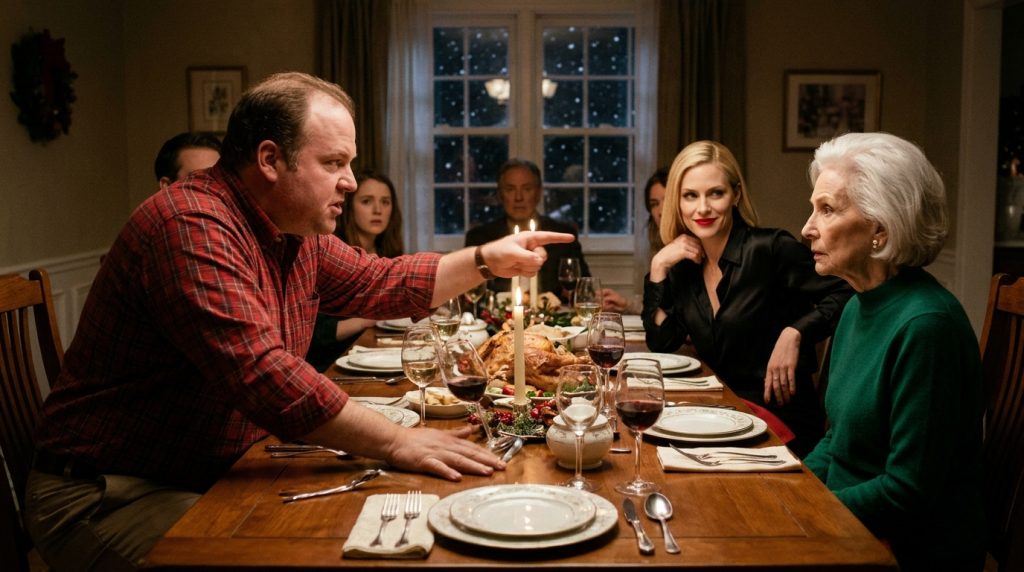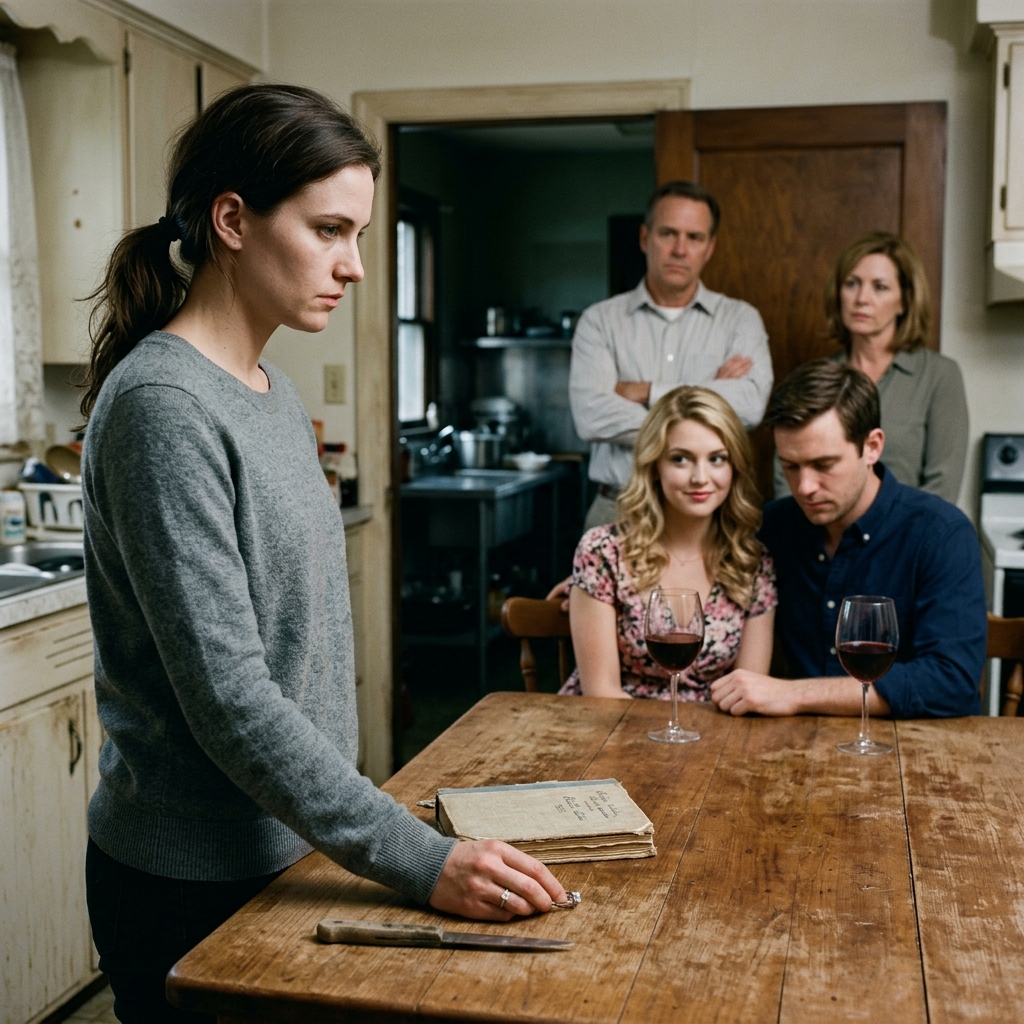
Nine years ago, at our own kitchen table, my father handed my fiancé to my younger sister as calmly as if he were rearranging a seating chart.
He looked directly at me and said, “Deline is beautiful, successful, wife material. You’re the one we keep in the back. You’re not.”
My mother nodded.
My younger sister gave me a small smile.
Rowan, the man who had put an engagement ring on my finger only a few months earlier, stared down at the table.
No one raised a voice. No one needed to. They had already decided what I was worth.
I was the hands.
Deline was the face.
My recipes, my work, and apparently even the man I loved could be transferred to someone my parents thought looked better standing in the front of the room.
I removed my engagement ring and set it on the table.
Then I walked into the kitchen, took the cloth-covered notebook no one in my family had ever bothered to read, picked up the chipped paring knife my mother had been telling me to throw away for years, and left Ohio before the week was over.
They thought they had watched me lose everything.
What they did not understand was that almost everything valuable in that house had already walked out the door with me.
My name is Mera Soulberg. I’m thirty-four now, and before I tell you what happened when my family finally saw me again nine years later, you need to understand why they were so certain I would never become anything without them.
My parents had run a catering business in Mil Haven, Ohio, for more than twenty years. It was called the Soulberg Table, and by the time I was old enough to understand what a reputation was, the business already felt permanent.
People in town knew the name.
They knew my father’s handshake. They knew my mother’s polished smile. They knew the trays that came through the doors at weddings, anniversary parties, company dinners, and graduation celebrations.
What almost no one knew was how much of the food people remembered had started with me standing behind a counter where customers couldn’t see me.
I was twelve the first time my parents told me to stay in the back.
At that age, I didn’t recognize the sentence for what it would become. I thought they were protecting me from being underfoot. I thought being allowed near the kitchen at all meant I was trusted.
So I worked.
I chopped vegetables. I washed pans. I measured ingredients. I watched every adult around me make the same dishes over and over until I could tell what a sauce needed by the way it coated the back of a spoon.
When something tasted flat, I adjusted it.
When meat came out dry, I changed the timing.
When a dessert tasted too sweet, I learned how acid could pull it back into balance.
By my teens, I could take one of our ordinary recipes and make it taste like something people would drive across town to eat.
That should have earned me a place beside my parents.
Instead, it made me more useful behind them.
Deline was two years younger than I was. She was naturally comfortable with people in a way I never had time to become because I was always working.
She had the smile my mother liked.
She remembered names.
She knew how to compliment a bride’s flowers, laugh at the right moment with a client, and stand beside my father without looking as if she had been on her feet since five in the morning.
“My sister’s better with people,” I used to tell myself.
That explanation was easier than admitting my parents had made a decision about us long before either of us was old enough to challenge it.
Deline was the daughter they displayed.
I was the daughter they depended on.
The difference became impossible to ignore when I was nineteen.
We were catering a wedding for two hundred guests when the walk-in cooler failed ninety minutes before service.
Half the proteins had come up unsafe.
My father was on the phone with a repairman who told him he couldn’t get there until morning. My mother stood beside a prep table looking close to tears as she calculated how many guests were about to sit down for a dinner we could no longer serve.
Everyone kept looking at my parents.
I looked at the ingredients we still had.
There wasn’t time for panic.
I started rebuilding the menu in my head.
We had enough vegetables. Enough starches. Enough usable protein in a separate unit. Enough stock. Enough herbs. Enough of everything, really, if we stopped thinking about what the menu had been supposed to be.
“Move those trays,” I said to one of the kitchen workers.
I pulled the safe ingredients together and changed the entire service.
Popular Posts
→- 1
- 2
- 3
- 4




Recently Viewed
Stories you read recently will appear here.