Chapter 10 – The Shoes on the Shelf
I didn’t go see him.
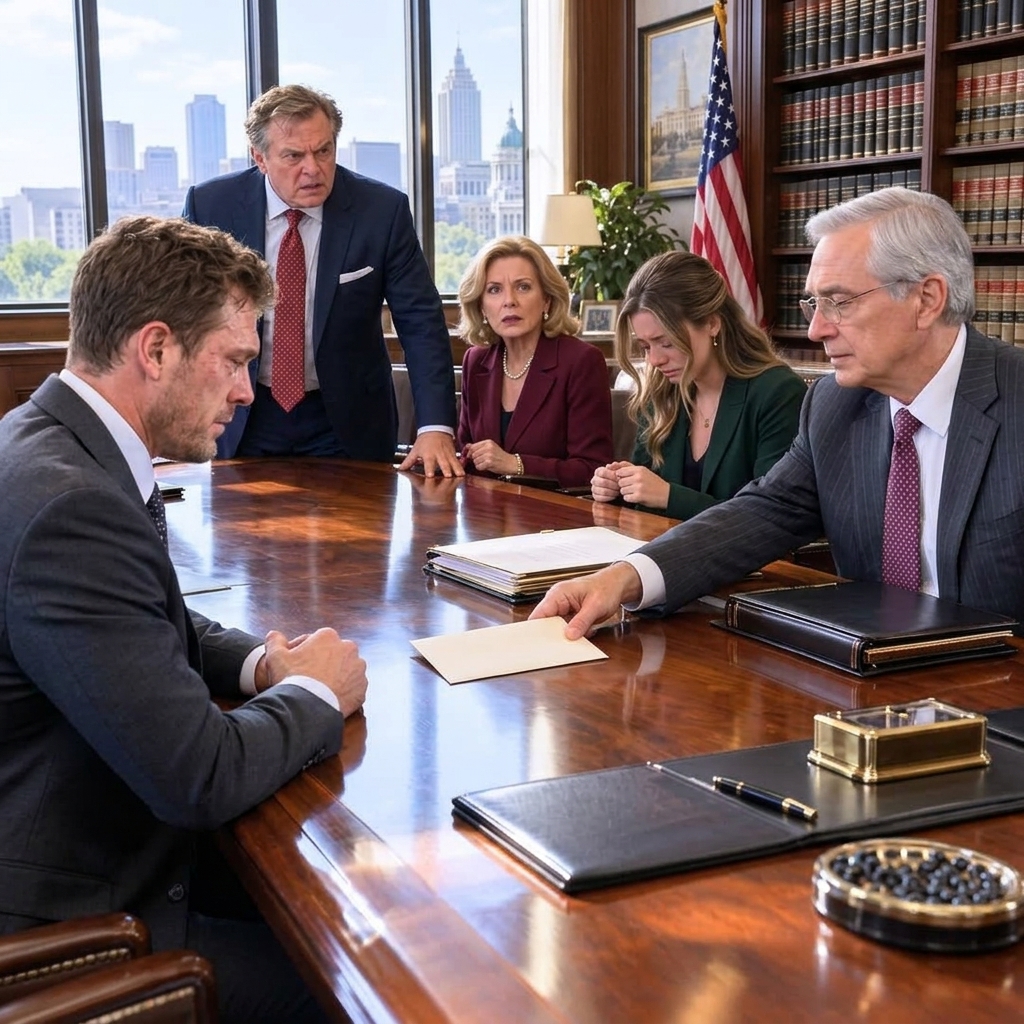
I thought about it for two days, and then I wrote a statement instead and gave it to Mr. Vance to read at sentencing.
I wrote about the shoes in my hand and the ribbon on the floor and the room I had built for a baby who wasn’t born yet.
I wrote about my brother Grant and the summer he argued with Beckett about the books, and the words Grant said to me that I laughed off.
I wrote that I had loved my husband and that I was done confusing love with permission.
The judge read it and nodded once, and then Beckett was sentenced to prison for fraud, forgery, and his role in Grant’s death.
I sat in the back of the courtroom and didn’t cry until it was over.
Ysolde was there, in the last row, and when it was done she stood up and looked at me and didn’t say anything, and I didn’t say anything either, because there wasn’t anything that needed saying right then.
She closed her paint store for a week and then opened it again, and I heard from Cressida that she was doing all right.
I had my daughter in the spring, in a hospital with Rosalind in the waiting room and Mrs. Purdy calling every hour to ask if there was news.
When they put her in my arms I thought about the nursery and the crib and the yellow curtains, and I thought about how strange it was that the room I had built for her had been the room where I finally saw the truth.
I named her Grace, because that was what I needed and what I got.
Ysolde sent me a card when Grace was born.
It was a simple card with a flower on the front, and inside she had written, “I’m glad she has you.”
I put it on the shelf in my new apartment, next to the tiny baby shoes I had carried into the nursery that day.
I kept the shoes.
I kept the ribbon with DADDY on it too, and I put it in a box in the closet beside the shoes, because I didn’t want to throw it away and I didn’t want to look at it every day.
Some things you keep because they remind you what you survived.
Grant’s estate was settled that summer, and the money went where it should have gone, and I bought a small house with a yard and a room with a window that looked out at a maple tree.
I didn’t build a nursery right away.
I took my time.
When Grace is old enough to ask about her father, I’ll tell her the truth in a way she can carry — not all at once, not in anger, but in pieces she can hold.
I’ll tell her that her mother was brave, and that being brave sometimes means walking into a room you don’t want to walk into and opening a door beside a crib.
I’ll tell her about her uncle Grant, and how he tried to warn me, and how I wish I had listened sooner.
And I’ll tell her that the tiny shoes on the shelf were the first thing I ever bought her, and that I carried them into a room full of betrayal and walked out with something better than what I found.
I don’t need anyone to open that door beside the crib ever again.
The room is quiet now.
The window is open.
And Grace is asleep down the hall.
Popular Posts
→- 1
- 2
- 3
- 4




Recently Viewed
Stories you read recently will appear here.