If Mom had too much wine at a neighborhood gathering, I made sure we got home safely.
If bills needed sorting, technology stopped working, or something around the house required attention, I handled it.
Amanda and Mom handled the social calendar.
From outside, our household still looked admirable.
Mom was the woman who had survived divorce with dignity. Amanda was the charming daughter with a bright future. I was the responsible son who never caused problems.
Behind closed doors, I felt less like a son and more like infrastructure.
I kept everything operating.
By the time college applications arrived, I had started thinking about distance as freedom.
My grades and test scores gave me several options, including schools Mom considered impressive. Fairfield University was among them.
Mom liked Fairfield partly because someone she knew had a son attending there.
I chose State University instead.
It had a strong computer science program and offered me a partial academic scholarship.
More importantly, it was several hours from home.
When I announced my decision, Mom stared at the acceptance letters spread across the dining-room table.
“You’re throwing away your potential.”
“I like the program.”
“Fairfield accepted you. Think about the connections.”
Amanda was home from her freshman year at Binmar College.
She looked amused.
“State University? Isn’t that where people go when they can’t get anywhere better?”
I ignored the comment.
The scholarship reduced my costs. The computer science program had a good reputation. The campus felt right.
What I did not tell either of them was that lower tuition and physical distance gave me something I valued more than prestige.
Independence.
Mom eventually adjusted the story for her friends.
She told them I had received multiple offers but selected State because of its specialized program.
Amanda preferred another description.
She called it “Richard’s budget school.”
Her education at Binmar was fully financed with Mom’s help, including additional borrowing.
Mine was different.
I worked about twenty hours a week at the university IT help desk. I picked up freelance website projects when I could. I learned how to stretch money, manage deadlines, and solve my own problems.
Amanda’s social-media feeds showed sorority events, weekend trips, formal dinners, and carefully arranged photographs from vacation destinations.
My life looked much less glamorous.
But for the first time, it felt like mine.
My roommate Jordan and I spent late nights coding or arguing about independent films. I developed friendships with people who cared less about where my family lived and more about whether I was reliable, interesting, or funny.
I began dating Rachel, a journalism student who had very little patience for social performance.
Around her, I never felt like I had to prove my usefulness.
That was new.
Thanksgiving during my first year away became the first real test of whether I could bring that new version of myself back into my family’s house.
I arrived home with textbooks, assignments, and plans to see several high-school friends.
Amanda also came home.
One afternoon she walked into my room and dropped the requirements for a marketing presentation onto my bed.
“I need you to make this.”
I looked at the papers.
“You need help with the software?”
“No, I need the presentation done.”
“When?”
“Sunday night.”
I stared at her.
She explained that she had shopping to do for an upcoming sorority formal and did not have time to deal with the technical part.
“You’re good with computer stuff,” she said. “It’ll take you two hours.”
For the first time, I answered without searching for an excuse.
“No.”
Amanda froze.
“What do you mean, no?”
“I mean I’m not doing your project.”
“Are you serious?”
“Yes.”
She stared at me long enough that I almost laughed.
Apparently, she had prepared for several possible reactions from me.
A direct refusal had not been one of them.
“I have finals to prepare for,” I said. “And I already made plans tomorrow.”
“It would take you two hours.”
“Then you should have plenty of time to do it yourself.”
I turned back to my book.
Amanda left, closing the door much harder than necessary.
Later that evening, Mom appeared.
“Why won’t you help your sister?”
“I offered to answer questions.”
“She’s under a lot of pressure.”
“So am I.”
Mom’s expression changed.
“That’s very selfish, Richard. Family helps family.”
The sentence was so familiar that I could practically hear it before she spoke.
“I’m happy to review Amanda’s work,” I said. “I’m not doing the assignment for her.”
Mom left disappointed.
Amanda barely spoke to me for the rest of the holiday.
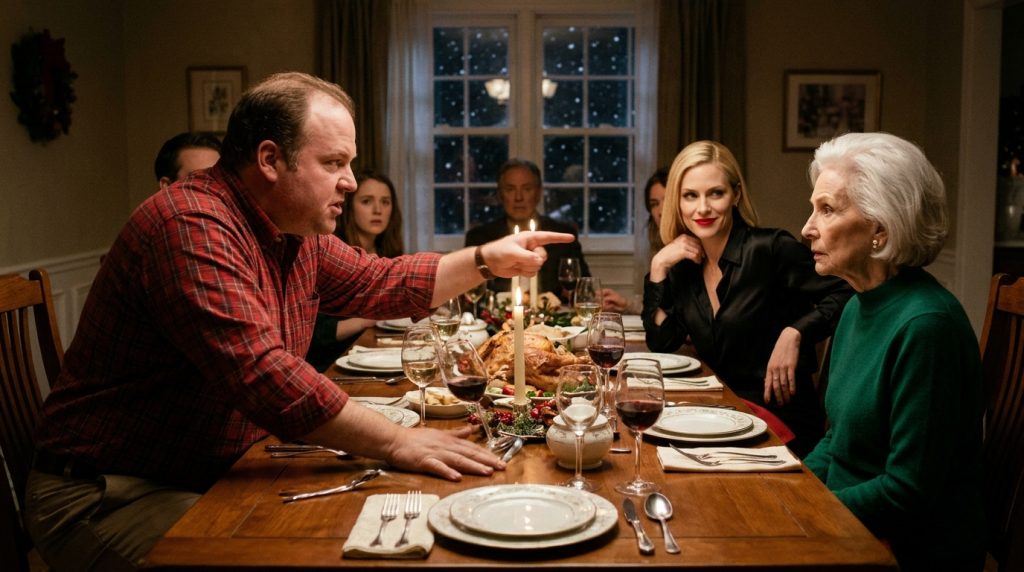
At Thanksgiving dinner, Mom’s friends asked Amanda about college. They praised her activities, her connections, her plans.
Nobody mentioned my scholarship or my grades.
For once, that bothered me less than I expected.
Popular Posts
→- 1
- 2
- 3
- 4




Recently Viewed
Stories you read recently will appear here.