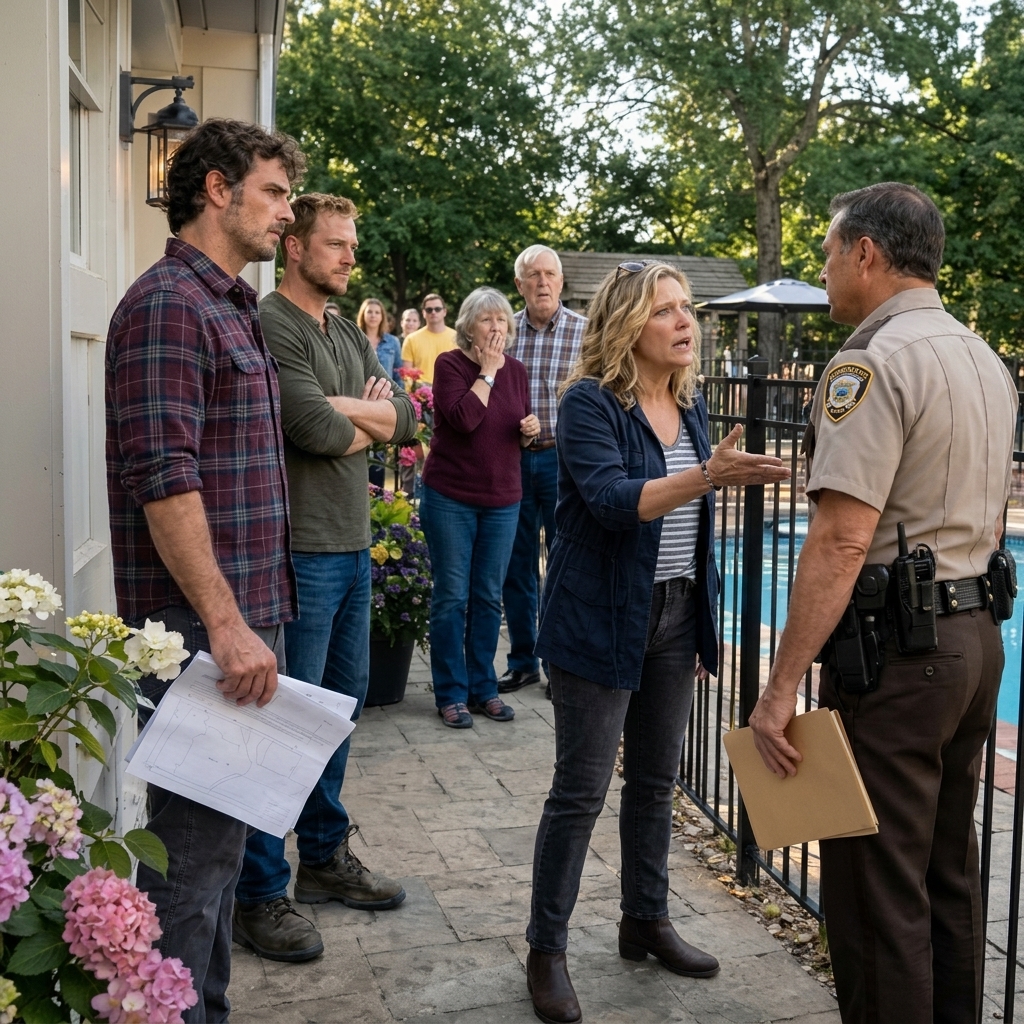
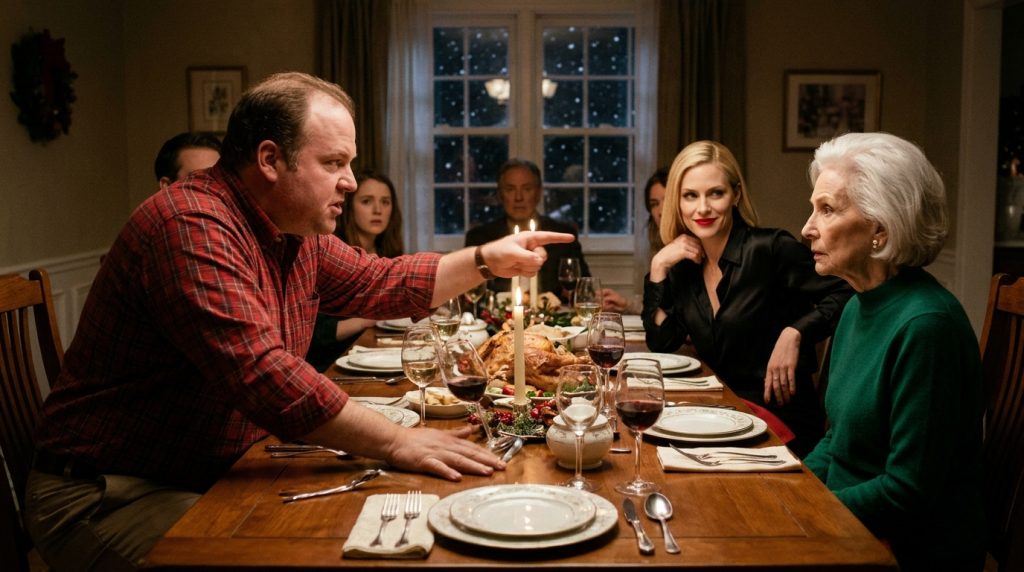
“I came here for your birthday because I love you. But I can’t keep participating in this.”
Amanda folded her arms.
“So you’re throwing a tantrum and leaving?”
I looked at Mom instead.
“Happy birthday.”
I placed the wrapped bracelet on the entry table.
“I hope you like it.”
Then I walked outside.
Mom called after me.
Amanda said something from inside the house, but I did not turn around.
I got into the rental car and backed down the driveway.
For several minutes, I drove without knowing exactly where I was going.
Eventually I booked a room near the airport and changed my flight to the earliest available departure the following morning.
That night, I lay awake in a hotel room listening to the air conditioner hum.
There was guilt.
There was anger.
There was sadness.
But underneath all of it was something unfamiliar.
Relief.
The next morning I flew back to Austin.
By the time I reached my apartment, my phone showed twenty-seven missed calls and sixteen text messages from Mom.
Some were angry.
Some were pleading.
Some tried to make me feel guilty.
I turned the phone face down on my coffee table.
Then I called my boss and took two personal days.
For the first time in years, I allowed myself to sit quietly without solving anything for anybody.
The guilt arrived first.
Had I embarrassed Mom?
Had I reacted too strongly?
Should I have waited until after the party?
Then I pictured Amanda’s expression.
I remembered Mom looking at me instead of correcting her.
I remembered the years leading up to that moment.
Slowly, the guilt began losing its authority.
On Tuesday evening, my friend Marcus called.
I had missed our usual basketball game.
“You okay, man?”
I hesitated.
Then I told him the entire story.
Not just the shoes.
Everything.
When I finished, Marcus was quiet for a moment.
“Sounds like you finally did what you needed to do.”
“They’re still my family.”
“Sure. But family doesn’t require you to erase yourself.”
That sentence stayed with me.
A few days later, I sent Mom one message.
“I need time and space. I’m safe and okay, but I won’t be in contact for a while. Please respect that.”
Her answer appeared almost immediately.
“This is very hurtful, Richard. We’re family. We should be able to talk.”
I did not respond.
The first week was difficult.
I would reach for my phone automatically when something happened at work.
Then I remembered.
I worried about Mom.
I wondered whether Amanda had created another emergency.
My sense of responsibility had been trained into me for too long to disappear overnight.
During the second week, a demanding project at work took most of my attention.
Without family calls constantly interrupting my focus, I noticed a difference.
So did my boss.
“You seem more present lately,” he said. “More decisive.”
He was right.
I slept better.
I concentrated longer.
My apartment stopped feeling like a temporary place between one family problem and the next.
By the third week, I decided I needed help understanding why creating distance felt simultaneously healthy and frightening.
I found Dr. Lisa Brennan, a therapist who worked with difficult family systems and boundary setting.
During our first appointment, I explained the roles in my family.
The favored daughter.
The reliable son.
The mother who kept the system functioning by asking one child to absorb the consequences of the other child’s choices.
Dr. Brennan listened.
“What you’re describing is a family system built around fixed roles,” she said. “You became the helper and fixer. Amanda became the person who expected fixing.”
“So what do I do?”
“You’ve already started. You created distance.”
She leaned forward slightly.
“Now you learn how to maintain it without believing that another adult’s discomfort means you have done something wrong.”
Over the next several weeks, I kept going to therapy.
I learned to recognize guilt as a reaction, not an instruction.
I learned the difference between caring about someone and taking responsibility for them.
Work continued improving.
I helped with a successful product launch and began mentoring a new developer.
My social life expanded too.
I joined a weekend hiking group.
I went to concerts.
I signed up for a cooking class on impulse.
That was where I met Allison.
She was easy to talk to and had a calm confidence I found immediately attractive.
After we had been dating for several weeks, she asked about my family.
“We’re not really in contact right now,” I said.
She waited.
“There were some unhealthy patterns for a long time. I needed distance.”
Allison nodded.
“My older brother and I went through something similar. Sometimes space is what finally makes people look at what they’re doing.”
There was no judgment.
Popular Posts
→- 1
- 2
- 3
- 4




Recently Viewed
Stories you read recently will appear here.