She admitted that she had favored Amanda.
She admitted that she had rewarded appearances.
She admitted that because I was dependable, she had taken my reliability for granted.
“I kept asking you to be the reasonable one because it was easier,” she said.
I did not rescue her from the discomfort.
I let her continue.
“I can’t change the past,” she said eventually. “But I’d like to build something healthier, if you’re willing.”
“I’m willing to try.”
Meeting Amanda was more difficult.
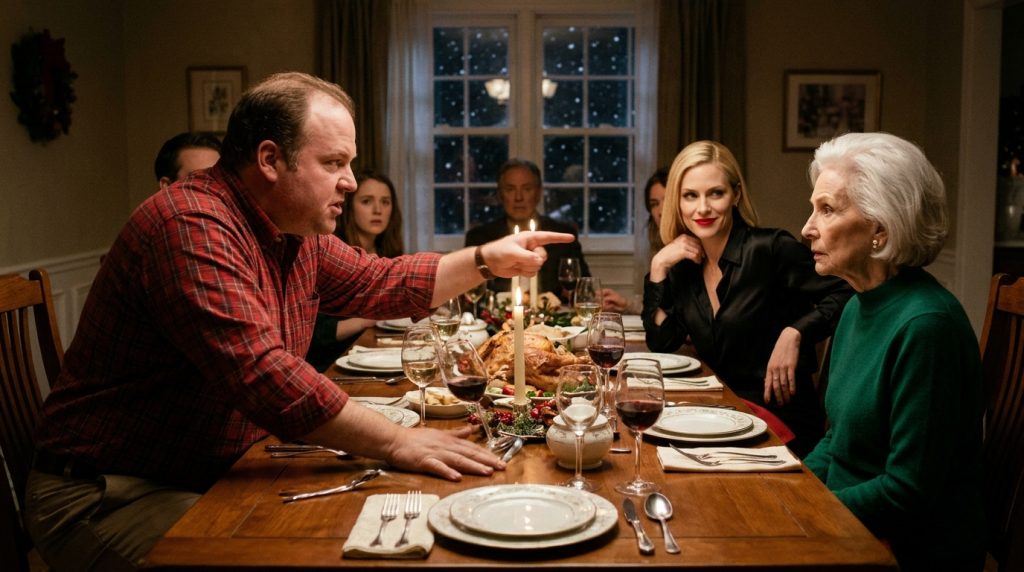
We planned dinner at Mom’s house the following evening.
When I arrived, Amanda was already in the kitchen helping prepare food.
Actually helping.
That alone was unusual enough to catch my attention.
She looked up.
“Hi, Richard.”
“Hi.”
“Thanks for coming.”
There was no smirk.
No joke.
No demand.
Just awkward politeness.
During dinner, Amanda asked about my work.
Then she listened to the answer.
She spoke about her own job without complaining that the company failed to appreciate her talent.
When Mom mentioned the restitution payments, Amanda did not change the subject.
“It’s going to take a while,” she said. “But I owe people the money.”
After dinner, Amanda asked if we could talk alone.
We went to the back porch.
The chairs were different, but the view of the yard reminded me of childhood.
Amanda sat across from me.
For once, she looked uncertain.
“I need to apologize.”
I waited.
“The shoe thing was awful.”
She paused.
“But it wasn’t only that.”
Her hands tightened together.
“It was years of expecting you to do things for me. Taking advantage of you. Acting like your time mattered less than mine.”
I listened.
Amanda looked directly at me.
“When the legal situation happened and you wouldn’t come fix it, I was furious.”
“That doesn’t surprise me.”
She almost smiled.
“I blamed you for a while.”
“What changed?”
“I ran out of people to blame.”
That answer sounded more honest than anything she had said to me in years.
“I had to sit in meetings with attorneys. I had to look at the customer complaints. I had to agree to repay people. Nobody could do it for me.”
She paused.
“And eventually I realized that maybe that was exactly what I needed.”
I leaned back.
“That couldn’t have been easy.”
“It wasn’t.”
She looked toward the yard.
“But I should have learned how to deal with consequences years ago.”
Then she met my eyes again.
“I don’t expect us to suddenly become best friends.”
“Good.”
That earned a brief laugh.
“But I’d like a chance to show you I’m trying.”
I believed she meant it.
That did not mean trust returned immediately.
It did not mean old memories disappeared.
But it was a beginning.
Before I left Connecticut, the three of us agreed on simple boundaries.
Communication would be regular but limited.
Nobody would assume I was responsible for financial emergencies.
Nobody would expect me to manage Amanda’s crises.
If old behavior appeared, I would address it rather than quietly absorbing it.
The months that followed were imperfect.
Mom occasionally slipped into guilt-driven language.
Amanda sometimes made comments that sounded like the old version of herself.
The difference was what happened next.
I spoke up.
And more often than I expected, they listened.
The greatest change, however, was not in them.
It was in me.
I stopped measuring my worth by how useful I was.
I stopped believing love required unlimited access to my time, money, or energy.
My career mattered because I enjoyed the work, not because success might finally impress Mom.
My relationship with Allison mattered because it was reciprocal.
My friendships mattered because nobody kept score.
A year after the birthday party, Allison and I visited Connecticut together.
I felt nervous introducing her to Mom and Amanda.
The weekend went better than I expected.
Mom made an effort to know Allison without comparing her to anyone.
Amanda asked about Allison’s graphic-design work and actually let the conversation remain about Allison.
They were small things.
But healthy relationships are often built from small things.
Back in Austin, Allison and I sat on our apartment balcony one evening.
Jasper was stretched beside the sliding door. Bailey slept near our chairs.
Allison looked at me.
“Do you regret throwing away the shoes?”
I answered immediately.
“Not for a second.”
I thought about the metallic sound of the lid closing.
“It was messy. It embarrassed everybody. But nothing would have changed if I had cleaned them.”
Sometimes one moment becomes important not because of the object involved but because of what that object represents.
Those shoes represented years of assumptions.
Amanda assumed I would obey.
Mom assumed I would preserve the peace.
I assumed enduring it was the price of belonging.
Popular Posts
→- 1
- 2
- 3
- 4




Recently Viewed
Stories you read recently will appear here.