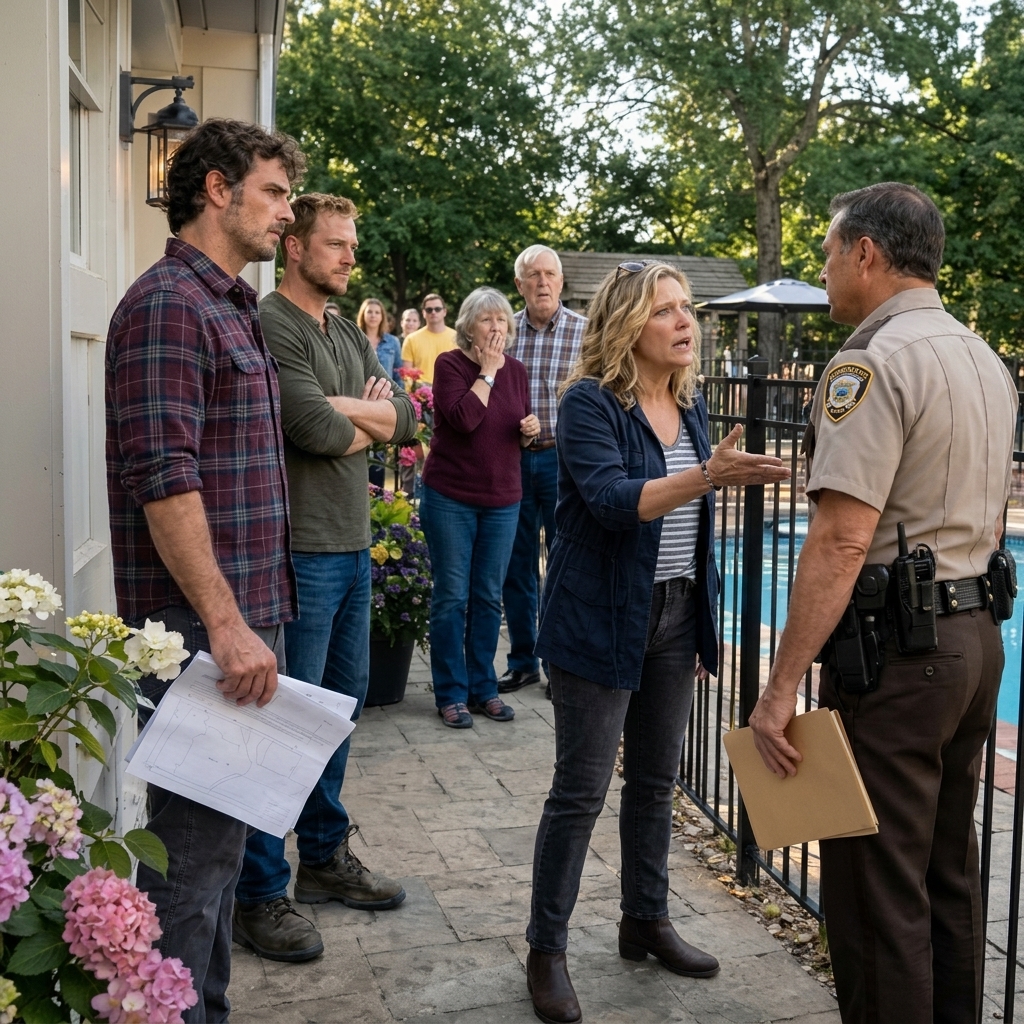
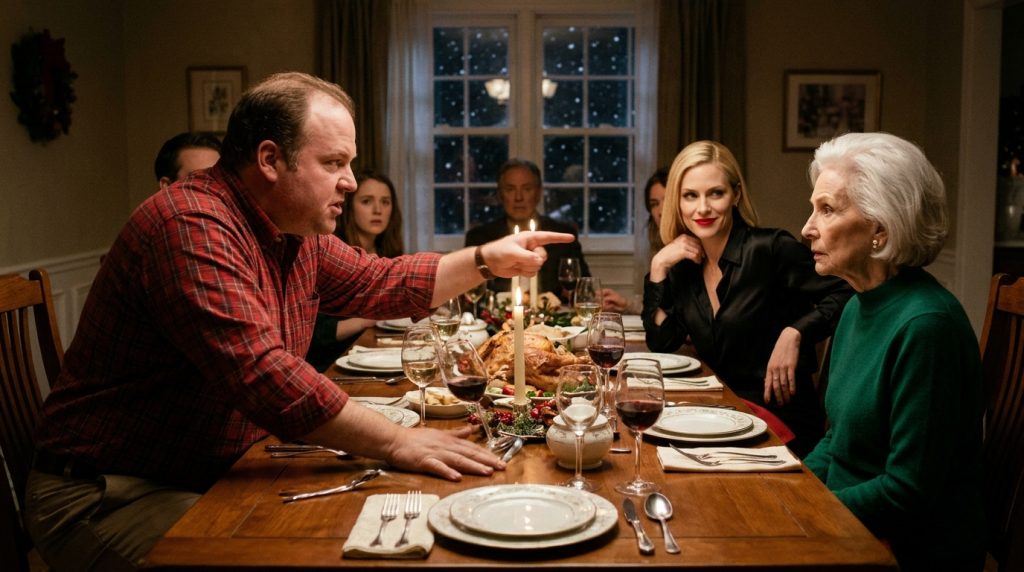
To Diane.
“What does Madison know?” I asked.
Diane went quiet.
Too quiet.
So there it was.
A nerve.
I pressed it.
“You didn’t take her because you love her. You took her because she saw something.”
Diane’s breathing changed.
Thomas pointed at me like yes.
“Did she find the photos?” I asked. “Or did she find the man with the tattoo?”
Diane said nothing.
The silence was louder than confession.
Then Madison screamed through the tape.
A thud followed.
Diane came back on the line, breath calm again.
“Midnight. The chapel.”
The call ended.
This time, I did not feel afraid.
I felt focused.
The detective said, “We can track tower pings from both calls.”
Thomas shook his head.
“She will know that. She wants us chasing phones.”
“Then what?” I asked.
Thomas looked at me.
“We prepare for the chapel.”
Grandma said, “Absolutely not.”
I turned to her.
“Diane asked for you because you know something she still fears.”
Grandma’s jaw tightened.
“I am not letting you walk into a trap.”
“I’m not planning to walk,” I said. “I’m planning to set one.”
For the first time that night, Grandma Eleanor looked at me not like a granddaughter, not like a rescued child, but like blood.
Whitaker blood.
Stubborn.
Patient.
Dangerous when cornered.
Thomas folded his arms.
“Tell me exactly what you’re thinking.”
I looked at the blue box.
Then at the archive shelves.
Then at the broken window where the tattooed man had fled.
“Diane wants the box because of what’s inside.”
“Yes,” Thomas said.
“So we give her a box.”
The retired detective smiled slowly.
“Not that box.”
“Not that box,” I said.
A mini-payoff happened before dawn.
The blue fireproof box contained more than the cassette and insurance papers.
Under the false bottom, Thomas found a small envelope with a keycard inside.
No label.
No note.
Just a plastic hotel keycard from a place that no longer existed.
The Magnolia Grand Hotel.
Demolished eight years earlier.
But the card sleeve had writing on the back.
Room 614.
Ask for Vera.
Grandma knew the name.
She sat down when she saw it.
“Vera Bell,” she said.
Thomas looked up.
“The night clerk?”
Grandma nodded.
“She worked at the Magnolia Grand. Diane used to meet someone there. James suspected it was connected to the insurance change.”
“Is Vera alive?” I asked.
Thomas was already searching his phone.
“Maybe.”
By sunrise, we knew three things.
Vera Bell was seventy-two.
She lived in a small blue house outside Brunswick.
And she had ignored every call from Thomas Garrett for four months.
That meant she was either scared.
Paid.
Or waiting for the right person.
At 8:10 a.m., I changed out of my wet dress into jeans, boots, and a gray sweater one of Grandma’s staff found for me.
At 8:12, Thomas told me I was not going to Brunswick.
At 8:13, I told him Diane had underestimated me my entire life and I was starting to enjoy how useful that was.
At 8:20, we were in the SUV.
Grandma insisted on coming.
Thomas refused.
Grandma asked if he planned to carry her physically back inside.
Thomas did not answer.
She came.
The drive to Brunswick took us through flat gray morning, past marsh grass and roadside churches with letter boards promising forgiveness in crooked black letters.
Grandma sat beside me in the back seat, hands folded over her cane.
For twenty minutes, neither of us spoke.
Then she said, “You are allowed to hate me.”
I looked out the window.
“I know.”
“Do you?”
I turned.
She looked older in daylight.
Not weaker.
Just more visible.
“I don’t hate you,” I said.
Her eyes shone.
“But I don’t know what to do with what you told me yet.”
“That is fair.”
“I needed someone.”
“I know.”
“And you were there.”
Her face crumpled.
“I know.”
The driver kept his eyes forward.
Thomas pretended not to hear.
I let the silence sit between us.
Not as punishment.
As truth.
Forgiveness rushed is just another kind of theft.
I was tired of having things taken from me.
Vera Bell’s house had peeling blue paint, a porch swing, and a ceramic frog beside the steps wearing a cracked red bow tie.
A woman watched us through the curtain before we even got out.
She opened the door before Thomas knocked.
“I knew you’d come once the girl found the box,” she said.
Her voice sounded like cigarettes and old hymns.
She was small, narrow-shouldered, with white hair braided down her back.
Her eyes went straight to me.
“You look like Lucy.”
My throat tightened.
“You knew my mother?”
“Everybody knew your mother. Sweetest woman to ever tip housekeeping twenty dollars for finding a baby sock.”
She pushed the door open.
Popular Posts
→- 1
- 2
- 3
- 4




Recently Viewed
Stories you read recently will appear here.