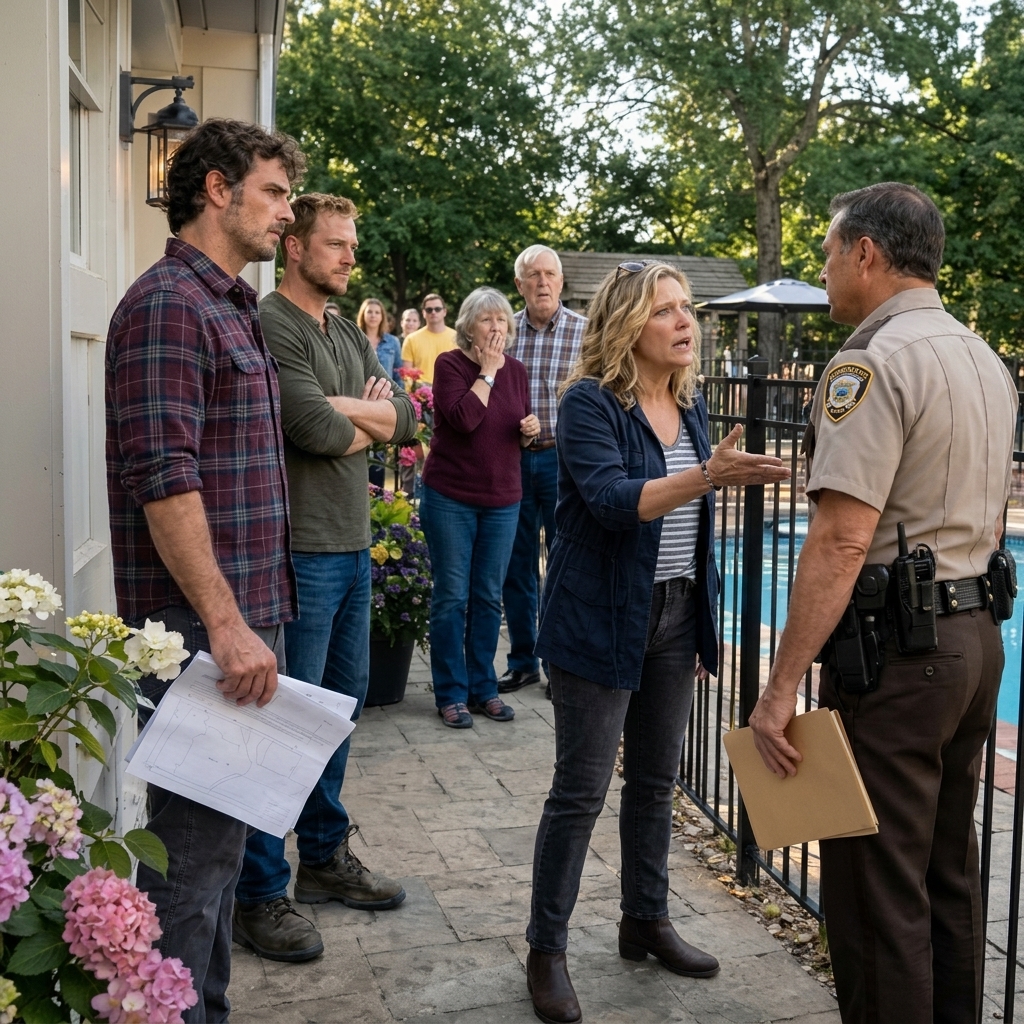
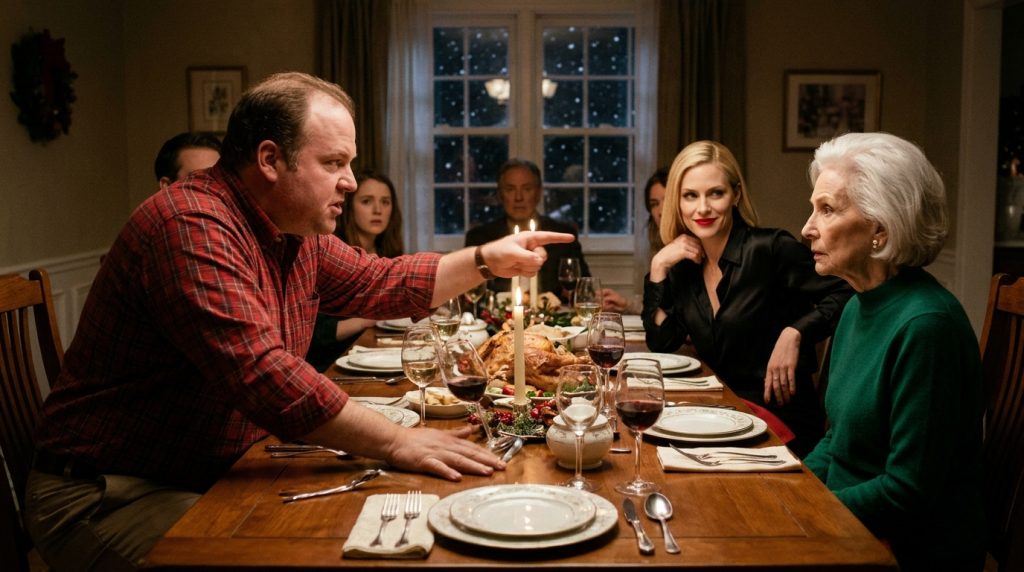
Instead, I said, “It depends who is being sacrificed.”
The room went still.
Diane’s smile twitched.
“What did you say?”
I folded my napkin neatly and placed it beside my plate.
“I said it depends who is being sacrificed.”
Richard cleared his throat.
Madison whispered, “Oh my God.”
Kyle smirked from beside her, already recording under the table.
Diane leaned close enough for me to smell her perfume.
Gardenia and expensive poison.
“You ungrateful little thing,” she whispered.
Then she turned to the waiter.
“Bring the bill.”
The waiter hesitated.
“All of it?” he asked.
“All of it,” Diane said, loud enough for the room to hear. “Annabelle insisted on being treated like family tonight. Family contributes.”
A few relatives looked away.
Not one spoke.
The waiter returned with the folder.
Diane took it, glanced at the total, and slapped it against my chest.
“Pay it.”
I looked at Grandma Eleanor.
She sat perfectly still.
Too still.
Her blue eyes were fixed on Diane, not me.
I reached slowly into my purse.
Inside was my debit card.
Behind it, folded twice, was a rental application for a tiny apartment across town. A real bedroom. A window. A door that locked.
The deposit was due Monday.
The bill in my hand was almost exactly the amount I had saved.
Diane knew that.
Of course she knew.
She had always known where to place the knife.
I gave the waiter my card.
“Run it,” I said quietly.
Diane smiled.
Then Madison giggled.
That tiny sound snapped something inside me.
Not loudly.
Not dramatically.
It was more like a thread breaking.
I had been the girl in the basement.
I had been the extra plate no one wanted to set.
I had been the charity story at Diane’s church brunch.
I had been the unpaid babysitter, the housekeeper, the convenient shame.
I had been the quiet one.
I had been the grateful one.
I had been the orphan who owed everyone everything.
But I was not going to be that woman anymore.
“Wait.”
Grandma Eleanor’s voice cut across the room.
The waiter froze with my card halfway to the machine.
Grandma stood.
Slowly.
Carefully.
Like a queen rising from a throne she had allowed fools to circle for too long.
“Cancel that transaction,” she said.
Diane blinked.
“Mother, sit down. You’re tired.”
Grandma looked at her daughter.
“No, Diane. I am finally awake.”
The room changed.
You could feel it.
Chairs creaked.
Forks lowered.
Richard’s face lost its color.
Grandma lifted one hand toward the oak doors at the back of the private dining room.
They opened immediately.
A man in a charcoal suit stepped inside carrying a black leather briefcase.
Thomas Garrett.
I knew the name because old money in Savannah said it with fear.
Estate attorney.
Former prosecutor.
A man who did not smile unless someone else had made a fatal mistake.
He walked past the tables and placed his briefcase beside Grandma’s untouched birthday cake.
“Good evening,” he said.
Diane shot to her feet.
“What is this?”
Grandma did not answer.
Thomas opened the briefcase.
The sound of the latches clicking seemed louder than the quartet, louder than the river outside, louder than the blood rushing in my ears.
He removed a sealed folder.
Then another.
Then a stack of bank statements thick enough to silence a room.
Grandma turned to the guests.
“I invited all of you tonight because Diane wanted an audience,” she said. “So I decided to give her one.”
Diane laughed once.
It came out sharp and ugly.
“This is absurd. Mother, you’re confused.”
Thomas looked up.
“Mrs. Whitaker was evaluated by two independent physicians last week. Both found her fully competent.”
Richard pushed back from the table.
“Tom, there’s no need for this.”
“There is every need,” Grandma said.
Then she turned to me.
And for the first time all night, her voice softened.
“Annabelle, your parents did not leave you poor.”
My fingers tightened around the leather bill folder.
“What?”
Thomas slid the first document across the table.
“When James and Lucy Whitaker died, they left a trust for their only daughter,” he said. “Initial value: $650,000. It was designed to cover education, housing, healthcare, and adult transition expenses until Annabelle turned twenty-five.”
The room inhaled as one body.
I did not move.
I heard the number.
I understood the words.
But my mind rejected them.
Because when I was fourteen, Diane said she couldn’t afford winter boots.
Because when I was seventeen, Richard told me college was a fantasy for girls who did not know their place.
Because when I was nineteen, I worked two jobs while Madison flew to Paris for “cultural enrichment.”
Popular Posts
→- 1
- 2
- 3
- 4




Recently Viewed
Stories you read recently will appear here.