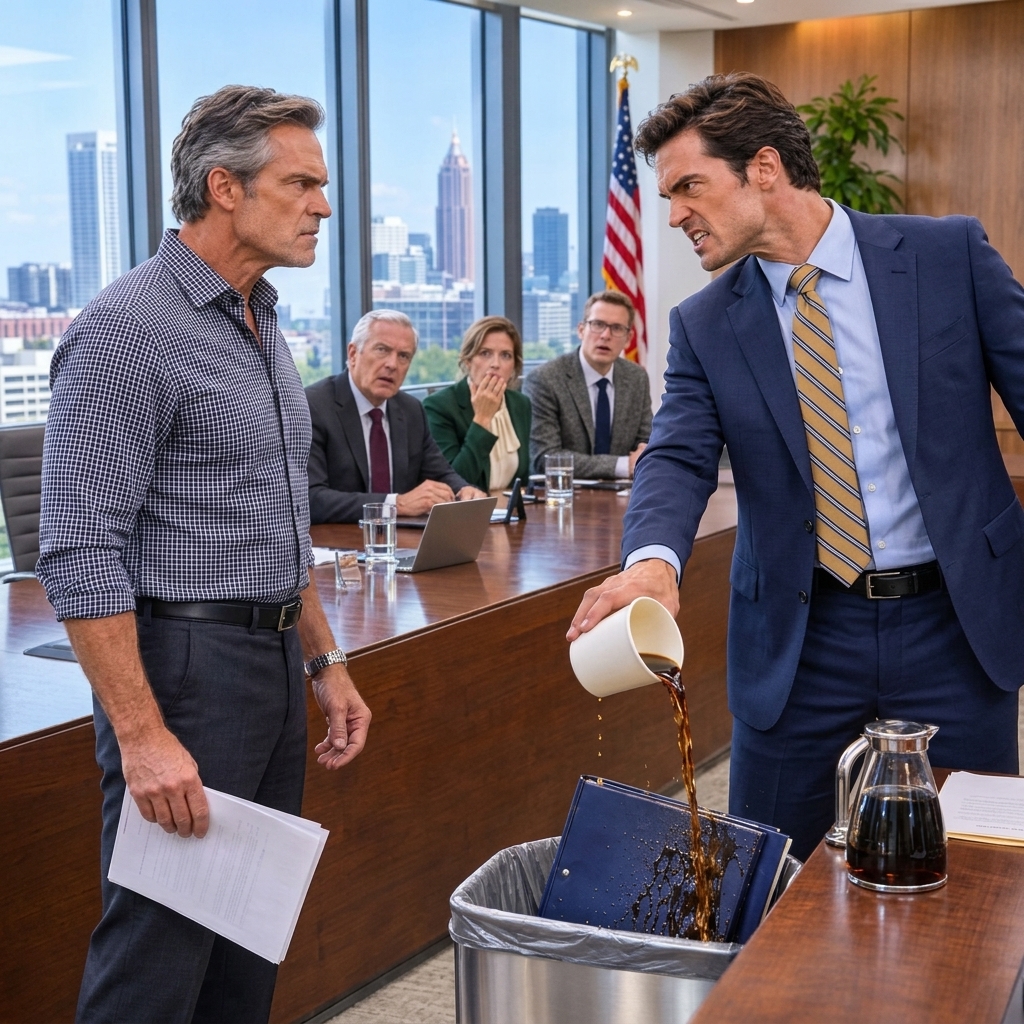
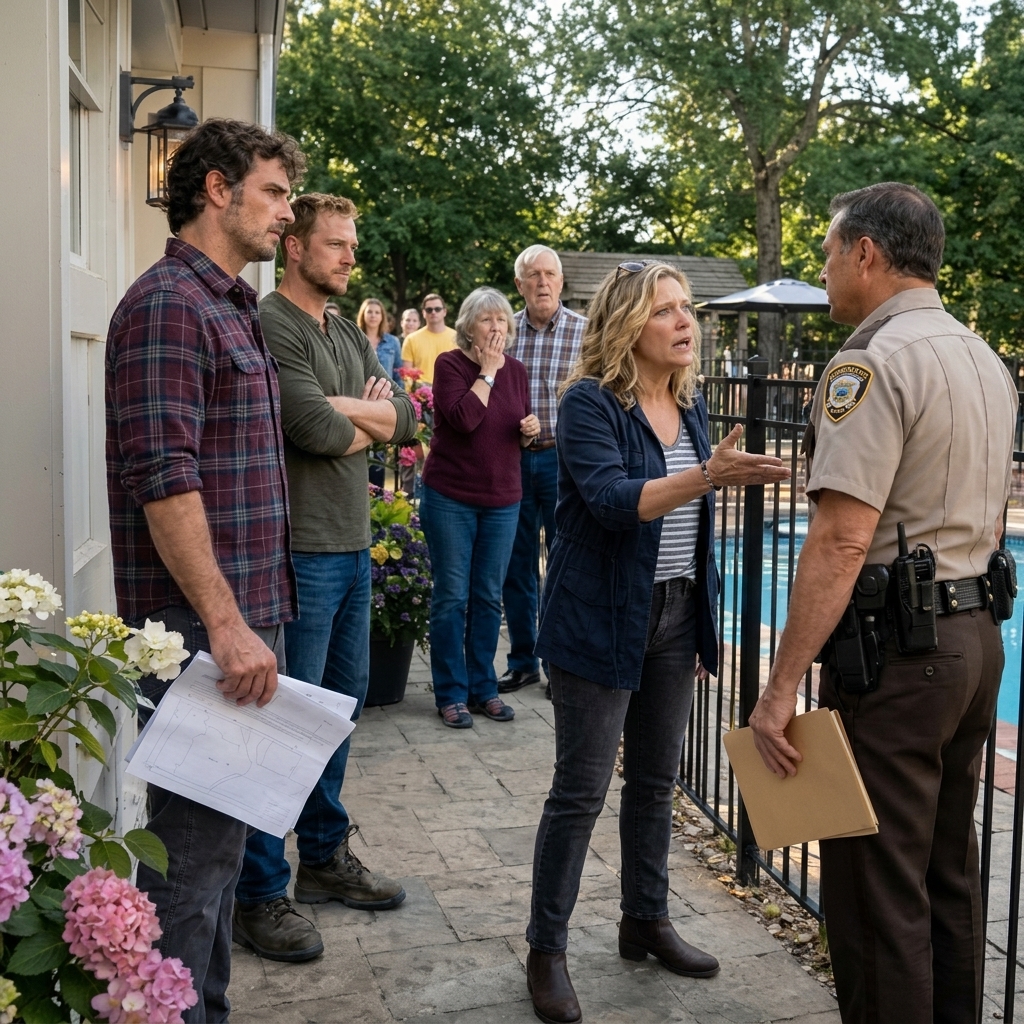
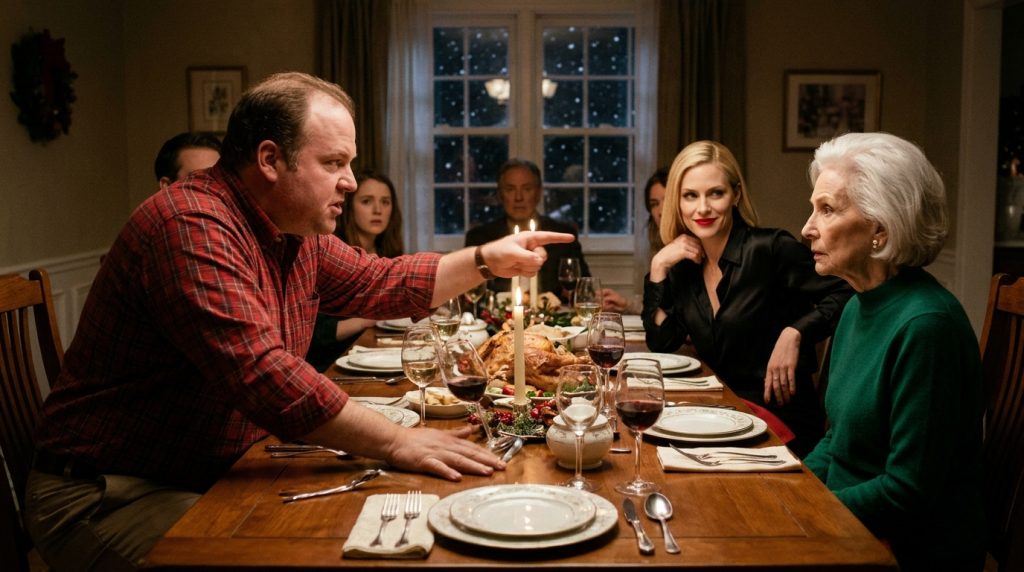
Thomas looked up.
I tapped the picture.
“Find who took it. Find the blue box. Find out why Diane was there.”
Grandma opened her eyes.
Thomas almost smiled.
Almost.
“There is one place to start,” he said.
“Diane’s house?”
“No,” Grandma said.
We both looked at her.
She walked to the desk, opened the center drawer, and removed an old brass key attached to a faded tag.
WHITAKER OFFICE ARCHIVE.
“James kept duplicate records in the old cotton warehouse before we converted it,” she said. “Diane never knew I kept the archive room locked under my own name.”
Thomas stood.
“We go tonight.”
Grandma’s voice sharpened.
“You go tonight. I am not a porcelain doll.”
“You are also the central testator in an active estate dispute,” Thomas said. “And someone just threatened your life.”
Grandma gave him a look that would have curdled milk.
I stood.
“I’ll go.”
Both of them turned to me.
“I’m the one Diane never thought mattered,” I said. “That has always been her blind spot.”
Thomas studied me for a long moment.
Then he nodded once.
“Fine. But we do it my way.”
His way involved two guards, one retired detective, a silent alarm company, and a black SUV with tinted windows.
By 9:40 p.m., we were crossing the river toward the old Whitaker warehouse district.
Savannah at night looked beautiful from a distance.
Spanish moss.
Gas lamps.
Rain shining on cobblestone.
Up close, the warehouse stood at the end of a narrow service road, brick walls dark with age, windows boarded from the inside.
The sign over the door still read WHITAKER EXPORTS, though the company had moved downtown years earlier.
Thomas unlocked the gate.
The metal screamed.
Inside, dust coated everything.
Old desks.
Shipping ledgers.
Framed photographs of men in suits shaking hands beside crates.
The archive room was in the back behind a steel door.
Grandma’s brass key fit.
Thomas turned it.
The lock clicked.
The room beyond smelled untouched.
Cardboard.
Paper.
Cold air.
Rows of banker boxes lined metal shelves.
Every box had a date.
Every label was written in my father’s handwriting.
My throat tightened.
Thomas gave me gloves.
“Touch only what you have to.”
We started with the year my parents died.
There were tax documents.
Property transfers.
Legal correspondence.
Insurance binders.
At 11:18 p.m., I found the first mini-payoff.
A folder labeled GUARDIANSHIP — ANNIE.
Inside was the notarized custody preference.
Eleanor Whitaker.
Not Diane.
Not Richard.
Eleanor.
Diane had known.
She had hidden it.
Thomas photographed every page.
At 11:43, the retired detective found a ledger.
Not business accounting.
Personal.
My father had written dates and names.
D.M. requesting early access again.
R.M. pushing sale of river lots.
Diane angry about trust restrictions.
Richard asked about “accident insurance” over lunch. Strange.
My skin prickled.
Thomas read silently, jaw tightening.
At 12:07 a.m., one of the guards called from the hallway.
“Mr. Garrett.”
We stepped out.
The rear office door was open.
Fresh mud marked the floor.
Someone had been inside recently.
Very recently.
Thomas lifted a hand for silence.
Then we heard it.
A scrape overhead.
Slow.
Deliberate.
The building had a second-floor storage loft.
Thomas motioned everyone back.
The detective drew his sidearm.
My pulse hammered, but my mind stayed sharp.
Diane knew about the warehouse now.
Or someone did.
A shadow moved at the top of the stairs.
Then a box came crashing down.
It exploded against the floor ten feet from us, spilling old files like bones.
The lights went out.
Someone screamed.
Not me.
In the dark, footsteps pounded above us.
Thomas yelled, “Back exit!”
A guard’s flashlight cut across the loft.
For one second, I saw a man in a hood.
Black magnolia tattoo on his wrist.
Then he vanished through an upper window into the rain.
The police arrived eleven minutes later.
He was gone.
But he had dropped something.
A small blue key.
Not brass.
Not modern.
A key to a fireproof box.
My father’s box.
Thomas held it in his palm.
“This means the box still exists,” he said.
I looked at the broken window.
Rain blew through the opening.
“So he came here looking for it too.”
“No,” Grandma said behind us.
We all turned.
She had ignored instructions and arrived with her driver, wearing a raincoat over her nightgown and the expression of a woman who had buried fear decades ago.
She stepped into the archive room and pointed toward the lowest shelf.
“He came because he knew we would find that.”
We followed her gaze.
The fallen box had knocked loose a panel at the base of the wall.
Behind it was a narrow hidden compartment.
Inside sat a small blue fireproof box.
Scratched.
Dusty.
Locked.
For a moment, nobody spoke.
Popular Posts
→- 1
- 2
- 3
- 4




Recently Viewed
Stories you read recently will appear here.